

Recovering an apostolic movement dynamic asks something significant of you as a leader: a genuine rethink of how your church or organization is organized. For generations, Western church structures have followed largely mechanistic, bureaucratic, and centralized patterns — patterns that hold back the kinetic, movemental, energy already present in the gospel. Building movements capable of scaling and reproducing themselves calls for what I call movemental intelligence or MQ: designing your church so that the identity, values, and capability of the whole are reproduced in every part, right down to the smallest group.
The Holographic Principle: The Whole Lives in Every Part
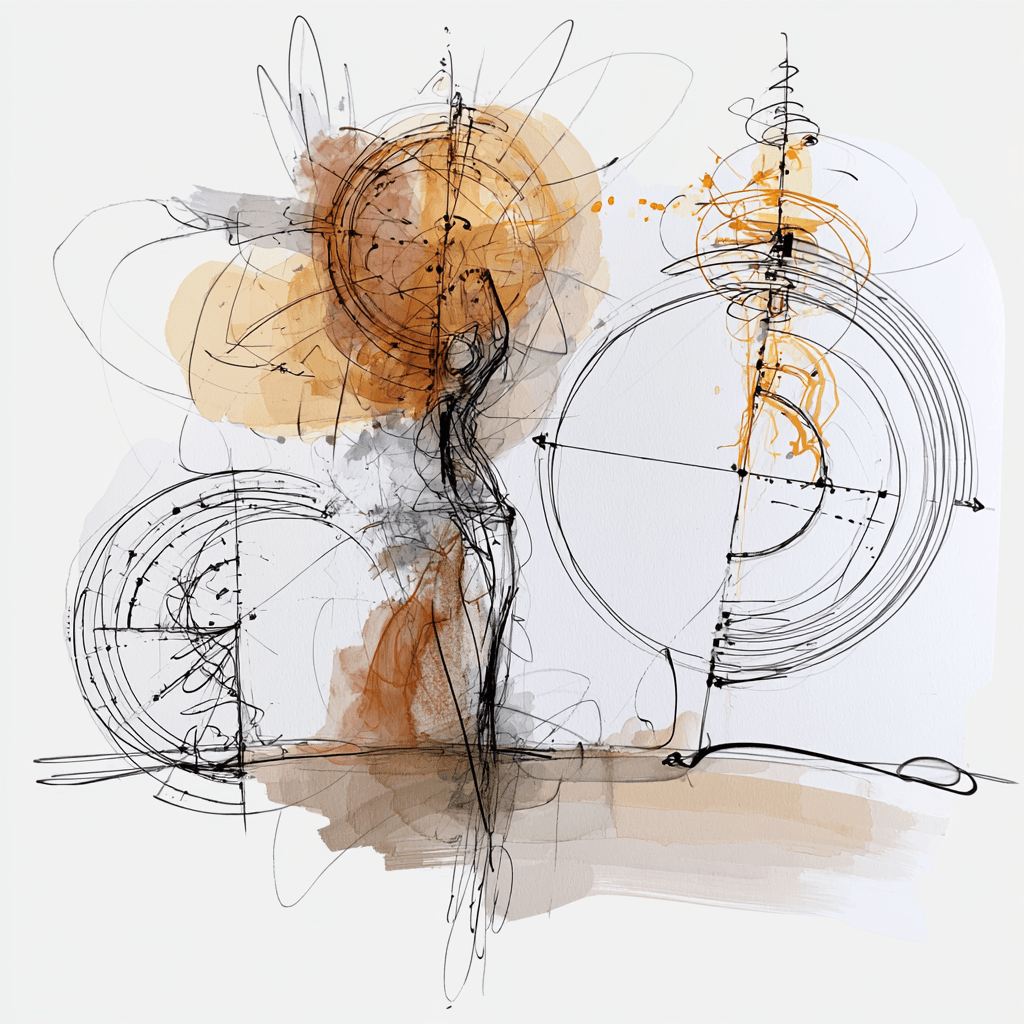
The hologram is a brilliant metaphor that has generated some excellent thinking that relates to MQ. A hologram gets its name from an interesting property of light: the complete three-dimensional image is stored within every fragment of the plate that produces it. Shatter a holographic plate into a hundred pieces, and each piece — not just a corner of the picture, but the whole picture — can still reconstruct the full image, just at a smaller scale.
That's the pattern your church/organization needs to reproduce at every level—from the smallest to the largest part. Think about it this way; every one of the trillions of cells in the human body carries the complete human genome, the full set of instructions for building an entire person, not just a fragment. A holographically designed movement works the same way: every micro-church, missional community, and in fact, every individual disciple carries the full genetic code of the movement — its mDNA. This includes the core convictions that hold everything together: the lordship of Jesus, a commitment to disciple-making, a willingness to regularly engage in risk and adventure, a missional-incarnational instinct that sends people outward while rooting them in their context, and fivefold (APEST) leadership — the full range of apostolic, prophetic, evangelistic, pastoral, and teaching gifting distributed across the whole body. These convictions should be fully alive wherever two or three gather, not concentrated at headquarters or reserved for a professional class.
Restoring Full Missional Capacity to Your Grassroots
Many institutional church models have grown comfortable with heavy departmentalization — outsourcing core movement functions to specialists. Evangelism gets handed to parachurch organizations. Theological formation gets handed to seminaries. Cross-cultural mission gets handed to agencies. Over time, this reductionism trains ordinary believers into a kind of passivity, teaching them to depend on specialists rather than trusting the capacity the Spirit has already placed in them.
Holographic thinking restores that capacity to the ground level:
Build omni-competent micro-communities. Equip every small group or house church to worship, disciple, evangelize, and plant new expressions as a complete, functioning body of Christ — a full expression of church in its own right, not a satellite that depends on the main campus for anything beyond the basics.
Train your leaders broadly, on purpose. This is what is called planned redundancy — over-training leaders across a wide range of ministry skills so that any gathering of believers, anywhere in your network, already holds what it needs to thrive without waiting for permission or resources from above.
Four Design Moves for Leaders
1. Build redundancy of function, not redundancy of parts. Older organizational models rely on redundancy of parts — treating people as replaceable specialists slotted into narrow roles. Growing movements need redundancy of function instead: expanding what every believer is capable of, cross-training people broadly in prayer, biblical understanding, gospel proclamation, and community leadership. Capacity spreads throughout the body rather than pooling in a few trained hands.
2. Set a minimum critical specification, and release the rest. This means defining only the small set of non-negotiable convictions and commitments that genuinely hold a movement together — its essential meta-ideas — while trusting local leaders with everything else. This is sometimes called chaordic design, a blend of enough order to stay unified with enough freedom (chaos, in a generative sense) for local creativity to flourish. Shared purpose and clear principles do the coordinating work that a policy manual or command structure used to attempt, opening space for thousands of Spirit-led, contextual expressions to emerge in ways headquarters could never have planned.
3. Trust the intelligence already present at the edges. Centralized structures assume the best thinking happens at the top and flows downward. Holographic structures work from the opposite assumption: local leaders, closest to their own neighborhoods and cultures, are often best positioned to sense what those contexts actually need and respond quickly. Give them real decision-making authority, not just responsibility.
4. Build a habit of ongoing learning and unlearning. Set up regular rhythms where your teams honestly examine their working assumptions, retire methods that have outlived their usefulness, and refine their practices based on what they're actually seeing on the ground. This is a form of what's sometimes called double-loop learning — reviewing not just your results, but the underlying assumptions producing those results.
Building Resilience Through Distributed Design
This kind of design gives a movement real staying power, and biologists and organizational theorists have long used a helpful image to describe it: the difference between a spider and a starfish.
A spider depends entirely on its head. Cut it off, and the whole organism dies. Many church structures work the same way — dependent on a single central leader or office, fragile by nature, vulnerable to a single point of failure. A starfish works differently. Its intelligence, its capacity for regeneration, is distributed across its whole body. Cut off one arm, and that arm can regenerate into an entirely new, fully functioning starfish. Holographically designed movements are built like starfish: authority, wisdom, and leadership pushed outward to the edges rather than held at the center, so that even under pressure, the movement doesn't just survive — it multiplies.
This same pattern appears throughout the natural world as fractal design — simple, elegant patterns that repeat at every scale, from the branching veins of a single leaf to the shape of an entire forest. When you embed a simple, easily reproducible pattern of discipleship and leadership into every believer, your church can grow rapidly across neighborhoods, cities, and nations while staying rooted in the same essential life and convictions at every scale, from the smallest house church to the movement as a whole.
Resources for further exploration:
Rob Wegner, Lance Ford, and Alan Hirsch, The Starfish and the Spirit
Alan Hirsch and Dave Ferguson, On The Verge
Alan Hirsch, Chapter on 'Organic Systems' in The Forgotten Ways
Alan Hirsch (w/ Rob Kelly), Section II in Metanoia