

"When our Lord and Master Jesus Christ said, 'Repent,' he willed the entire life of believers to be one of repentance."
— Martin Luther, Thesis 1 of the Ninety-Five Theses
The Hebrew verb shuv, to turn or to return, appears more than a thousand times in the Old Testament, making it one of the most persistent words in the whole vocabulary of Scripture, a steady drumbeat sounding beneath the long story of Israel's walk with God. When Jesus steps into Galilee announcing that the time is fulfilled and the kingdom of God has drawn near, his very first imperative gathers that entire Hebraic inheritance into a single summons: repent, and believe the good news (Mark 1:15). Luther grasped the implication with remarkable clarity when he placed it at the head of his theses, recognising that metanoia describes the permanent posture of the disciple, the ongoing movement of a whole life being turned, again and again, toward the One who calls it.
Repentance as a Way of Learning
To live a life of repentance is to commit oneself to a life of growth, because the penitent must remain perpetually teachable before a God who keeps revealing more of himself and, in the same light, more of ourselves. Doing this well involves learning what is still new to us, un-learning what we once believed and now discover to be distorted, partial, or captive to the idols of our age, and re-learning what we already knew and had allowed to slip from memory, whether through deliberate evasion or through the slow erosion of attention that comes with familiarity.
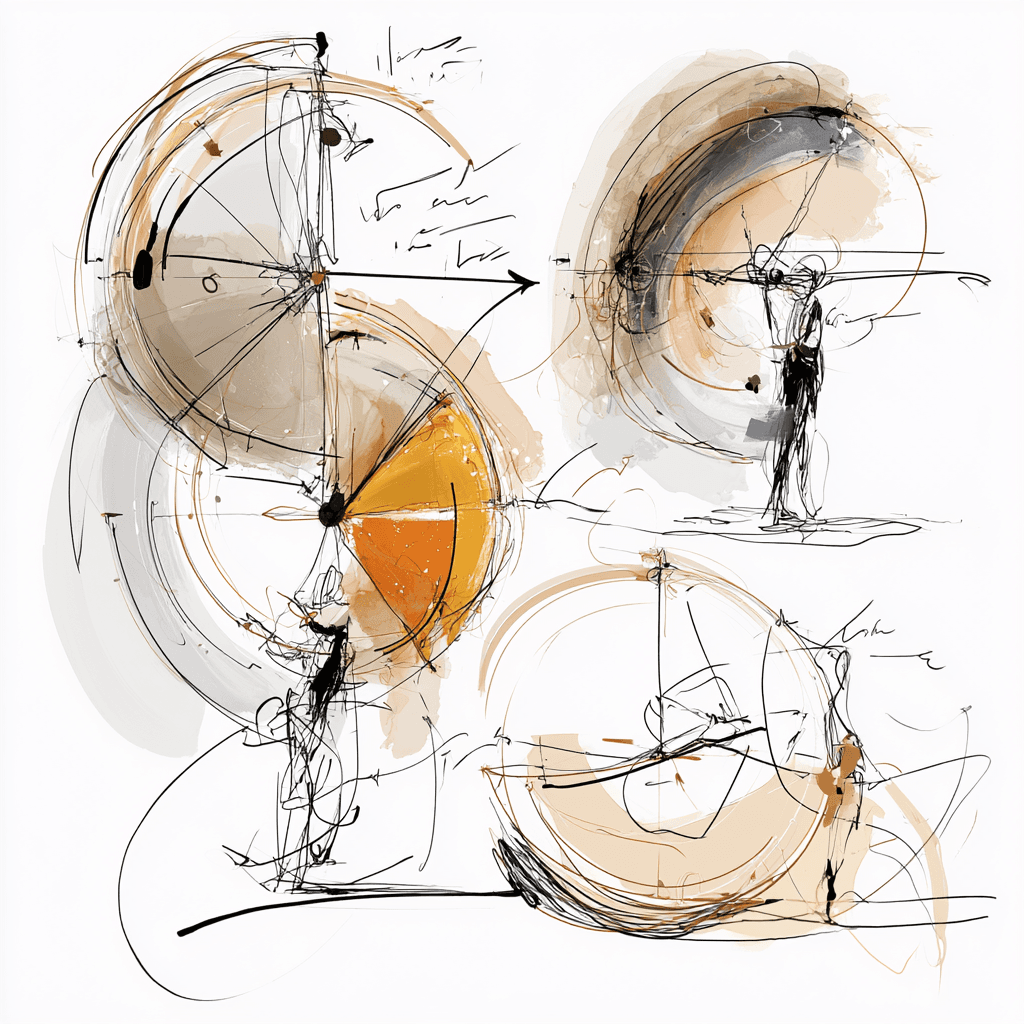
Real learning, then, is always multidimensional, engaging the whole person in a movement that unfolds along three axes at once:
Turning: learning, un-learning, and re-learning, which reshapes the personal and social habits that form us long before we reflect on them.
Direction: orienting, de-orienting, and re-orienting, which recalibrates our passions and redirects the heart-imagination toward its true home in God.
Volition: choosing, un-choosing, and re-choosing, which awakens and activates the will so that insight becomes embodied obedience.
The Shema and the Whole Person
Taken together, these three dimensions correspond to the deep grain of Hebraic epistemology, where right belief (orthodoxy), right passion (orthopathy), and right practice (orthopraxy) are held together as a single, integrated way of being in the world. Israel learned this from the Shema, the daily confession that the Lord is one and is to be loved with all the heart, soul, and strength (Deut 6:4–5), to which Jesus adds the mind (Mark 12:30), making the totality of the human person explicit. The oneness of God calls forth a corresponding oneness in the worshipper, a wholehearted gathering of every faculty around the one true centre of reality.
The church has long discerned a further resonance here in the three transcendentals of truth, goodness, and beauty. Truth claims the mind and draws us into faithful thinking; goodness claims the will and shapes ethical life; beauty claims the soul and attunes us to the glory that saturates creation and shines most fully in the face of Jesus Christ (2 Cor 4:6). Holistic metanoia touches all three, so that our thinking, our acting, and our loving are each turned, and turned together.
Knowing God with Passion
All three dimensions must be expressed with passion if we are to grow in the knowledge of God, because the biblical word for knowing, yada, carries the intimacy of covenant relationship, the kind of knowing that engages the knower entirely and transforms them in the process. Christ himself is the fullest embodiment of this integrated life, the Truth who is also the Way and the Life (John 14:6), the one in whom perfect understanding, perfect obedience, and perfect love were united in a single human existence offered wholly to the Father. To be conformed to him is to be drawn into that same wholeness, where head, heart, and hands move together in one fluid act of devotion, and repentance becomes the doorway into this kind of knowing, the continual turning that enlightens the eyes of the heart (Eph 1:18) so that we perceive ever more of the God who always exceeds what we have so far comprehended.
Covenant and Kingdom
This is what it means to grow within the covenant-kingdom of God. Covenant life is sustained through regular and ritualised remembrance and return: Sabbath and Passover, the prophetic summons to walk again in the ancient paths (Jer 6:16), and the Lord's Table, where we proclaim his death until he comes. Each of these practices weaves repentance into the very fabric of faith and faithfulness, so that returning to God becomes as natural and necessary to the people of God as breathing, and a people who remember well find themselves returning readily.
The kingdom, meanwhile, is God's reign breaking into history with a dynamism that continually outruns our categories. Jesus likened it to new wine requiring new wineskins (Mark 2:22), to a seed growing secretly through the night, to leaven working its way through the whole lump. Keeping pace with a reality so alive and so expansive requires an ongoing readiness to un-learn and learn afresh, simply to remain in step with what the King is doing and asking of his people in each new season. Here repentance takes on its missional character, becoming the means by which the church stays responsive to the Spirit who goes ahead of us into the world.
The Urgency of the Whole Turn
The hour calls for a church that repents with every faculty it possesses, whose convictions, affections, and choices are all being drawn into the gravitational field of Jesus at the same time and with the same intensity. Such a people become a living demonstration of the kingdom, a community whose very capacity to turn signals that the age to come has already begun to arrive in their midst. Every disciple, every leader, and every community is invited into this whole-hearted turning, starting today, with whatever God is currently teaching, unsettling, and reawakening in us.
Key Takeaways
Repentance is a lifelong posture: metanoia describes the entire life of the disciple, an ongoing movement of growth and return.
Learning moves in three directions: learning, un-learning, and re-learning together keep the disciple teachable before God.
Turning engages habit, heart, and will: holistic repentance reshapes our practices, reorients our passions, and activates our choices.
The Shema integrates the whole person: orthodoxy, orthopathy, and orthopraxy, along with truth, goodness, and beauty, are held together in love for the one God.
Covenant and kingdom both require turning: covenant sustains us through remembrance and return, and the kingdom stretches us to keep learning in step with the King.