


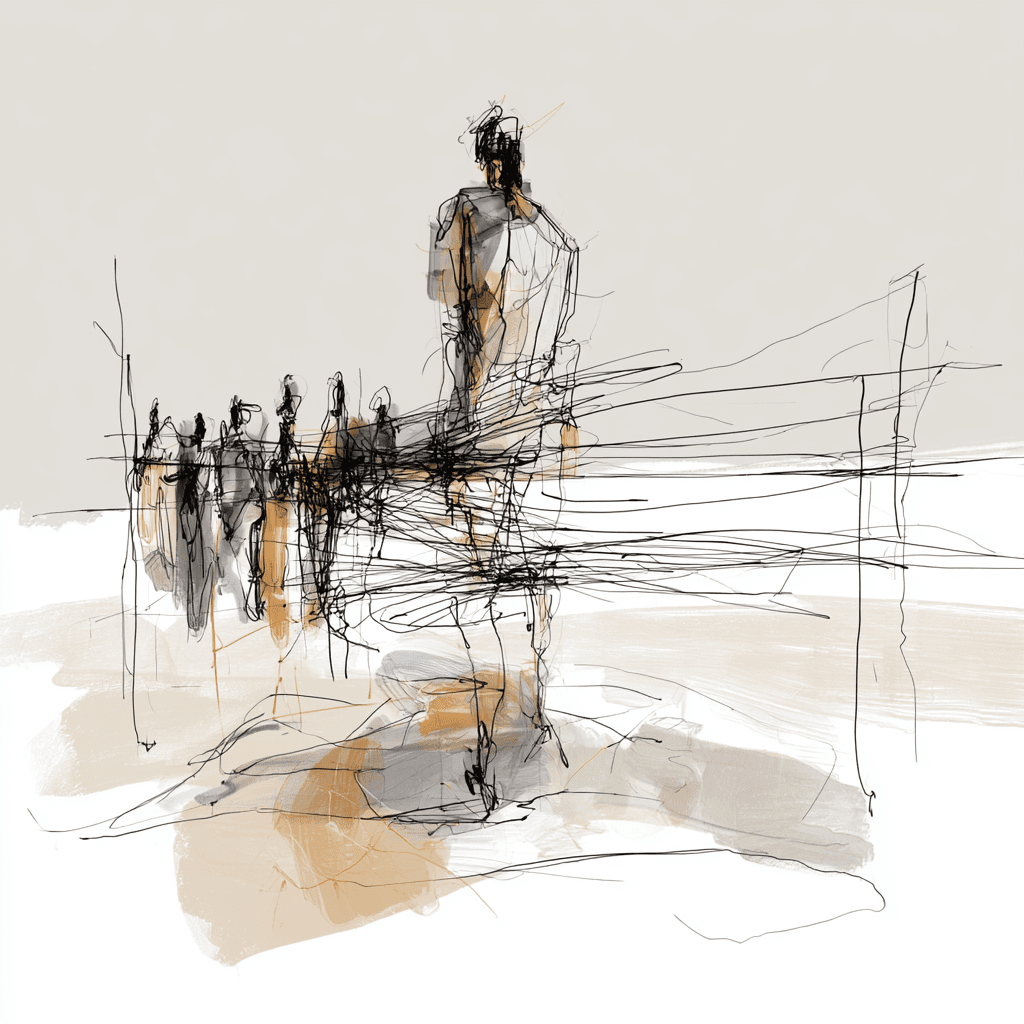
There is a key idea I borrowed from anthropology when I was trying to discern what conditions and dynamics need to be present and active for authentic, transformative Jesus movements to emerge. This became a central insight in what would eventually become my key book, The Forgotten Ways. And that key idea is called liminality and communitas. Victor Turner initially used the term liminality to describe the threshold experience that tribal peoples pass through in their rites of passage, the moment when a young person is taken from the familiar structures of home and status and led into a space where the old identity has been set aside and the new one has not yet fully arrived, a space of genuine ambiguity in which normal categories loosen their hold and something new becomes possible that could not have emerged inside the settled arrangements of ordinary life.
Turner called liminality-communitas a realm of pure possibility, and the phrase deserves to be taken with full theological seriousness, because when we open the Scriptures with this lens in hand we discover that the whole biblical story is threaded through with exactly this kind of threshold experience; from Abram leaving his father's house for a land he has only been promised; through the wilderness wanderings of a whole liberated slave people learning to trust a God they cannot yet see clearly; through the exile that reshaped Israel's entire relationship with the Lord; through the itinerant and homeless ministry of Jesus who had nowhere to lay his head; through the beatings and shipwrecks that mark the apostolic ministry of Paul; all the way into the scattered and often persecuted communities of the early church whose story in the book of Acts reads like an unfolding adventure precisely because it was one. Liminality, understood in this way, is not a strange or marginal idea that we import from social science and awkwardly graft onto our theology. It names something that God's people have always known in their bones, a condition that the Lord seems to love using as the very soil in which revelation, transformation, and mission take root and grow.
This matters enormously for congregations today, because so much energy in contemporary church life has gone into the careful removal of exactly this kind of threshold experience from the corporate life of God's people, building instead a form of church that specializes in predictability, comfort, and the careful management of risk, so that the gathered community becomes a place where nothing much is required of anyone beyond attendance and mild affirmation. Recovering liminality as a normal and even necessary dimension of congregational life offers a way back into the kind of generative, Spirit-filled existence that Scripture and history both describe as characteristic of movements that God has used to change the world.
Four dimensions of that generative life deserve particular attention: the capacity for ecclesial innovation, the deep comradeship that Turner named communitas, the quality and urgency of a community's praying, and the felt, embodied sense of being caught up in what God himself is doing in the world.
Liminality and the Wellspring of Innovation
Innovation in the life of the church has too often been imagined as a matter of technique, as though fresh expressions of ministry could be produced through better programming, sharper branding, or more creative worship design applied to congregations that otherwise remain safely inside their existing structures and assumptions. Turner's insight about the prophets and artists he called 'edge-people' points toward something quite different, describing those individuals and communities who live near the margins of established systems and who therefore see possibilities that people comfortably situated at the center simply cannot perceive, because seeing those possibilities requires standing somewhere the center has never had to stand.
The church's most fruitful seasons of imagination have almost always arisen precisely at these edges, in the collision between the gospel and cultures, needs, and questions that the existing models were never built to address, forcing communities into a posture of genuine listening and improvisation that no amount of strategic planning conducted safely inside familiar walls could ever produce on its own.
When a congregation places itself at a real boundary, whether that boundary is geographic, cultural, or relational, it is placed by that very act into the kind of open, unscripted space where the Spirit has room to surprise a people with fresh forms of faithfulness, because the old answers no longer quite fit the new questions being asked of them there. Ecclesial innovation, in other words, is far less a matter of clever invention than of location, of a community being willing to place itself where the map has run out and where the only faithful response is to attend closely to what God might be doing in a situation that none of the received wisdom anticipated.
Liminality and the Birth of Communitas
Turner paired liminality with a companion word, communitas, to describe the intensified bond of fellowship that forms among people who pass through a threshold experience together, discovering in the process a solidarity that has nothing to do with mere proximity or shared preference and everything to do with genuine mutual need. Communitas grows where people must actually depend on one another to make it through, where every person's contribution is required rather than merely welcomed, and where the ordinary markers of status and role that structure everyday community begin to matter far less than the shared task at hand.
This is why the deepest experiences of Christian fellowship recorded throughout church history so consistently arise in conditions of hardship, persecution, and marginality rather than in conditions of settled security, from the underground gatherings of the early church meeting under threat of arrest to the scattered networks of the Chinese house church movement enduring decades of suppression, each of these communities discovering a quality of belonging together that congregations living in comfort and safety have to work very hard to manufacture through programming alone.
A congregation that wants to grow in the direction of genuine communitas will therefore need to build shared experiences of real risk into its ordinary life, sending small teams together into situations that require them to listen, adapt, and serve in ways that expose their limitations and call forth gifts from people who might otherwise have remained quietly on the sidelines. People discover one another in a new register entirely once they have had to trust each other in a place where the outcome was genuinely uncertain, and congregations that make room for this kind of shared threshold experience find that belonging deepens in ways that no amount of small-group curriculum, however well designed, could accomplish on its own.
Liminality and the Renewal of Prayer
The quality of a community's prayer life bears a close and often overlooked relationship to how much liminality that community allows itself to experience, because prayer that arises from genuine need carries a different weight and urgency than prayer that arises from comfortable routine.
Scripture's most theologically fertile seasons of revelation cluster consistently around moments of extremity, the patriarchal wanderings, the exodus and wilderness years, the exile in Babylon, the itinerant ministry of Jesus, the missionary hardships of Paul, each of these threshold experiences producing some of the richest prayers and deepest disclosures of God's character found anywhere in the biblical text, because people who have been brought to the end of their own resources learn to pray with an honesty and dependence that settled security rarely calls forth.
A congregation whose corporate life consists mainly of managed, predictable activity will tend to develop a prayer life that mirrors that same managed predictability, polite and habitual rather than urgent and expectant, simply because there is little in the actual texture of that community's life that requires anything more from God than continued maintenance of what already exists. Congregations that place themselves in situations of genuine risk and uncertainty, by contrast, discover that prayer becomes something closer to what it was for the apostolic band described in the book of Acts, a matter of real dependence offered by people who know that the outcome of what they have undertaken rests entirely in God's hands and cannot be secured through their own competence.
Liminality restores to prayer the very quality that gives it its biblical shape, turning it from a devotional exercise practiced alongside an otherwise self-sufficient community into the essential lifeline of a people who have deliberately placed themselves somewhere they cannot survive without God showing up.
Liminality and the Felt Sense of Participation in the Mission of God
Perhaps the deepest gift that liminality offers a congregation is the recovery of a felt, embodied sense of involvement in the ongoing mission of God in the world, the missio Dei that Scripture presents as the great work of redemption that the Father has been carrying out since before the foundation of the world and into which the church has been invited as a genuine participant rather than a mere spectator.
A congregation whose life is organized entirely around the maintenance of internal programs will inevitably experience its faith primarily as a private matter, something practiced and consumed within the boundaries of its own gatherings, even when its stated theology affirms a much larger vision of what God is doing in history.
Placing a congregation at a genuine threshold, sending its people into real encounter with need, brokenness, and unfamiliar cultural terrain, restores the sense that this community's story is caught up inside a much larger story that God himself is authoring, a story that began long before this congregation existed and will continue long after, and into which this particular gathering of disciples has been graciously invited to play a real part.
This is precisely the dynamic visible throughout the book of Acts, where a scattered, threatened, and often homeless community of believers experienced their mission not as a program they were running but as a movement they had been swept up into, carried forward by a Spirit whose initiative consistently outpaced their own planning and whose surprises kept reminding them that the mission belonged to God before it belonged to them. Congregations that recover this sense of participation discover a vigor and expectancy in their common life that no amount of internal programming can produce, because they have come to know experientially rather than merely doctrinally that they are caught up in something vastly larger than themselves, something that God is doing in the world with or without their cooperation and into which they have been graciously welcomed as genuine co-laborers.
A Summons Toward the Threshold
Recovering liminality as a normal feature of congregational life is ultimately a summons to become again the kind of pilgrim people that Scripture consistently describes God's people as being, a community willing to leave behind the settled securities that have come to define so much of contemporary church life and to step together into the kind of threshold space where innovation becomes possible, where communitas takes root, where prayer regains its urgency, and where the felt sense of participation in God's larger mission comes alive once more. This is not a call to manufacture danger for its own sake, nor a romantic longing for hardship as though suffering itself were the point, but rather an invitation to place ourselves deliberately and wisely in the situations where dependence on God and one another becomes real again, trusting that it is precisely there, at the threshold, that the generative life of the church has always been found.