

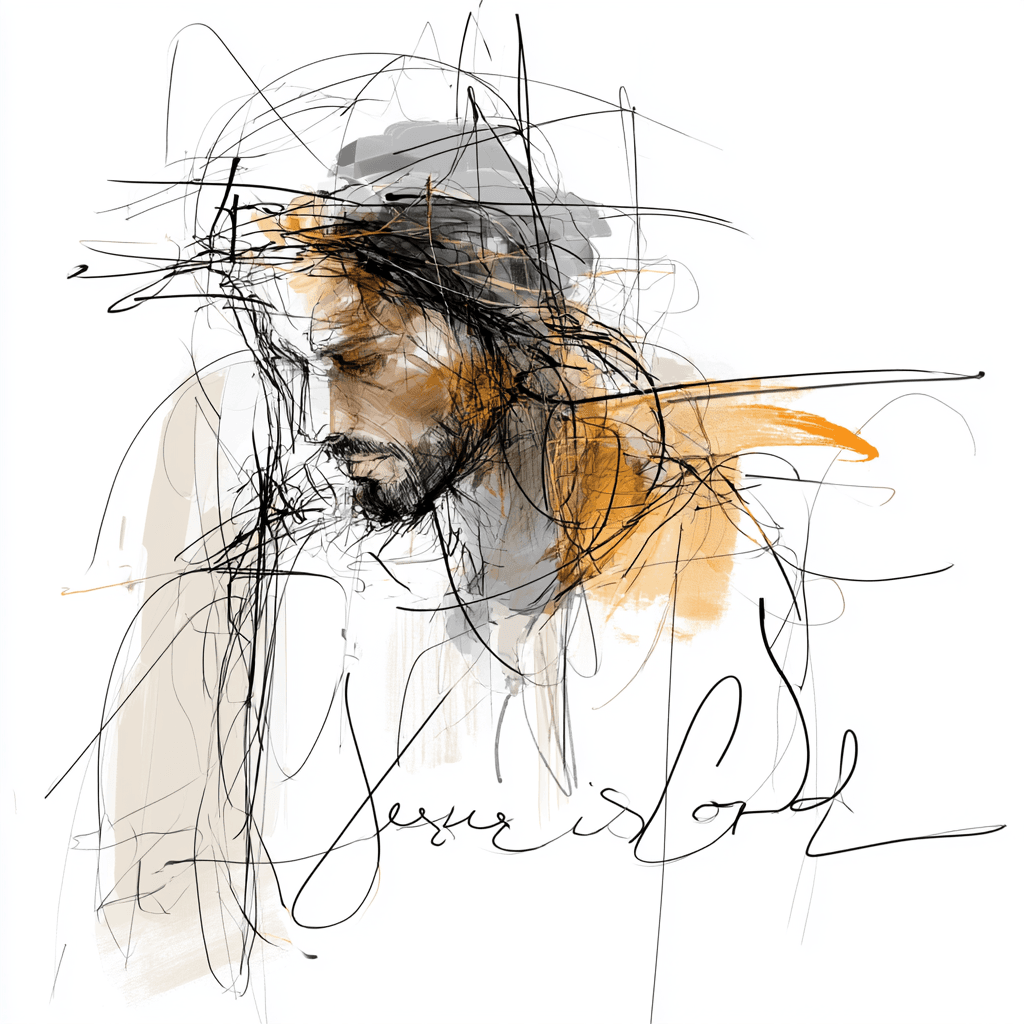
There is the paradox at the heart of missional ecclesiology: The more tightly the church is tethered to Jesus, the more freely it can move into the world. Its creativity, its adaptability, its capacity to incarnate the gospel in a thousand cultural forms, all of it flows from that one living connection. The church has one proper inner orientation, to be as transparent a vessel as possible for the form of Christ.
"As the Father has sent me, so I send you." — John 20:21
Trace the great missionary surges of Christian history and a curious pattern surfaces. The Celtic missionaries wandering Europe with just a psalter and a staff, the Moravians of Herrnhut sending ordinary craftsmen to the Caribbean and Greenland, the Chinese house churches multiplying under persecution into tens of millions: each displayed a breathtaking capacity for cultural improvisation, and each drew that genius from a single-minded preoccupation with Jesus. The movements that travelled furthest were the ones that held most closely to him.
This reflects a generative logic built into the very nature of the Church, one I have long expressed in a simple formula: Christology determines missiology, and missiology determines ecclesiology (X>M>E) [The Forgotten Ways and ReJesus] The Church that recovers this sequence, and returns to its source again and again, discovers a living paradox at the heart of its existence: the more tightly it is tethered to Jesus, the more freely it can move into the world.
Christology as the Originating Reality
The Church begins with a person: Jesus of Nazareth, who called disciples, embodied the reign of God, went to the cross, was raised by the Father, and now reigns as Lord, present to his people by the Spirit. He is the image of the invisible God, the one in whom all things hold together, and the head of the body, the Church (Col. 1:15–18), given as head over everything for the Church, which is his fullness (Eph. 1:22–23). Christology—every thing we can say about Jesus, from his trinitarian essence, his pre-existence, the election and formation of a messianic people Israel, Incarnation, teaching and model, death, resurrection, return, and reign—is the source, centre, norm, and determining reality of the Church's existence. Every model, system, and strategy takes its place downstream from him and draws whatever authority it carries from its fidelity to him.
Christology Determines Missiology
On the evening of the resurrection the risen Lord shows his wounds, breathes on his disciples, and says, "As the Father has sent me, so I send you" (John 20:21). Everything turns on that small word as. The Church's mission is patterned on, and continuous with, the sending of the Son. So before the Church asks how to reach a neighbourhood or engage a culture, it asks how Jesus relates to the Father, how he embodies the Kingdom, how he moves toward the margins, and how he forms and sends his disciples. Mission is participation in the missio Dei, carrying the same missional-incarnational impulse that brought the Word into flesh. Its source is Christ, its pattern is his life, and its measure is his likeness.
Missiology Determines Ecclesiology
A sent people requires forms of life fitted to its sending. Its structures, practices, leadership, and communal rhythms all emerge from and serve its Christ-derived vocation. In Ephesians 4 the ascended Christ gives apostles, prophets, evangelists, shepherds, and teachers so that the body might grow into the whole measure of his fullness (Eph. 4:11–13); the fivefold ministry is the ministry of Jesus himself distributed through his people. Every inherited structure and tradition holds its legitimacy as a servant of the mission, honoured where it carries the life of Jesus and reshaped where it obstructs it. Ecclesiology is the provisional, adaptable form of a people whose identity rests in Christ and whose life is given over to his mission.
Always Re/Calibrating
This is what we call ReJesus—always returning to Dr. Jesus for the checkup; to see whether we are properly aligned. And so the X>M>E sequence is recursive, and ecclesiology must keep turning back to Christology, because every community of faith lives under a gravitational pull toward self-reference. Buildings need upkeep, programmes need staffing, traditions need guarding, and the community's energy gradually curves inward. Ecclesiology quietly migrates to the front of the sequence: the Church starts with its structures, asks what mission they can support, and then what kind of Jesus will legitimate that mission, until it finds itself worshipping a Christ fashioned in the image of its institutional needs.
Renewal reverses the inversion. Francis embracing the leper, the Reformers recovering the sufficiency of grace, the early Methodists rediscovering holiness among the poor: each time a fresh vision of Christ released fresh mission, and that mission called forth new forms of church.
The Paradox of Rootedness and Freedom
"I am the vine; you are the branches. If you remain in me and I in you, you will bear much fruit" (John 15:5). The branch bears fruit shaped by its soil and season, and always carrying the life of the vine.
This is the paradox at the heart of missional ecclesiology. The more tightly the church is tethered to Jesus, the more freely it can move into the world. Its creativity, its adaptability, its capacity to incarnate the gospel in a thousand cultural forms, all of it flows from that one living connection. Balthasar puts it plainly: the church has one proper inner orientation, to be as transparent a vessel as possible for the form of Christ.
The Church's identity remains constant, for Jesus Christ is the same yesterday, today, and forever (Heb. 13:8), and its expressions remain endlessly adaptable, because that same Christ seeks to be made flesh among every people. Paul became all things to all people precisely as one who lived under the law of Christ (1 Cor. 9:19–23). Freedom is the fruit of fidelity, and the anchor makes the voyage possible.
The Drift of Displacement
Displacement seldom announces itself. Good things gradually assume the place that belongs to Christ alone: denominational identity, institutional preservation, theological systems, political ideologies, cultural preferences, and mission methodologies. Each has a legitimate subordinate role, and each, once it becomes the centre, bends the Church's mission and identity around itself. A Church can grow highly organised, doctrinally confident, and culturally influential while becoming progressively less transparent to the form of Christ. Ezekiel watched the temple rituals continue as the glory of the Lord paused at the threshold and departed (Ezek. 10), and the risen Christ stands outside the door of prosperous Laodicea and knocks (Rev. 3:20).
Formed, Sent, and Free
The Church always renews itself by returning to Jesus Christ. There is no other center that can give proper weight to both the identity as well as the purpose of the church in the world. A renewed vision of Christ generates a renewed understanding of his mission, which in turn calls forth new and fitting forms of ecclesial life. As the inherited forms strain across the Western world, the constant temptation is to double down on prevailing approach by reaching for the next technique or by restructuring. The deeper invitation is to behold again the one whose form gave the Church its life. The more completely the Church is formed by him, the more fully it can be sent by him, and the more freely it can become whatever the gospel requires in the world.
There is the paradox at the heart of missional ecclesiology: The more tightly the church is tethered to Jesus, the more freely it can move into the world. Its creativity, its adaptability, its capacity to incarnate the gospel in a thousand cultural forms, all of it flows from that one living connection. The church has one proper inner orientation, to be as transparent a vessel as possible for the form of Christ.
Key Takeaways
Christ is the originating reality. Every model, system, and strategy takes its place downstream from him.
Mission is read off the life of Jesus. The Church is sent as the Son was sent.
The Church takes its shape from its sending. Its forms serve the mission and stay responsive to it.
Renewal is recursive. The Church keeps returning to Christ to renew its mission and its forms.
Rootedness generates freedom. Tethered to Jesus, the Church moves freely into the world.