The missional posture becomes real only when translated into concrete daily habits, intentional neighborhood audits, and accountable team rhythms.
In brief
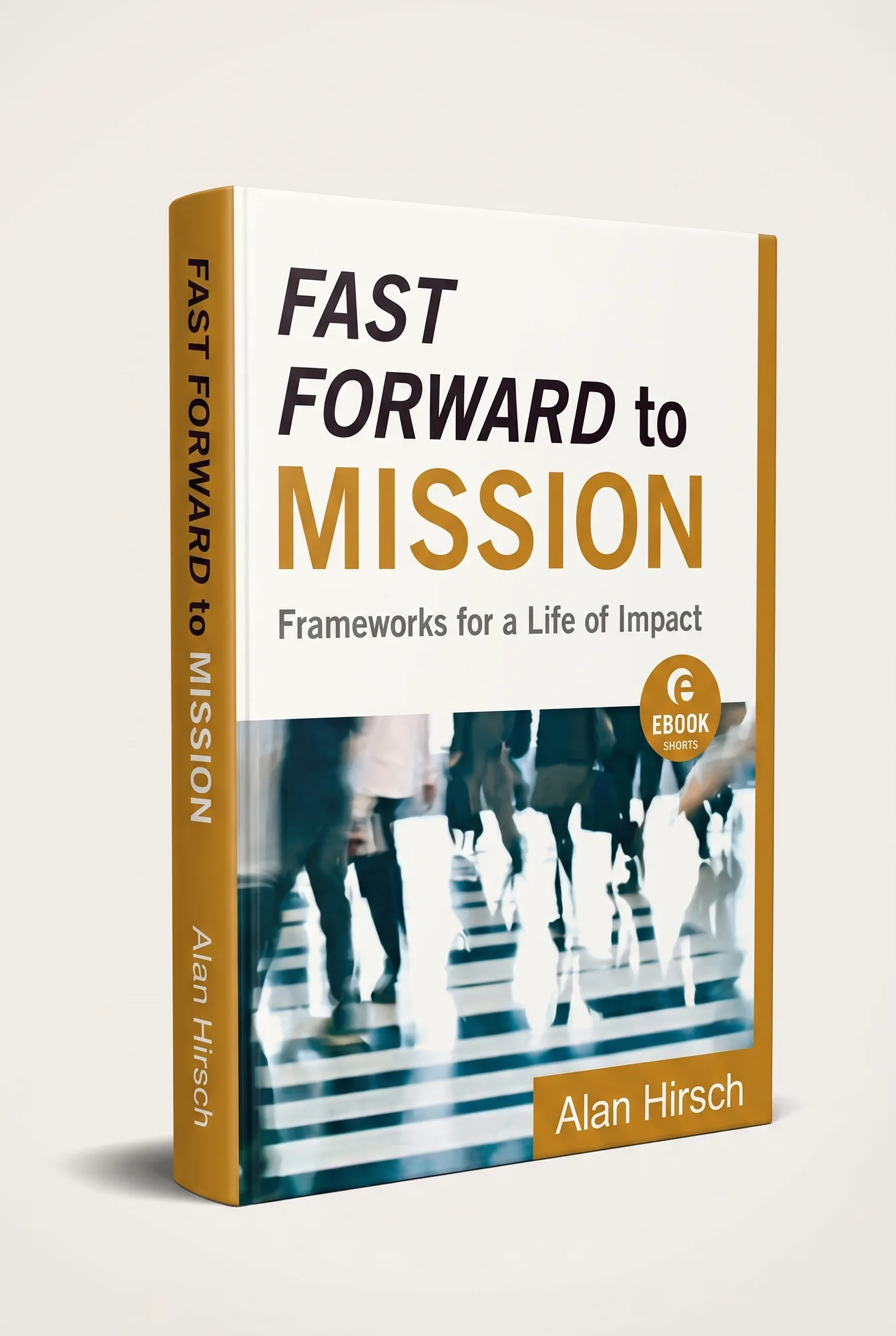
Fast Forward to Mission (2011), written with Lance Ford, is the field companion to Right Here, Right Now. It turns small groups from discussion circles into action labs that move through briefing, field exercise and debriefing. Teams covenant around proximity, frequency and spontaneity, map their area with a neighborhood audit, and work through six labs — listening, finding a third place, the table habit, uncovering the quest, serving with local partners, and establishing a rhythm — so that everyday mission becomes shared habit.
On this page
Right Here, Right Now gave everyday Christians the theological permission to see their neighborhoods as their parish. This field guide asks how a small group of friends actually begins living that out next Tuesday.
Within months of publishing Right Here, Right Now, Lance Ford and I encountered a familiar dynamic: readers were excited by the vision of incarnational neighborliness, but they quickly stalled when trying to cross the chasm from inspirational reading to collective practice. Stepping out into a secular neighborhood feels awkward. Without shared rhythms, practical exercises, and intentional debriefing, good intentions degenerate into standard church social gatherings.
Fast Forward to Mission was created to be the practical field companion that bridges that exact gap.1
§ 1
Why This Book Exists
The shift toward missional Christianity is not primarily an intellectual adjustment; it is an embodied habituation.
When people attempt to transition from consumer-oriented church attendance to active neighborhood presence alone, they almost always retreat when they hit the first barrier of awkwardness or fear. They need a team. And that team needs a shared playbook—a structured track that guides them through the discomfort of meeting their neighbors, listening to local stories, and practicing radical hospitality.
Lance and I designed Fast Forward to Mission as a concise, highly focused training manual for small groups, missional communities, and church planting teams. It strips away academic discourse and replaces it with structured action labs, guided field experiments, and communal debriefing tools designed to be worked through together over several weeks.2
§ 2
The Central Reframe: From Discussion to Habituation
The core reframe of Fast Forward to Mission is that missional capacity is forged through shared muscle memory rather than informational study.
Traditional church small groups gather in living rooms to discuss a curriculum or dissect a sermon. They talk about mission, study biblical passages on mission, and pray for distant missionaries—while remaining entirely insulated from the physical neighborhood surrounding the house they are meeting in.
This workbook inverts that habit. It insists that the small group meeting is an action lab:
- The Briefing: Learning a single foundational posture (e.g., listening, proximity, table hospitality).
- The Field Exercise: Going out into the streets, local diners, parks, and front yards to practice that posture.
- The Debriefing: Gathering back together to process what happened, where God was encountered, and what fears were surfaced.
Discipleship happens in the debriefing of shared missional action.3
§ 3
What the Book Actually Does
Fast Forward to Mission is structured around two primary pedagogical brackets, moving teams from conceptual orientation into lived practice.
Part One
pp. 11–37
Briefing Right Here
Lays the essential groundwork for team action. It summarizes the core theology of the missio Dei and the priesthood of all believers into tight, highly digestible briefings. It establishes team covenants around three core practices:
- Proximity: Choosing to spend consistent time in shared physical spaces.
- Frequency: Becoming recognizable regulars in the third places of the community.
- Spontaneity: Cultivating spiritual margin so that interruptions are received as divine invitations.4
The section includes practical tools for conducting a "Neighborhood Audit"—mapping the local coffee shops, public parks, community centers, and neglected corners where people gather.
Part Two
pp. 44–65
Debriefing Right Now
Provides the operational debriefing guides for six sequential action labs:
- The Art of Listening: Walking the neighborhood without an agenda, observing the social fabric, and listening to the ambient cries and joys of the place.
- Finding the Third Place: Identifying and adopting a local public space where team members can become known as friendly, consistent presences.
- The Table Habit: Moving hospitality from private dining rooms to shared, open-table meals that welcome strangers and neighbors.
- Uncovering the Quest: Learning to listen to pop culture, local events, and neighborhood struggles to identify the spiritual search hidden beneath everyday routines.
- The Serving Project: Partnering with existing local civic or charity organizations rather than inventing competitive church programs.
- Establishing the Rhythm: Codifying personal and communal rules of life to sustain everyday mission over the long haul.5
§ 4
Where This Book Sits in the Larger Body of Work
Fast Forward to Mission belongs to the companion genre within this body of work, functioning alongside The Forgotten Ways Handbook (2009) and Disciplism (2014).
It does not introduce new theological concepts; it operationalizes the ecclesiological vision of Right Here, Right Now (2011). Where The Forgotten Ways Handbook provides diagnostic instruments for systems-level church leaders dealing with the full mDNA framework, Fast Forward to Mission is dialed directly into the weekly rhythms of grassroots practitioners and neighborhood small groups.
§ 5
Who Needs to Read This
- The small group leaderwho wants to stop running traditional Bible study circles that never impact the surrounding community.
- The church planterpreparing a core launch team to inhabit their target neighborhood before launching public Sunday services.
- The missional community coachseeking a turn-key, actionable field guide for training leaders in basic neighborliness.
- The team of Christian friendswho want to live on mission together but need a practical, low-barrier roadmap to get started.
§ 6
Where to Go Next
Fast Forward to Mission is designed to be used in tandem with Right Here, Right Now (2011)—which provides the full theological foundation and narrative case studies.
For groups ready to expand their neighborhood practice into a full-scale organic network, The Forgotten Ways Handbook (2009) provides the next level of organizational and mDNA tools.
Notes
5 notes
- The origin and purpose of the field guide: Fast Forward to Mission, Introduction, pp. 5–10. ↩
- The necessity of collective practice in neighborhood mission: Fast Forward to Mission, "Briefing Right Here," pp. 11–24. ↩
- Shifting the small group from lecture room to action lab: Fast Forward to Mission, pp. 25–37. ↩
- The core incarnational habits (proximity, frequency, spontaneity): Fast Forward to Mission, pp. 30–35. ↩
- Action labs and neighborhood debriefing frameworks: Fast Forward to Mission, "Debriefing Right Now," pp. 44–65. ↩
Works cited
Built from the notes · details from the books record
Hirsch, Alan. Fast Forward to Mission: A Missional Imagination for the Church in a Post-Christian World. 2011.
this book · cited 5× · notes 1, 2, 3, 4, 5
Sources drawn from
Fast Forward to Mission (all chapters: "Briefing Right Here," "Debriefing Right Now," "Action Labs & Neighborhood Audits"); Right Here, Right Now (Putting the Extra in the Ordinary, Salt Blocks and Salt Shakers); The Forgotten Ways Handbook (Missional-Incarnational Impulse).
How these ideas evolved
Each concept in this book, and every book it runs through.
- Missional-Incarnational Impulse
Applies here
- Disciple Making
Applies here
Related works
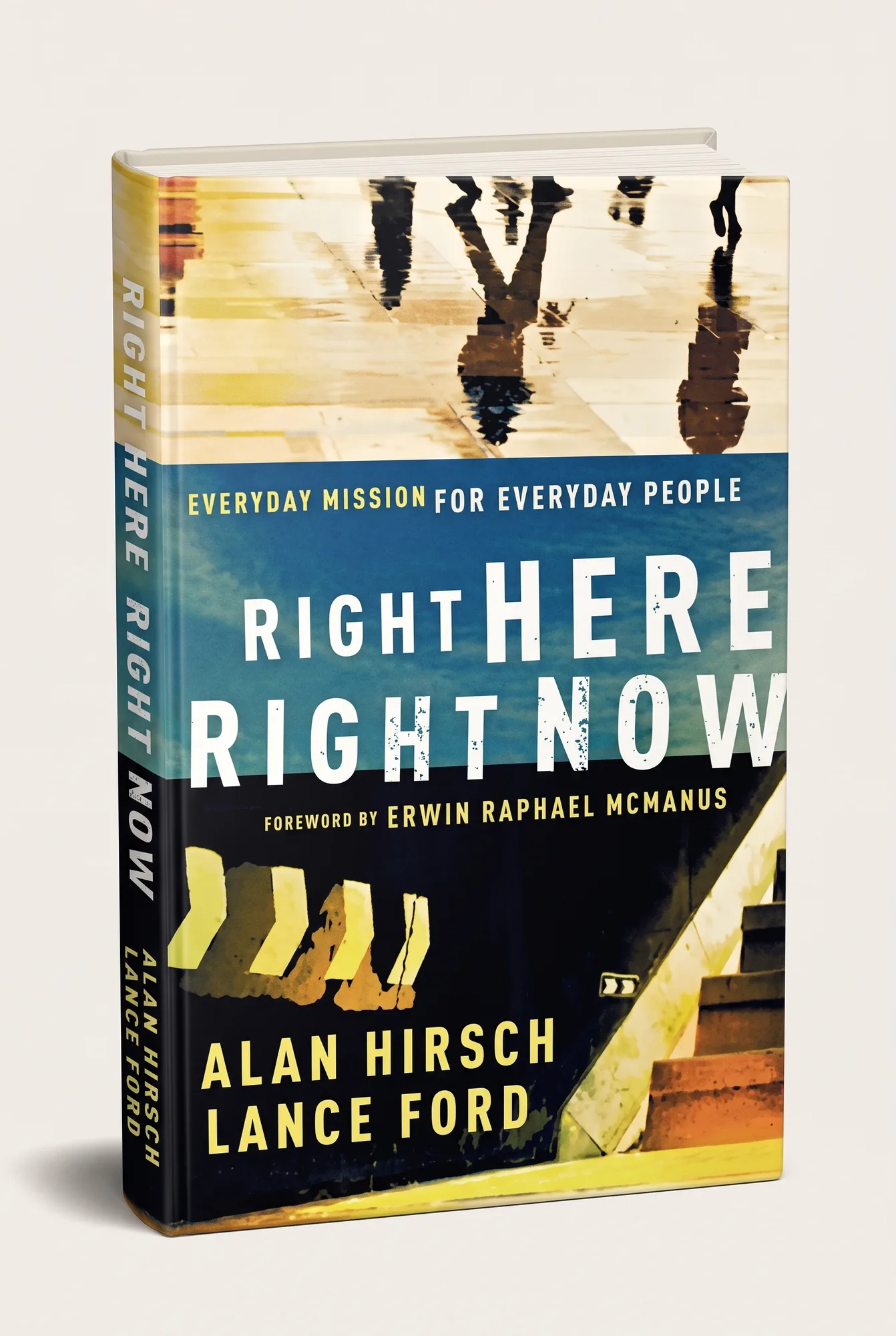
- 06 · 2011Right Here, Right NowShares: Missional-Incarnational Impulse, Disciple Making
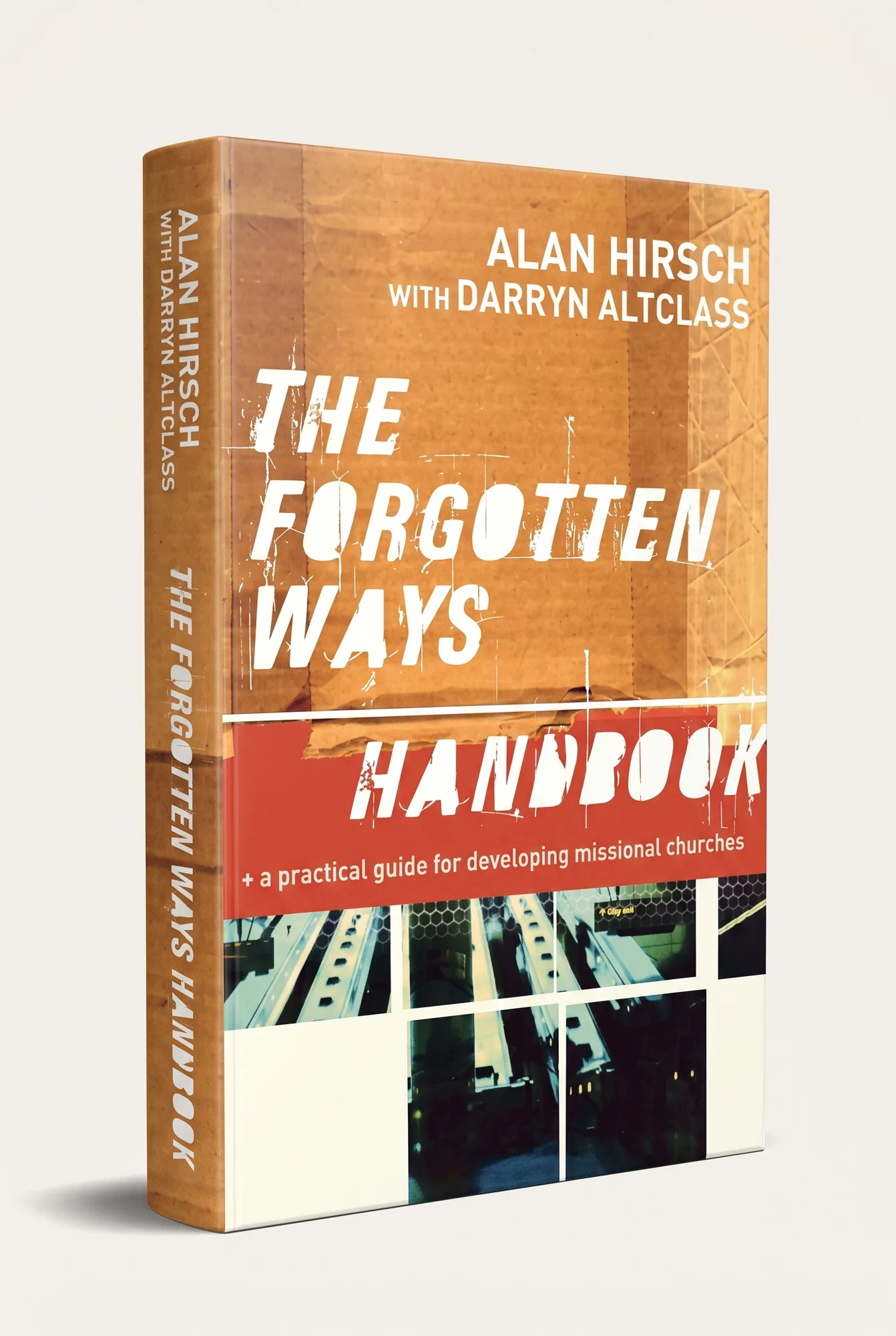
- 03 · 2009The Forgotten Ways HandbookShares: Disciple Making, Missional-Incarnational Impulse
- 05 · 2010UntamedShares: Disciple Making, Missional-Incarnational Impulse
- 04 · 2008ReJesusShares: Disciple Making, Missional-Incarnational Impulse