Repentance is not feeling guilty about the past; it is the radical, ongoing renovation of how we see, think, feel, and inhabit reality in Christ.
In brief
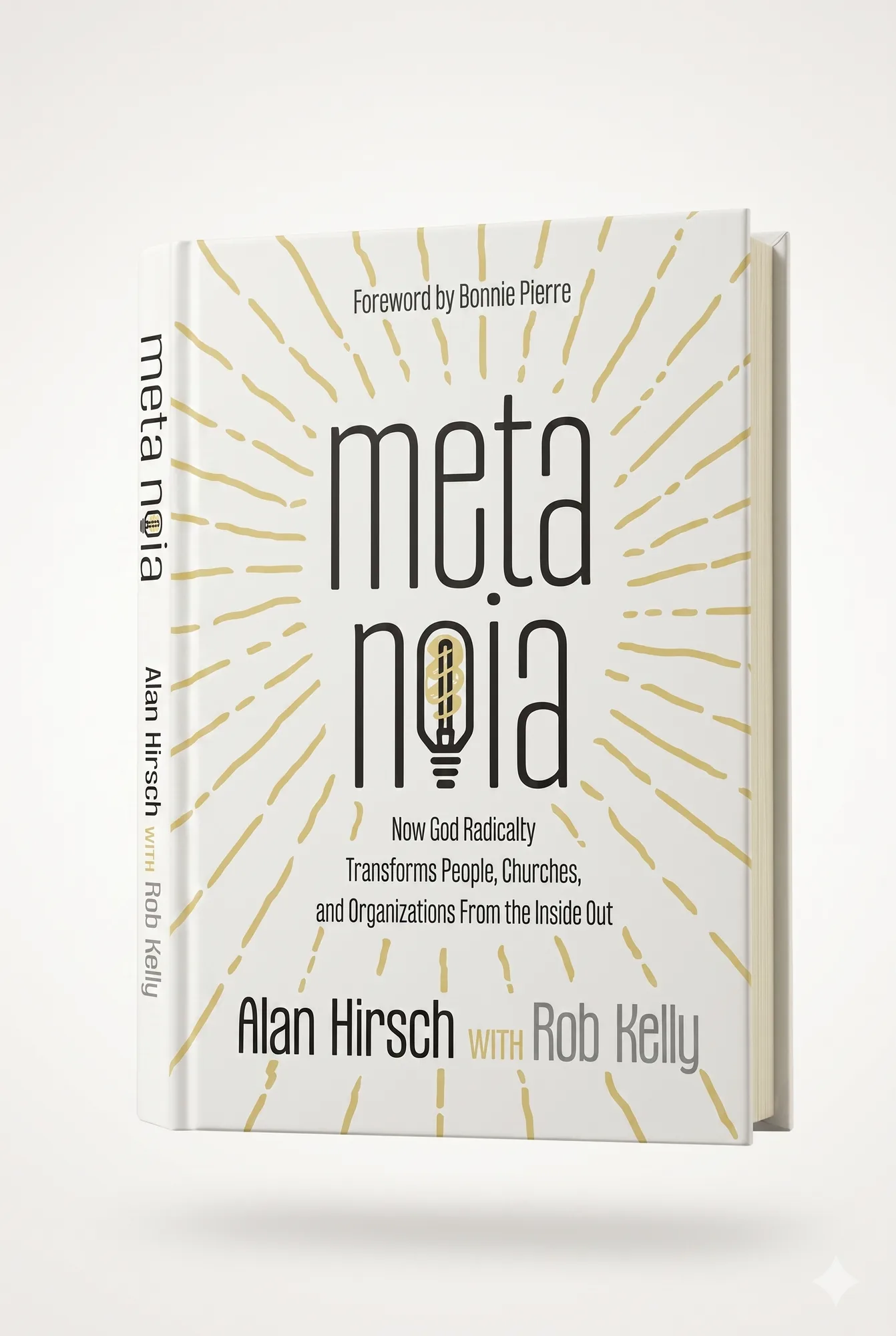
Metanoia (2023), written with Rob Kelly, reclaims repentance from guilt management. The Latin translation of metanoia as poenitentia shifted the word toward penance and remorse; the book recovers it as moving beyond our current mind to inhabit the mind of Christ. Written after the upheavals of the early 2020s, it treats metanoia as continuous renewal across mind, heart and action, maps a four-stage journey from dissonance to integration, and offers practices for people, churches and organizations.
On this page
The word repent has become one of the most toxic, misunderstood, and emotionally damaged words in the English language. In contemporary religious culture, it evokes images of angry street preachers, guilt-ridden moralism, weeping at altars, and self-flagellation.
In 2023, Rob Kelly and I published Metanoia. We wrote this book in the turbulent wake of global pandemic, deep cultural polarization, and widespread ecclesiastical fracture. Across the Western world, millions of Christians were deconstructing their faith, leaving churches in droves, or feeling disoriented by the collapse of institutional certainty.
We recognized that the root of our crisis was an ancient linguistic and theological mistranslation. By reducing the Greek word metanoia to the Latin concept of poenitentia (penance, remorse, and behavioral punishment), the Western church replaced Jesus' explosive summons to cognitive and perceptual revolution with a system of religious guilt management. Metanoia was written to reclaim the radical, beautiful, and healing reality of biblical conversion: moving beyond our current mind to inhabit the mind of Christ.1
§ 1
Why This Book Exists
The early 2020s exposed the profound spiritual exhaustion of the Western church. Decades of political tribalism, moral scandals, and institutional defensiveness had produced what we call "the apocalypse of the ecclesial soul"—an unveiling of the spiritual shallowness that lay beneath our polished church programming.
Leaders everywhere were asking how to navigate this cultural transition. Some doubled down on authoritarian culture-war defensiveness; others abandoned the faith entirely.
Rob Kelly and I saw that neither reaction addressed the real challenge. What the church was experiencing was not a fatal ending, but a necessary death of our illusions. When Jesus began his public ministry with the declaration, "The time is fulfilled, and the kingdom of God is at hand; repent (metanoeite) and believe in the good news" (Mark 1:15), he was not issuing a threat. He was announcing an invitation into a radically new way of perceiving and inhabiting reality.
To navigate the post-Christendom era, the people of God do not need better political strategies or more clever marketing. We need what Paul called the total renewal of the mind (Romans 12:2). We need to undergo a continuous, life-giving, systemic metanoia.2
§ 2
The Central Reframe: Moving Beyond the Existing Mind
The foundational reframe of Metanoia is that true repentance is an epistemological and ontological breakthrough: metanoia is the radical shift from our existing worldview to the worldview of Jesus.
The Greek word metanoia is a compound:
- Meta: Beyond, across, higher, transformative (as in metamorphosis).
- Nous: The mind, the perceptive faculty, the seat of understanding and consciousness.
To metanoeo literally means to move beyond our current mind—to transcend the mental models, cultural scripts, and defensive narratives that keep us trapped in fear and self-preservation.
When Latin Christianity translated metanoia as poenitentia, the emphasis shifted entirely from perceptual transformation to emotional remorse and penitential works. Discipleship was reduced to moral accounting: try harder, feel bad when you fail, and perform religious duties to appease God.
Metanoia restores the biblical vision across three integrated dimensions:
- The Cognitive Dimension (The Mind): Shattering our shrunken mental paradigms to perceive reality as it truly is in the light of the gospel.
- The Affective Dimension (The Heart): Healing our deep emotional wounds, releasing bitter defensiveness, and learning to love as Christ loves.
- The Behavioral Dimension (The Actions): Living out an alternative kingdom ethic of justice, mercy, radical hospitality, and reconciliation.3
Metanoia is not something you do once to get saved; it is the permanent, joyful operating system of the disciple who is continuously being transformed into the image of Christ.
§ 3
What the Book Actually Does
Metanoia moves across nine chapters, weaving together biblical linguistics, developmental psychology, neuroscience, and spiritual formation.
Chapter 1
pp. 36–43
The Apocalypse of the Ecclesial Soul
Provides a sobering, unsparing diagnosis of the contemporary crisis in the Western church. The cultural disruptions of our era are an apokalypsis—an unveiling of the idols of power, consumerism, and institutional self-preservation that have colonized our hearts. Rather than mourning the loss of cultural privilege, we must welcome this crisis as the gracious mercy of God calling us to repentance.4
Chapters 2–3
pp. 46–74
Metanoi-Eh? & Why We Need to Repent
Chapter 2, "Metanoi-Eh?," does the foundational linguistic excavation, tracing the tragic historical shift from Greek metanoia to Latin poenitentia. Chapter 3, "Why We Need to Repent," exposes the epistemic trap: human beings are addicted to confirmation bias and self-justification. We naturally construct paradigms that protect our ego, and only the disruption of the Holy Spirit can break us out of our self-referential prisons.5
Chapters 4–5
pp. 79–125
Christo-Logic & Wholehearted Metanoia
Chapter 4, "Christo-Logic," establishes the normative center: Jesus Christ is the ultimate paradigm of God, humanity, and creation. To repent is to recalibrate our entire thinking around the logic of the cross and resurrection (1 Cor. 1:18–25). Chapter 5, "Wholehearted Metanoia," integrates neuroscience and spiritual psychology, demonstrating how true transformation requires the alignment of the intellect, the deep emotional gut (kardia), and bodily habits.6
Chapters 6–7
pp. 128–171
The Metanoia Journey & Paradigm
Chapter 6, "The Metanoia Journey," maps the four universal stages of cognitive and spiritual breakthrough:
- Dissonance: The breakdown of our inherited, inadequate paradigm.
- Crisis / The Liminal Void: Standing in the uncomfortable disorientation of not knowing.
- Illumination: The grace-filled encounter with a larger, Christ-centered reality.
- Integration: Embodying the new understanding in concrete community habits.
Chapter 7, "Paradigm," draws on Thomas Kuhn's philosophy of scientific revolutions to show how entire ecclesial systems undergo paradigm shifts.7
Chapters 8–9
pp. 176–215
Platformed & Practices
Chapter 8, "Platformed," critiques the celebrity culture and institutional defensiveness that prevents Christian leaders from practicing honest repentance. Chapter 9, "Practices," concludes the book with concrete spiritual disciplines for cultivating a permanent metanoic posture: contemplative prayer, truth-telling confession, cross-cultural table fellowship, and active peacemaking.8
§ 4
Where This Book Sits in the Larger Body of Work
Metanoia represents the latest flagship work in the twenty-year development of the Hirsch canon.
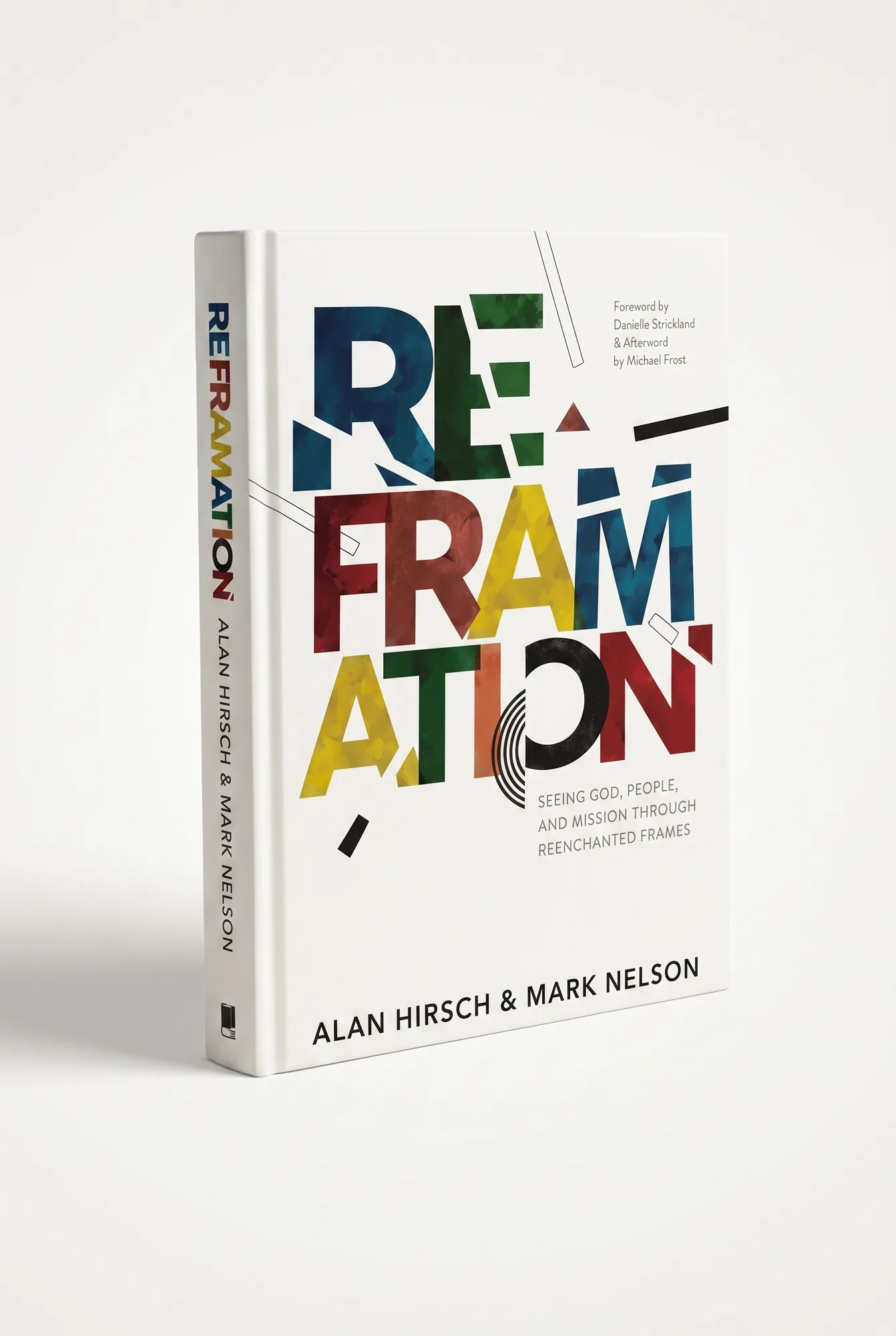
It serves as the natural companion and fulfillment of ReFramation (2018). Where ReFramation opened the doors of the aesthetic imagination, inviting readers into wonder, beauty, and cosmic re-enchantment, Metanoia provides the cognitive, psychological, and spiritual mechanics of how that transformation actually takes place in real human lives.
The book also brings the entire movemental arc full circle:
- The Shaping of Things to Come (2003) and The Forgotten Ways (2006) asked: What kind of church must we build?
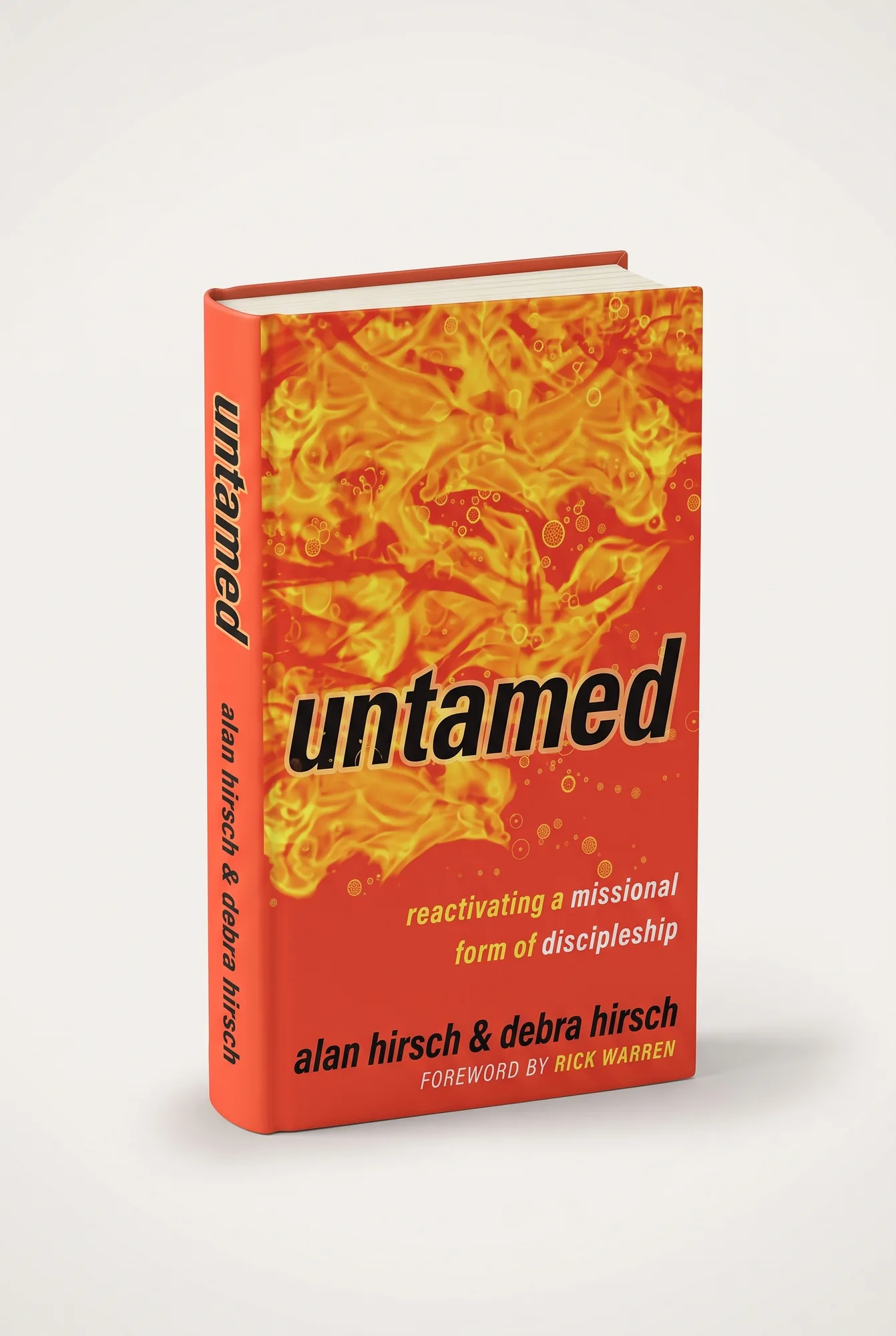
- ReJesus (2008) and Untamed (2010) asked: Who is the Jesus we follow, and what kind of disciples must we become?
- The Permanent Revolution (2012) and 5Q (2017) asked: What kind of organizational intelligence must we recover?
- Metanoia (2023) asks the ultimate root question: How must our minds, hearts, and worldview be continuously converted so that we can faithfully inhabit this calling?
§ 5
Who Needs to Read This
- The Christian in the midst of deconstructionwho is exhausted by fear-based dogma and religious guilt, seeking a healthy, life-giving biblical path toward reconstructive faith.
- The senior pastor or leadership teamnavigating intense cultural polarization, conflict, or institutional transition, needing a framework that moves beyond defensiveness.
- The spiritual director, counselor, or formation pastorseeking a robust integration of biblical repentance, psychological healing, and cognitive transformation.
- Any disciple of Jesuswho wants to break free from recurring negative patterns and experience the continuous, joy-filled renewal of the mind of Christ.
§ 6
Where to Go Next
For readers who want to explore the aesthetic and imaginative horizon of this renovated mind, ReFramation (2018, with Mark Nelson) is the direct companion.
For those wanting to see how communities of renewed disciples organize into viral apostolic movements, The Forgotten Ways (2006) remains the foundational roadmap.
Notes
8 notes
- The linguistic mistranslation of metanoia into Latin poenitentia: Metanoia, ch. 2, pp. 46–55. ↩
- The contemporary crisis as the apocalypse of the ecclesial soul: Metanoia, ch. 1, pp. 36–43. ↩
- The three dimensions of wholehearted metanoia (mind, heart, action): Metanoia, ch. 5, pp. 101–125. ↩
- Cultural polarization and the collapse of institutional certainty: Metanoia, ch. 1, pp. 36–43. ↩
- The epistemic trap and human cognitive confirmation bias: Metanoia, ch. 3, pp. 59–74. ↩
- Christo-Logic and the logic of the cross: Metanoia, ch. 4, pp. 79–95. ↩
- The four stages of the metanoia journey and Thomas Kuhn's paradigm shifts: Metanoia, ch. 6–7, pp. 128–171. ↩
- Practical spiritual disciplines for ongoing metanoia: Metanoia, ch. 9, pp. 203–215. ↩
Works cited
Built from the notes · details from the books record
Hirsch, Alan, and Rob Kelly. Metanoia: How God Radically Transforms People, Churches, and Organizations From the Inside Out. 100Movements, 2023.
this book · cited 8× · notes 1, 2, 3, 4, 5, 6, 7, 8
Sources drawn from
Metanoia (all chapters: "The Apocalypse Of The Ecclesial Soul," "Metanoi-Eh?," "Why We Need To Repent," "Christo-Logic," "Wholehearted Metanoia," "The Metanoia Journey," "Paradigm," "Platformed," "Practices"); ReFramation (The Great Reframation); Untamed (The Lying Mirror); ReJesus (existential monotheism); Thomas Kuhn (The Structure of Scientific Revolutions); Charles Taylor (A Secular Age).
How these ideas evolved
Each concept in this book, and every book it runs through.
- Metanoia
Introduces here
- Metanoia (2023)
- Jesus Is Lord
Develops here
- Disciple Making
Develops here