“Because of the latency of mDNA in every Christian and every church, the future is in the womb of the present. The possibility of movement lies at the heart of every church.”
In brief
The Forgotten Ways (2006) asks how the early church and the Chinese underground church multiplied without buildings, clergy or cultural privilege. Its answer is Apostolic Genius: a life force already latent in every church, carried by six interdependent elements of missional DNA (mDNA) — Jesus Is Lord, Disciple Making, the Missional-Incarnational Impulse, APEST Culture, Organic Systems, and Liminality and Communitas. The task is recovery, not acquisition. It is the map from which every later book explores one region.
On this page
Every church contains, somewhere in its genetic structure, everything it needs to become a movement.
That claim is either the most important thing you'll read today or the most implausible. Which it is depends entirely on what you think the church is — and where you think its power actually comes from. The Forgotten Ways, published in 2006, is the book that makes that claim with full theological seriousness and then builds the entire framework needed to understand it.
This is the book that introduced the concept of Apostolic Genius to the world. It is the most cited, most taught, most argued-over of all the works in this body of writing. And it is still, twenty years on, the place where the conversation has to start.
§ 1
Why This Book Exists
The question that launched The Forgotten Ways was deceptively simple: how did the early church do it?
The early Christian movement grew from an estimated twenty-five thousand to twenty million people in two hundred years. They were members of an illegal religion. They had no church buildings. They had no formal institution or professional clergy. They had no seeker-sensitive services, no seminaries, no commentaries. They actually made it harder to join — by the late second century, aspiring converts had to undergo a significant initiation period to prove they were worthy of joining the community of the baptized.1 And yet they grew, and grew, and grew.
Before that example could be dismissed as a freak of history, a second story demanded attention: the underground church in China. When Mao Zedong took power, the church in China numbered approximately two million people, largely modelled on Western institutional forms. What followed was one of the most systematic persecutions of Christians in recorded history. All foreign missionaries were expelled. Church property was nationalized. Senior leaders were killed. Second and third-tier leaders were killed or imprisoned. Public meetings of Christians were banned under threat of death or torture. The explicit aim of the Cultural Revolution was to obliterate Christianity from China.2
When the Bamboo Curtain lifted in the early 1980s, observers expected to find a decimated remnant. What they found instead was a church that had flourished beyond all imagination. Estimates put the number at sixty million Christians — and growing. No buildings. No professional clergy. No central organization. No mass meetings.3
How? That question became the engine of the book. And the answer, once found, changed everything.
§ 2
The Central Reframe: The Code Was Already There
The question most people bring to a book about church decline is: What do we need to add? Better programs, sharper leadership training, more culturally relevant worship. The assumption buried in that question is that the church is currently missing something it needs to acquire from outside itself.
The Forgotten Ways refuses that assumption entirely. The book's central claim is that the church already carries within itself the complete genetic code for becoming a movement — and that the task is recovery, not acquisition. "Because of the latency of mDNA in every Christian and every church, the future is in the womb of the present. The possibility of movement lies at the heart of every church."4
The term coined for this built-in life force is Apostolic Genius — "that underlying dynamic force that makes the church come alive in its dynamic movemental forms."5 It is not a program. It is not a leadership style. It is a systemic reality, present in every authentic Jesus movement in history, latent in every congregation that follows Jesus in any time. "Apostolic Genius lies dormant in you, me, and every local church that seeks to follow Jesus faithfully in any time. We have quite simply forgotten how to access and trigger it."6
The vehicle for Apostolic Genius is what the book names mDNA — missional DNA. Just as biological DNA encodes life into every cell of an organism, mDNA encodes movement into the very life and structures of the church. The m is inserted purely to differentiate it from its biological counterpart: "What DNA does for biological systems, mDNA does for ecclesial ones."7 And like biological DNA, it is present in every cell — in every local congregation, in every individual follower of Jesus — whether or not it is currently active.
The book's project is to identify the six irreducible elements that together constitute this code, and to show how their recovery releases the kind of movement we read about in Acts.
§ 3
What the Book Actually Does
The Forgotten Ways moves through two major sections, each doing a different kind of work.
Section One
pp. 17–73
The Making of a Missionary
Opens with a first-person account of South Melbourne Restoration Community — the inner-city congregation I led from 1989. The church had been in steady decline for decades. When Debra and I arrived as rookie ministers, we were the last-ditch effort. If we couldn't turn it around, the denomination was going to close it.
What happened over the next fifteen years was not the result of implementing a better program. It unfolded through three distinct phases: from Death to Chaos, as an untamed group of people — gays, lesbians, goths, drug addicts, prostitutes — began forming a common life together around Jesus; to a Church-Planting Church, as that community began to send people out and plant new expressions of itself across Melbourne; to an Organic Movement, as the network took on a life beyond what any central leadership could direct or control.8 The story of SMRC is told here not as a success narrative but as a laboratory — a place where the elements of mDNA were discovered through lived experiment, failure, and theological reflection. Section One also zooms out to the denominational and translocal level, asking what the same dynamics look like from a wider vantage point.9
Section Two
pp. 75–242
A Journey to the Heart of Apostolic Genius
The theological and analytical core. Chapter 3, "Preparing for the Journey" (p. 77), introduces the two central concepts — mDNA and Apostolic Genius — and establishes the framework through which the rest of the book operates. The six elements are then each given a full chapter.
Element 1
ch. 4, p. 89
Jesus Is Lord
This is the spiritual heart and theological soul of every apostolic movement. The Shema of Israel — "Hear, O Israel: the LORD our God, the LORD is one" (Deuteronomy 6:4–6) — is the organizing confession of the people of God, reframed by the early church around the cosmic lordship of Jesus Christ.10 The declaration "Jesus is Lord" (Kyrios Iesous) was not merely a theological proposition. It was a world-ordering claim — one that demoted every competing allegiance, whether Caesar's or any other. Every significant Jesus movement in history has resided at its center this simple but explosive confession. When it is diluted, when Jesus becomes one priority among many, the movement loses its animating force.
Element 2
ch. 5, p. 109
Disciple Making
Discipleship is the way Jesus lives his life through his people — and the means by which a missional ethos is embedded throughout an organization. The chapter draws directly on 1 Corinthians 11:1 ("Follow my example, as I follow the example of Christ") as the pattern: the rabbi-apprentice relationship of proximity, imitation, and obedience.11 The book is blunt about the stakes: "If we fail here, it is unlikely that we will even get started in all the others."12 Disciple making is not a program. It is the irreplaceable, lifelong task of becoming like Jesus by embodying his message — and it must be structured into the basic formula of every community that wants to become a movement.
Element 3
ch. 6, p. 135
Missional-Incarnational Impulse
This element names the twin thrust of every apostolic movement: the outward missional impulse that drives the people of God across every boundary in pursuit of the lost, and the downward incarnational impulse that embeds the gospel deep into the texture of a given culture. "Our primary theology shapes our primary methodology."13 A community that has genuinely internalized the incarnation — the movement of God toward the world — will structure itself accordingly: going out as well as going deep, seeding itself into neighborhoods and subcultures rather than waiting for people to come to it.
Element 4
ch. 8, p. 187
Apostolic Environment / APEST Culture
This is the element that addresses how the church's ministry is expressed and organized. Drawing on Ephesians 4:11–16, the book argues that Christ gave five distinct ministry functions to the church — Apostle, Prophet, Evangelist, Shepherd, Teacher — and that all five are necessary for the body to reach full maturity and movement capacity.14 The chapter coins the term APEST Culture to describe the environment in which all five functions are genuinely present, active, and mutually accountable — the environment that creates the conditions for metabolic growth. At SMRC, the leadership team was structured around this principle, with each of the five functions represented and heading a corresponding ministry team.15
Element 5
ch. 9, p. 209
Organic Systems
Phenomenal Jesus movements grow precisely because they do not have centralized institutions to block growth through control. "Remarkable Jesus movements have the feel of a movement, structure as a network, and spread like viruses."16 This element addresses the question of appropriate organizational structure for metabolic growth — fluid, adaptive, decentralized, reproductive. The early church and the Chinese underground church are the two primary historical witnesses: both multiplied under conditions of active persecution precisely because no single node of the network could be targeted and removed.
Element 6
ch. 7, p. 159
Liminality and Communitas
The most vigorous forms of community form in the context of a shared ordeal. Communitas — a term drawn from the anthropological work of Victor Turner — describes the kind of comradeship that emerges when people are stripped of their social supports and must rely on one another in the service of a mission that lies beyond them.17 "The related ideas of liminality and communitas describe the dynamics of the Christian community inspired to overcome their instincts to settle down and become respectable."18 The chapter argues that the Western church has systematically removed itself from the conditions that produce communitas — it has built comfort, predictability, and institutional security into its basic architecture — and in doing so has evacuated the very conditions under which genuine community and genuine mission become possible. The recovery of liminality is not a call to manufactured hardship. It is a recognition that the people of God are always, by definition, a pilgrim people — a people on the move toward a destination that lies beyond what they currently possess.19
ch. 10–11
The Synthesis Chapters
The final chapters of Section Two, "Bringing It All Together" (ch. 10, p. 227) and "There and Back Again" (ch. 11, p. 243), synthesize the six elements into a coherent whole and return to the question of what their recovery requires in practice. The synthesis chapter is particularly important: it shows how the six elements are not independent variables but a genuinely interdependent system, each element reinforcing and requiring the others. Remove one and the whole weakens. Recover one and the others begin to stir.20
§ 4
Where This Book Sits in the Larger Body of Work
The Forgotten Ways is the gravitational center of everything.
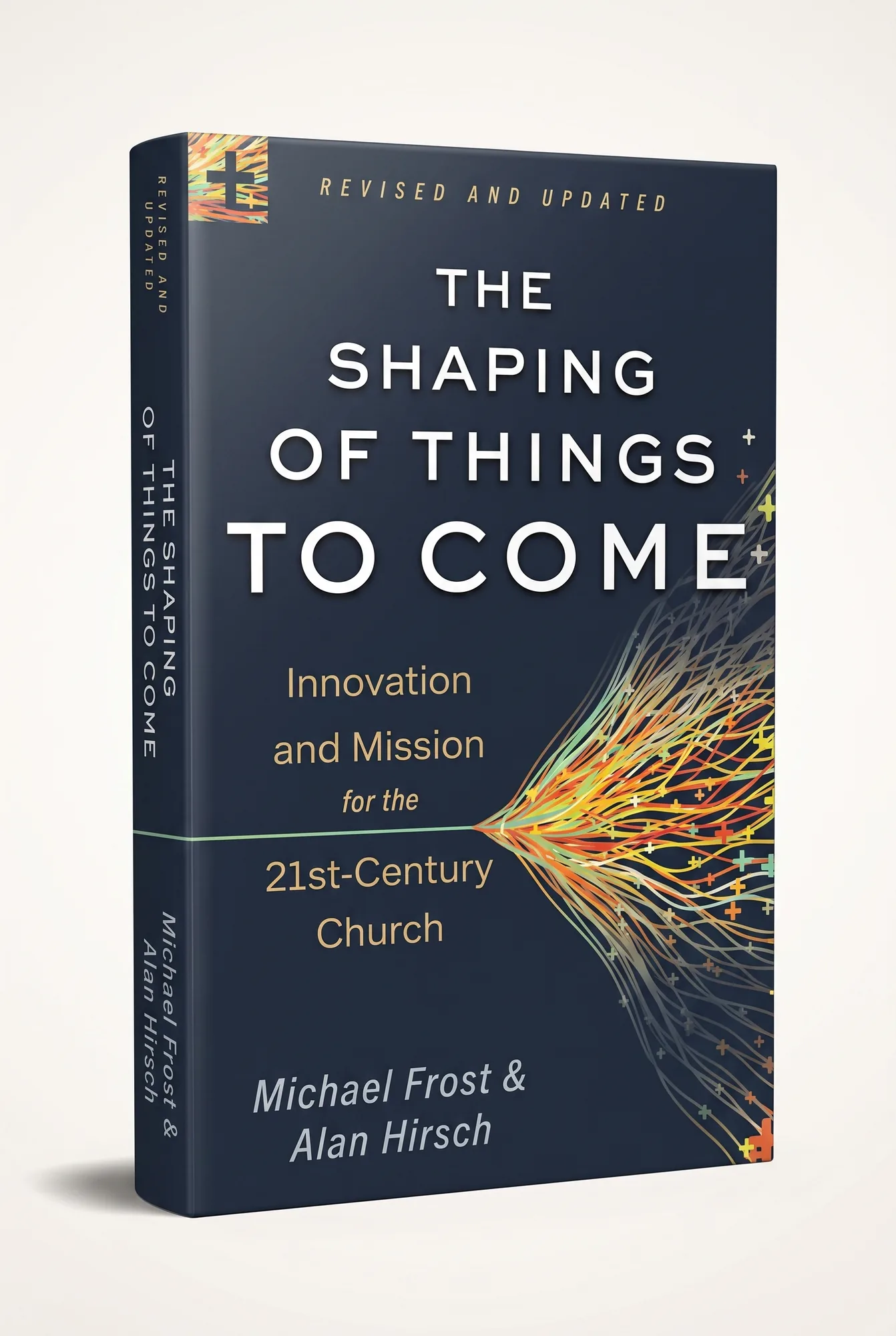
Every book before it points toward it. The Shaping of Things to Come (2003) named the problem — the structural captivity of the Western church — and introduced the incarnational and APEST frameworks in outline form. The Forgotten Ways takes those outlines and builds a full architecture. The incarnational impulse becomes Element 3 of mDNA. The APEST framework becomes Element 4. The early church and Chinese church examples, introduced in passing in the earlier book, are here developed as the primary historical evidence for Apostolic Genius.
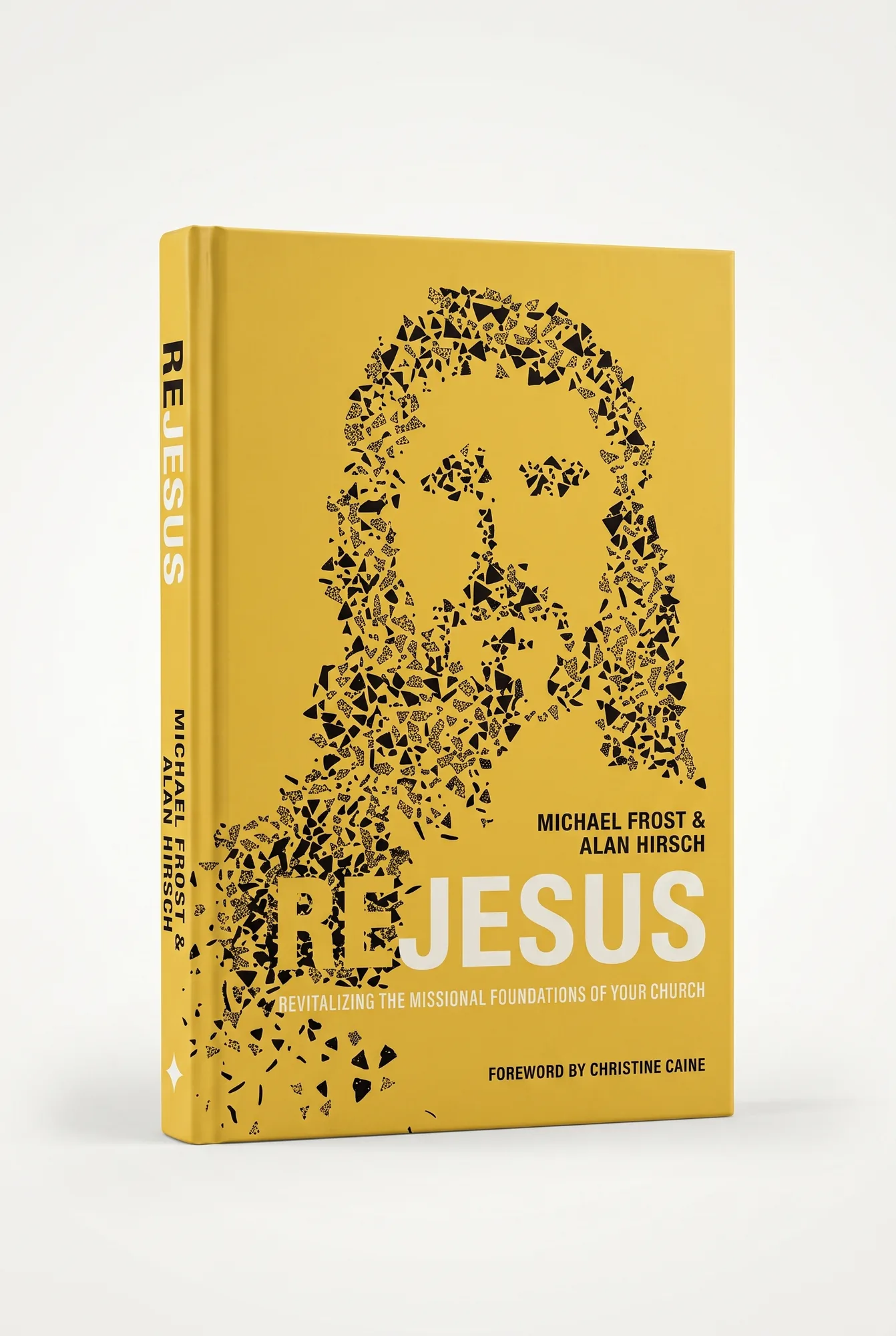
Every book after it builds on it. The Forgotten Ways Handbook (2009) provides the field assessment and diagnostic tools for implementing the mDNA framework in local church contexts. ReJesus (2008) goes deeper on Element 1 — Jesus Is Lord — asking what a genuinely Christocentric community looks like when that confession is taken with full seriousness. Untamed (2010) develops Element 2 — Disciple Making — into a full theology and practice of discipleship. The Permanent Revolution (2012) and 5Q (2017) develop Element 4 — APEST Culture — into the most comprehensive treatment of the fivefold ministry available in contemporary theological literature. The Faith of Leap (2011) develops Element 6 — Liminality and Communitas — into a full theology of holy risk and adventurous faith.
The Forgotten Ways is not one book among many. It is the map. Everything else is an expedition into one part of the territory it charts.21
§ 5
Who Needs to Read This
- The pastorwho has tried every renewal strategy available and is beginning to suspect the problem is not tactical but systemic. This book names the system and shows where the life actually comes from.
- The church planterwho wants to plant something that multiplies rather than something that merely grows. The difference between those two outcomes is precisely the difference between a community with active mDNA and one without it.
- The denominational strategisttrying to understand why some communities seem to generate movement energy while structurally identical communities do not. The answer is here — and it is not about resources, demographics, or leadership charisma.
- The missiologist or theologianwho wants the most developed account of what Apostolic Genius actually is and why it recurs across radically different historical and cultural contexts. The historical and theological argument in Section Two is the most rigorous available treatment.
- The ordinary follower of Jesuswho has read enough church-health literature to know that something is missing, but hasn't yet found a framework that names it with enough precision to act on. The mDNA framework is that precise. It is also that accessible.
§ 6
Where to Go Next
The Forgotten Ways charts the territory. The books that follow it each go deep into one region of that map.
For those who want to go deeper on the APEST framework — Element 4, the element that addresses how the church's ministry is structured and expressed — 5Q (2017) is the definitive treatment. It develops the fivefold typology into a full systems-level understanding of organizational health and movement capacity.
For those who feel the pull of Element 6 — Liminality and Communitas — The Faith of Leap (2011, with Michael Frost) is the natural next step. It takes the theological anthropology of communitas and develops it into a full account of what it means to follow Jesus into genuine risk and holy adventure.
For those who want to begin working with the mDNA framework in their own context, The Forgotten Ways Handbook (2009) provides the diagnostic tools and assessment instruments to do exactly that.
The map is here. The expeditions begin on the next page.
Notes
21 notes · 4 direct quotations
- Early church growth metrics and baptism initiation rigor: The Forgotten Ways, ch. 1, pp. 17–32. ↩
- Persecution and cultural revolution in China: The Forgotten Ways, ch. 1, pp. 33–48. ↩
- The sixty million underground church phenomenon in China: The Forgotten Ways, ch. 1, pp. 40–50. ↩
- QuotedDirect quotation: The Forgotten Ways, ch. 3, p. 77. ↩
- Definition of Apostolic Genius: The Forgotten Ways, ch. 3, p. 78. ↩
- Latency of Apostolic Genius in every local church: The Forgotten Ways, ch. 3, p. 79. ↩
- Definition of mDNA: The Forgotten Ways, ch. 3, p. 81. ↩
- The SMRC journey through death, chaos, church planting, and organic movement: The Forgotten Ways, ch. 1, pp. 17–38. ↩
- Denominational and translocal implications: The Forgotten Ways, ch. 2, pp. 51–73. ↩
- The Shema of Deuteronomy 6:4–6 reframed as Christological monotheism: The Forgotten Ways, ch. 4, pp. 89–108. ↩
- The rabbi-apprentice model and 1 Cor 11:1: The Forgotten Ways, ch. 5, pp. 109–134. ↩
- QuotedDirect quotation on disciple making: The Forgotten Ways, ch. 5, p. 111. ↩
- Primary theology shaping primary methodology: The Forgotten Ways, ch. 6, p. 137. ↩
- Ephesians 4:11–16 and fivefold ministry functions: The Forgotten Ways, ch. 8, pp. 187–208. ↩
- APEST leadership architecture at SMRC: The Forgotten Ways, ch. 8, pp. 195–202. ↩
- QuotedDirect quotation on viral Jesus movements: The Forgotten Ways, ch. 9, p. 210. ↩
- Anthropological definition of communitas via Victor Turner: The Forgotten Ways, ch. 7, pp. 159–165. ↩
- QuotedDirect quotation: The Forgotten Ways, ch. 7, p. 159. ↩
- The pilgrim people of God as theological ground for liminality: The Forgotten Ways, ch. 7, pp. 166–186. ↩
- Interdependence of the six mDNA elements: The Forgotten Ways, ch. 10, pp. 227–242. ↩
- The relationship of The Forgotten Ways to the larger body of work: The Forgotten Ways, 2016 edition, Preface, p. 9. ↩
Works cited
Built from the notes · details from the books record
Hirsch, Alan. The Forgotten Ways: Reactivating Apostolic Movements. Brazos Press, 2006.
this book · cited 20× · notes 1, 2, 3, 4, 5, 6, 7, 8, 9, 10, 11, 12, 13, 14, 15, 16, 17, 18, 19, 20Hirsch, Alan. The Forgotten Ways: Reactivating Apostolic Movements. Brazos Press, 2016 edition.
this book · cited 1× · note 21
Sources drawn from
The Forgotten Ways (all chapters: "Beginnings: A Personal Journey," "The Missional Church in the Making," "Preparing for the Journey," "Jesus Is Lord," "Disciple Making," "The Missional-Incarnational Impulse," "Liminality and Communitas," "Apostolic Environment," "Organic Systems," "Bringing It All Together," "There and Back Again"); The Shaping of Things to Come; The Permanent Revolution; 5Q.
How these ideas evolved
Each concept in this book, and every book it runs through.
- Jesus Is Lord
Introduces here · ch. 4
- Disciple Making
Introduces here · ch. 5
- Missional-Incarnational Impulse
Develops here · ch. 6
- APEST Culture
Develops here · ch. 8
- Organic Systems
Develops here · ch. 9
- Liminality & Communitas
Introduces here · ch. 7
- The Forgotten Ways (2006)
- The Forgotten Ways Handbook (2009)
- The Faith of Leap (2011)
- Missional DNA (mDNA)
Introduces here · ch. 3
- The Forgotten Ways (2006)
- The Forgotten Ways Handbook (2009)
- On the Verge (2011)
- Apostolic Genius
Introduces here · ch. 3
- The Forgotten Ways (2006)
- The Forgotten Ways Handbook (2009)
- On the Verge (2011)
Related works
- 01 · 2003The Shaping of Things to ComeShares: Missional-Incarnational Impulse, APEST Culture, Organic Systems
- 03 · 2009The Forgotten Ways HandbookShares: Jesus Is Lord, Disciple Making, Missional-Incarnational Impulse, APEST Culture, Organic Systems, Liminality & Communitas, Missional DNA (mDNA), Apostolic Genius

- 04 · 2008ReJesusShares: Jesus Is Lord, Disciple Making, Missional-Incarnational Impulse
- 12 · 20175QShares: APEST Culture, Organic Systems, Jesus Is Lord