We cannot live what we cannot imagine. The deepest crisis facing the church today is an aesthetic and theological bankruptcy of imagination.
In brief
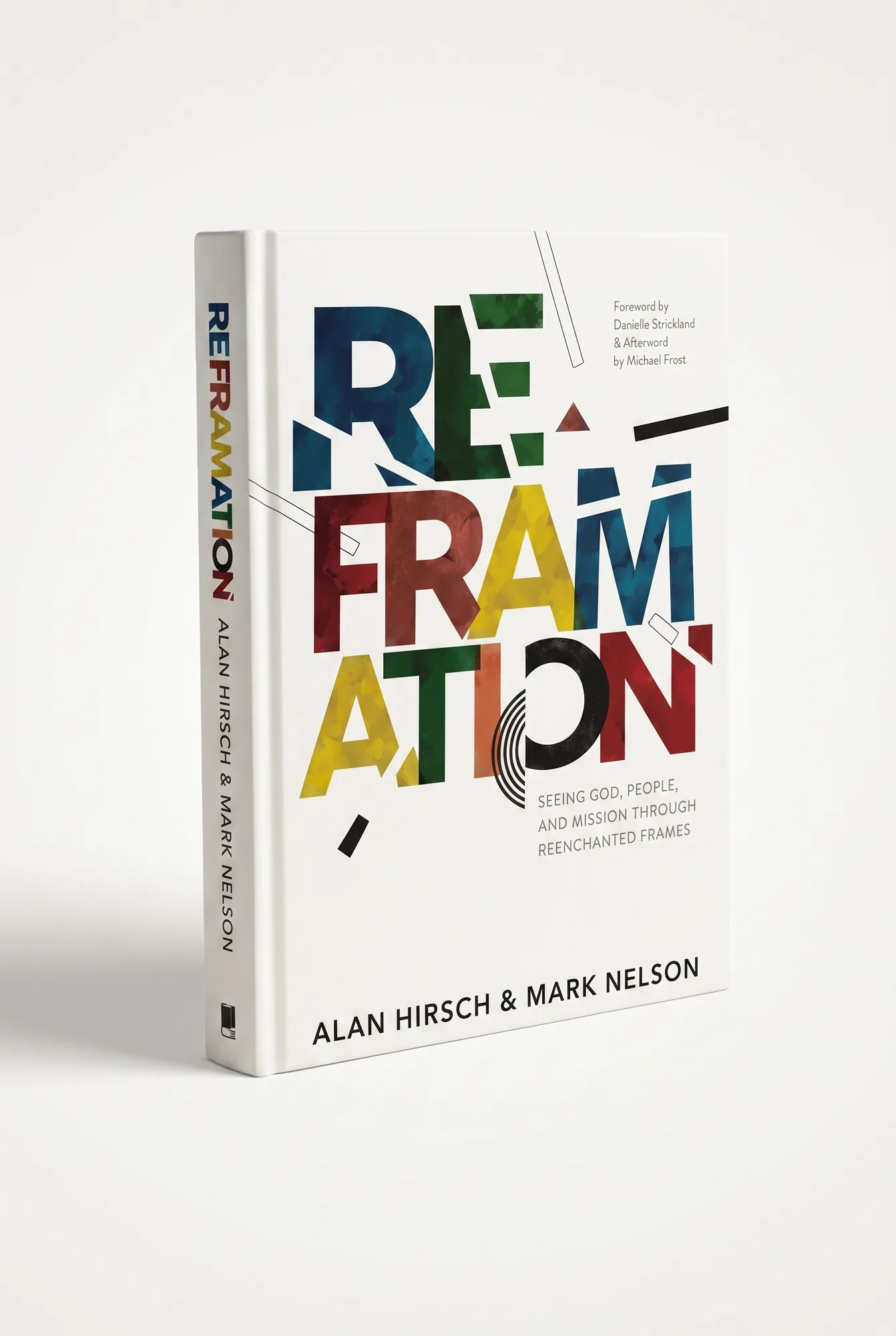
Reframation (2018), written with Mark Nelson, argues that the church's deepest crisis is a bankruptcy of imagination, not of method. Drawing on Hans Urs von Balthasar, Abraham Joshua Heschel, C. S. Lewis and William Blake, it recovers the Beautiful alongside the True and the Good and reframes God, humanity, mission and the cosmos through re-enchanted eyes. Moving through reduction, longing, re-enchanting and relearning, it holds that seeing precedes doing — we cannot live what we cannot imagine.
On this page
The ultimate problem confronting the church in the modern world is not an absence of strategic methodology; it is a profound failure of vision. We have inherited a shrunken, rationalized, utilitarian way of seeing reality that has stripped our faith of wonder, beauty, and transcendent awe.
In 2018, Mark Nelson and I published ReFramation. For nearly twenty years, my work had centered on ecclesiology, apostolic architecture, and missional systems—from The Shaping of Things to Come and The Forgotten Ways through The Permanent Revolution and 5Q. Yet across those two decades, a haunting question continued to press upon me: why do even our best missional frameworks falter in the hands of exhausted leaders?
The answer was sobering. You can give a leader the most brilliant apostolic blueprint in the world, but if their underlying imagination remains captive to secular disenchantment, mechanistic theology, and a domesticated concept of God, they will inevitably reduce that blueprint to another set of tired techniques. ReFramation was written to address the root of the root: the urgent necessity of recovering a re-enchanted theological imagination.1
§ 1
Why This Book Exists
We live in the cultural fallout of the Enlightenment—what Charles Taylor famously diagnosed as the "immanent frame" of a thoroughly disenchanted world. In this flattened reality, the universe is treated as a vast, predictable machine, human beings are reduced to economic producers and consumers, and religion is demoted to private moral compliance.
Tragically, the Western church accommodated itself to this exact reduction. We turned theology into an intellectual sorting mechanism of propositions to be defended, church into an entertainment enterprise, and discipleship into behavior modification. We lost what the Jewish theologian Abraham Joshua Heschel called "radical amazement"—the capacity to perceive the holy mystery, grandeur, and sacred presence of God vibrating throughout all created reality.
Mark Nelson and I realized that the missional movement had reached an aesthetic and ontological frontier. We had successfully diagnosed the structural failures of Christendom, but we had not sufficiently addressed the impoverished worldview that created those structures in the first place.
ReFramation was written to blow the windows open. Drawing heavily on Hans Urs von Balthasar, Abraham Joshua Heschel, C.S. Lewis, and William Blake, we set out to guide readers through a journey of sacred re-enchantment—reframing our vision of God, humanity, mission, and the entire cosmos.2
§ 2
The Central Reframe: The Aesthetic Re-Enchantment of Reality
The central reframe of ReFramation is that Christian discipleship is fundamentally an aesthetic and imaginative awakening: seeing precedes doing, and seeing requires the healing of our imagination.
Western religion has operated almost exclusively with the classical categories of the True (intellectual doctrine) and the Good (moral ethics), while completely abandoning the Beautiful (theological aesthetics). As the Catholic theologian Hans Urs von Balthasar warned, when a civilization loses its grasp of beauty, the good loses its attractiveness, and the true becomes an arid, defenseless concept.
ReFramation restores the primacy of the Beautiful, proposing four fundamental reframations:
- Reframing God: Moving beyond the therapeutic, domesticated deity of Western religion to encounter the sheer, unmanageable beauty, holiness, and poetic majesty of the Triune God.
- Reframing Humanity: Recovering the imago Dei—seeing human beings as living works of divine art endowed with sacred dignity and infinite depth.
- Reframing Mission: Shifting from utilitarian task management to participating in the cosmic dance of divine love and redemption.
- Reframing the Cosmos: Dismantling sacred-secular dualism to see the entire material world as charged with the grandeur and sacred theater of God.3
When our imagination is re-enchanted by the glory of God, mission ceases to be an exhausting duty and becomes the overflow of overwhelming wonder.
§ 3
What the Book Actually Does
ReFramation moves through four major movements across fifteen chapters, blending philosophical theology, literary analysis, and artistic contemplation.
Part One
pp. 47–93
A Reduction
Diagnoses the modern malaise. Chapter 2, "Moving the Moon" (p. 47), shows how our culture has pushed God to the periphery of existence, treating him as an occasional celestial guest rather than the ground of all being. Chapter 3, "A Curd Made From Mashed Soybeans" (p. 63), critiques the reductionism that turns the rich feast of divine life into bland institutional porridge. Chapter 4, "Stranded in Grey Town" (p. 83), draws on C.S. Lewis's The Great Divorce to expose the spiritual ghost-town of modern secular existence—where cynicism and self-absorption slowly starve the human soul.4
Part Two
pp. 98–126
A Longing
Explores the inextinguishable thirst of the human spirit. Chapter 6, "The Humming of Unseen Harps: The Spiritual Anatomy of Desire" (p. 98), explores what C.S. Lewis called Sehnsucht—the inconsolable longing within every human heart that points to our true homeland in God. Chapter 7, "Thro' Narrow Chinks in the Cavern" (p. 112), uses William Blake's imagery to describe how our perception has been imprisoned by rationalism, and how the Holy Spirit breaks open the cavern to let in the light of infinity.5
Part Three
pp. 135–192
A Reenchanting
The theological climax of the book. Chapter 9, "The Art of Seeing" (p. 135), unpacks von Balthasar's theological aesthetics, teaching readers how to contemplate the divine glory. Chapter 10, "The Great Reframation" (p. 156), re-articulates the character of God around holy love, breathtaking generosity, and boundless creativity. Chapter 11, "I'll Have What She's Having" (p. 178), shows how an encounter with genuine divine beauty makes the gospel irresistibly contagious in a cynical world.6
Part Four
pp. 198–229
A Relearning
Translates re-enchantment into lived reality. Chapter 13, "Shards of Heaven's Kaleidoscope" (p. 198), helps believers recognize glimpses of sacred truth, goodness, and beauty embedded in art, literature, culture, and nature. Chapter 14, "Romancing the City" (p. 215), articulates an incarnational urban missiology rooted in deep affection for our neighborhoods, calling the people of God to fall in love with their cities as God loves them.7
§ 4
Where This Book Sits in the Larger Body of Work
ReFramation represents a profound, mature turning point in the Hirsch canon.
Across the first fifteen years of my writing—from The Shaping of Things to Come (2003) and The Forgotten Ways (2006) to The Permanent Revolution (2012) and 5Q (2017)—my primary focus was ecclesiological, structural, and missiological. ReFramation dives beneath the architecture to explore the ontological and aesthetic foundations that hold the entire structure upright.
It picks up the high Christological thread of ReJesus (2008) and the discipleship formation of Untamed (2010), expanding them into a comprehensive worldview. It also serves as the direct theological and imaginative precursor to Metanoia (2023), where the renovation of imagination articulated here is translated into the psychology and biblical practice of total cognitive transformation.
§ 5
Who Needs to Read This
- The deconstructing Christianwho is disillusioned with superficial, moralistic, or dogmatic church cultures, yearning for a spacious, majestic, and intellectually beautiful vision of God.
- The tired pastor or church leaderwhose soul has been desiccated by pragmatic church-growth techniques, seeking the waters of spiritual renewal and artistic wonder.
- The Christian artist, creative, or marketplace thinkerwho has felt that institutional church has no category for imagination, beauty, and cultural engagement.
- Anyone feeling the numbness of modern secular lifelooking to recover the ability to see the world charged with sacred meaning.
§ 6
Where to Go Next
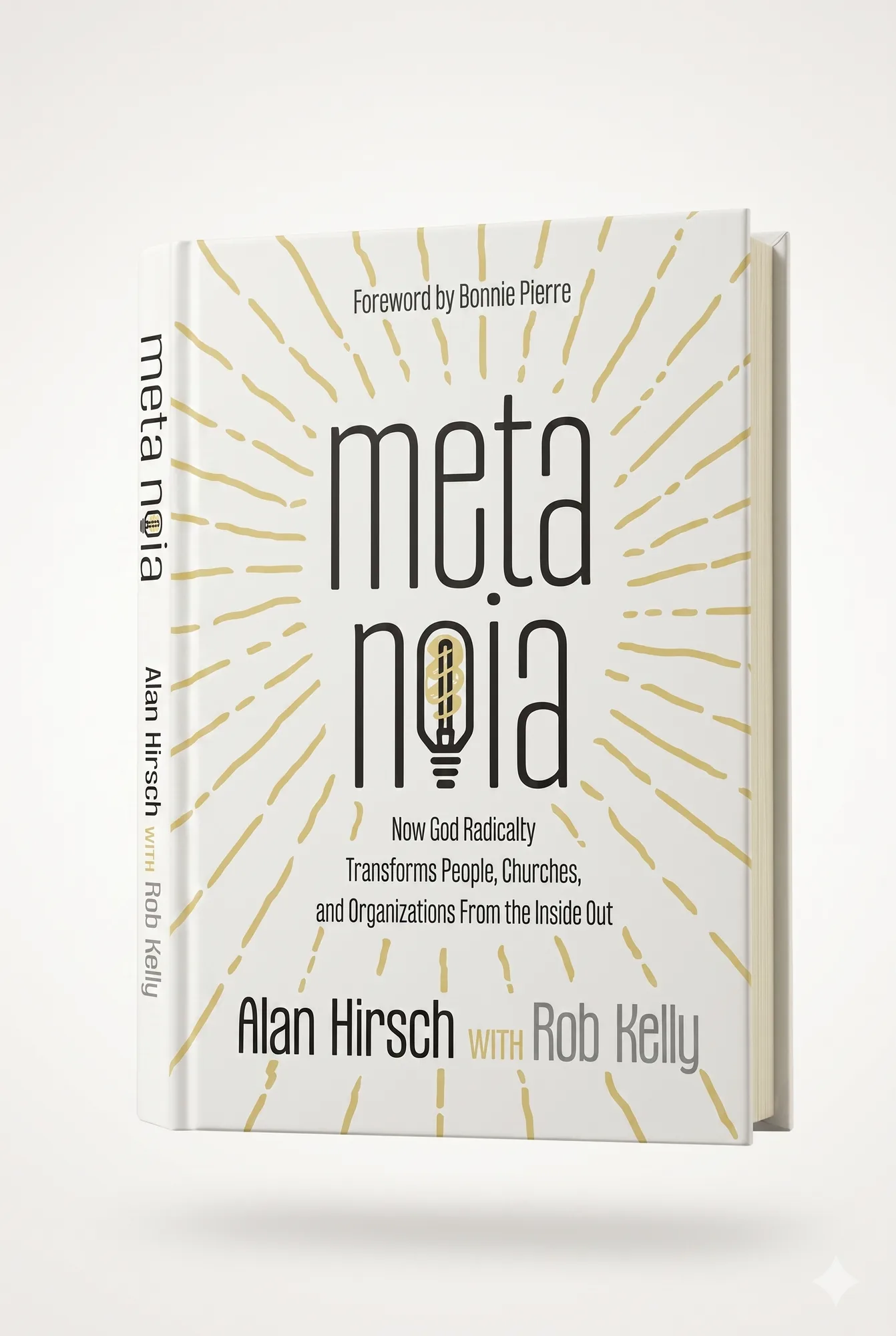
For readers who want to understand how this renovated imagination translates into personal repentance, cognitive renewal, and neural transformation, Metanoia (2023, with Rob Kelly) is the natural companion.
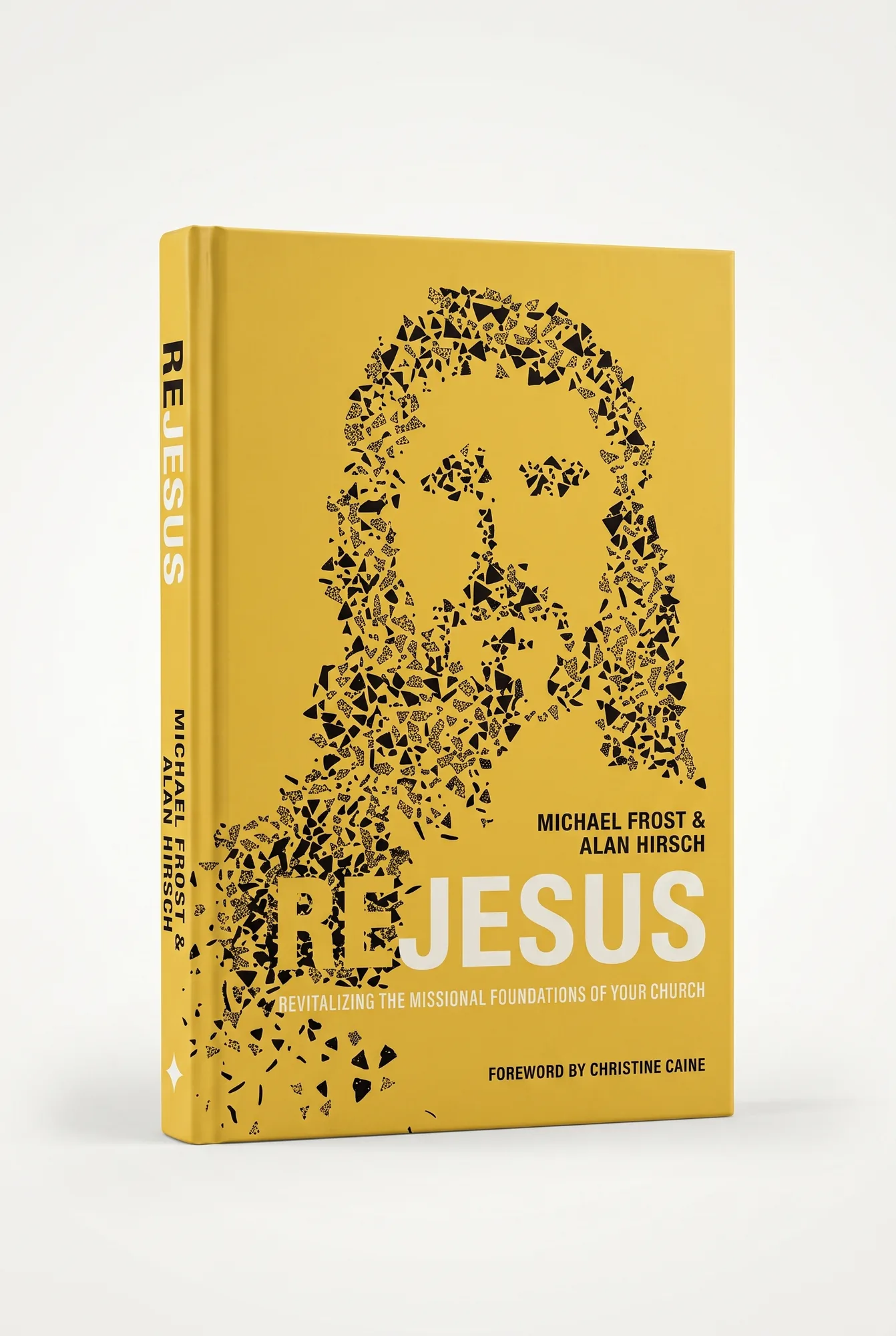
For those wanting to ground this expansive aesthetic vision in the historical, wild Jesus of the Gospels, ReJesus (2008, with Michael Frost) provides the Christological anchor.
Notes
7 notes
- The genesis of ReFramation and the crisis of religious imagination: ReFramation, Introduction, pp. 15–35. ↩
- Charles Taylor's disenchantment and Abraham Joshua Heschel's radical amazement: ReFramation, ch. 1–3, pp. 36–78. ↩
- Hans Urs von Balthasar and the recovery of theological aesthetics: ReFramation, ch. 9–10, pp. 135–175. ↩
- Cultural reductionism and C.S. Lewis's Grey Town: ReFramation, ch. 2–4, pp. 47–93. ↩
- C.S. Lewis on Sehnsucht and William Blake's perceptual cavern: ReFramation, ch. 6–7, pp. 98–126. ↩
- The Great Reframation and the contagious power of holy beauty: ReFramation, ch. 9–11, pp. 135–192. ↩
- Cultivating urban affection and romancing the city: ReFramation, ch. 13–14, pp. 198–229. ↩
Works cited
Built from the notes · details from the books record
Hirsch, Alan, and Mark Nelson. Reframation: Seeing God, People, and Mission through Re-enchanted Frames. 100Movements, 2018.
this book · cited 7× · notes 1, 2, 3, 4, 5, 6, 7
Sources drawn from
ReFramation (all chapters: "Moving The Moon," "A Curd Made From Mashed Soybeans," "Stranded In Grey Town," "The Humming Of Unseen Harps," "Thro' Narrow Chinks In The Cavern," "The Art Of Seeing," "The Great Reframation," "I'll Have What She's Having," "Shards Of Heaven's Kaleidoscope," "Romancing The City"); ReJesus (Missional Christology); Untamed (The Untamed God); 5Q (RetroFuture); Hans Urs von Balthasar (The Glory of the Lord); Abraham Joshua Heschel (God in Search of Man); C.S. Lewis (The Great Divorce, Surprised by Joy).
How these ideas evolved
Each concept in this book, and every book it runs through.
- Reframation
Introduces here
- Reframation (2018)
- Jesus Is Lord
Develops here
- Missional-Incarnational Impulse
Develops here