It's not about starting grand programs and running big organizations. It is doing what you do... for God. A saint is merely a person who makes it easier for others to believe in God.
In brief
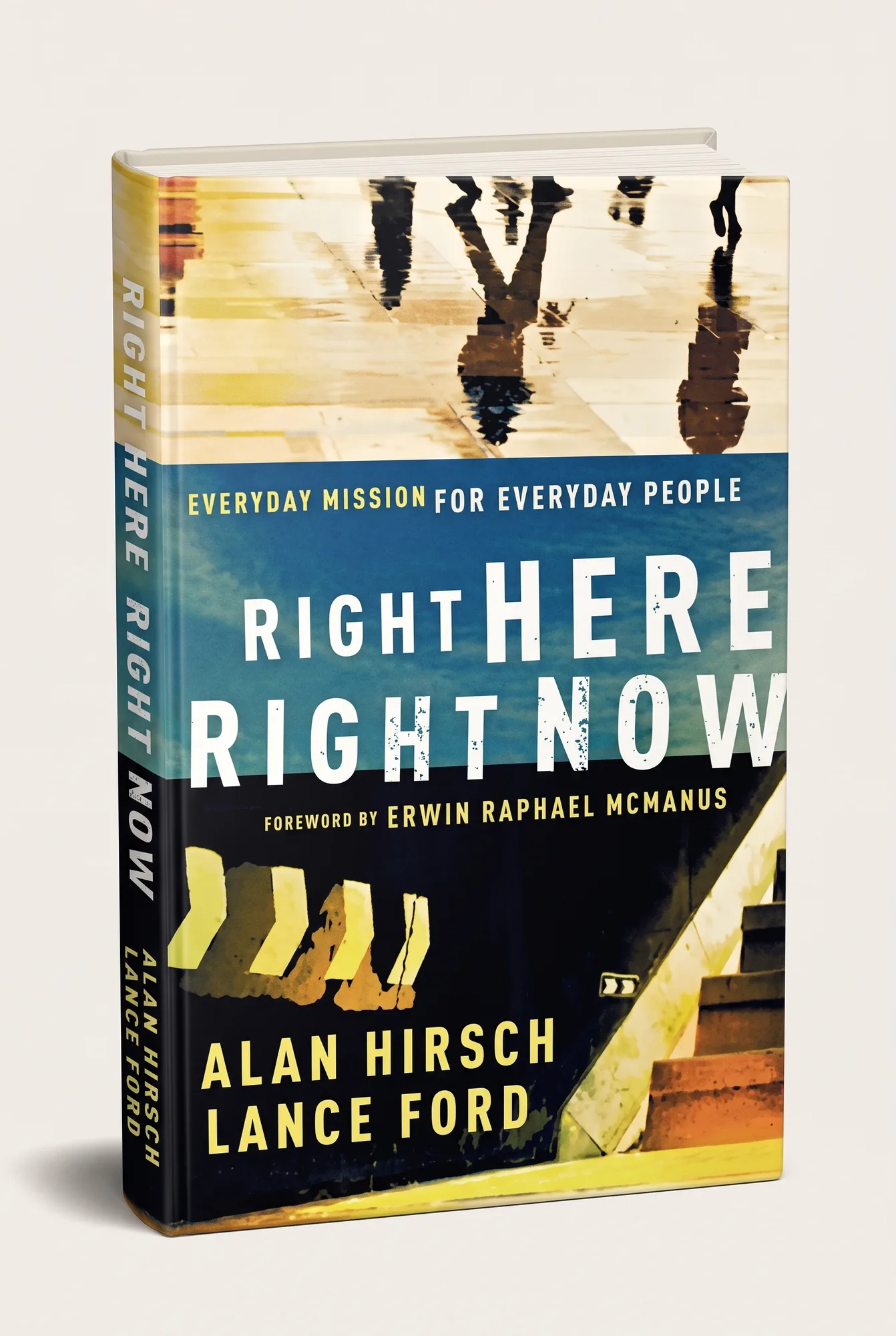
Right Here, Right Now (2011), written with Lance Ford, brings missional theology to ordinary believers in their neighborhoods, workplaces and third places. Its reframe is that conversion is commission: mission belongs to the whole people of God, not to professionals. It sets out four movements — out, in, alongside and from — and everyday practices of proximity, frequency, spontaneity and table hospitality. It translates Element 3 of mDNA, the Missional-Incarnational Impulse, into the vernacular of daily discipleship.
On this page
The prevailing assumption in church life is that mission is an activity reserved for spiritual professionals, cross-cultural specialists, or heroic church planters. That assumption has crippled the people of God.
In 2011, Lance Ford and I wrote Right Here, Right Now to shatter that professional monopoly. We wanted to prove that the redemptive presence of Jesus is designed to be lived out by ordinary believers in the everyday textures of their actual lives—in apartment hallways, suburban cul-de-sacs, soccer fields, coffee shops, and office cubicles. If Christianity in the West is going to recover its vital movemental power, it will happen through the activation of the whole people of God taking up their primary calling as priests in their own neighborhoods.
§ 1
Why This Book Exists
By the end of the first decade of the 2000s, the missional conversation had gained enormous intellectual traction. Denominations had created missional task forces, conferences were packed, and theological books were flying off the shelves.
Yet underneath the conference excitement, a troubling reality was taking shape on the ground. The missional framework was in danger of becoming an elite conversation among senior pastors, strategists, and academic theorists. The average Christian sitting in a Sunday pew felt bewildered by the high-flying rhetoric of "ecclesiological recalibration" and "systemic mDNA." Many assumed that becoming missional required selling their belongings, moving to an inner-city slum, or planting an alternative network. Missional had become intimidating.
Lance Ford and I had spent years wrestling with this disconnect. Lance brought the earthy, boots-on-the-ground wisdom of a veteran pastor and church planter in the American Midwest; I brought the conceptual frameworks forged at South Melbourne and refined across The Shaping of Things to Come and The Forgotten Ways. We recognized that if missional theology does not translate into the rhythm of Tuesday morning breakfast, school drop-offs, and casual conversations over a fence, it will remain an academic curiosity.
Right Here, Right Now was born to democratize missionality. It was our attempt to take the high Christological and ecclesiological theology of the previous decade and put it directly into the hands of truck drivers, nurses, schoolteachers, accountants, and stay-at-home parents.1
§ 2
The Central Reframe: Incarnational Neighborliness
The foundational reframe of Right Here, Right Now is that mission is an inherent dimension of Christian identity rather than a specialized church program: conversion is commission.
The Christendom church trained generations of Christians to view mission through an extractional lens: invite a friend out of their natural environment and into a church building where a professional can communicate the gospel. This approach assumes that God is primarily present inside the sanctuary and largely absent from the world.
The incarnational reframe asserts the exact opposite. God moved into our neighborhood in the person of Jesus Christ (John 1:14). Because the Spirit of Christ now indwells every follower, the church is already present wherever Christians live, work, and play. The primary task of mission is not taking God to a place where he is absent; it is discerning where the missionary God is already at work and joining him in what he is doing.2
We name two equally vital dimensions of every transformative people movement:
- The Apostolic Mission (AM): The formal, communal wing of the movement that focuses on church planting, pioneering new frontiers, and translocal leadership.
- The Mission of the Whole People of God (MPOG): The activation of every single disciple as a full-time agent of the kingdom in their natural spheres of influence.
When a church focuses solely on the apostolic wing, it ends up merely planting services while leaving ninety-five percent of its people passive. Real cultural transformation requires both: missional churches producing missional disciples who live as a worldwide message tribe.3
§ 3
What the Book Actually Does
Right Here, Right Now pairs comprehensive conceptual briefing with vivid narrative case studies, moving across ten chapters designed to transition readers from passive observers to active neighborhood priests.
Chapter 1
pp. 28–78
Putting the Extra in the Ordinary
Serves as the book's theological engine room—what I call my "formal briefing." Drawing on Matthew 16:18, John 20:21, and the missio Dei, the chapter lays out the core movemental architecture. It introduces the four essential directional movements required of every disciple:
- Move Out (Mission): Cultivating a going posture, adopting the art of the small, and remembering that "the mission has a church."4
- Move In (Incarnation): Moving deep into urban tribes, taking culture seriously like Paul in Athens (Acts 17), and seeing the spiritual quest hidden inside secular activities.5
- Move Alongside (Relational Proximity): Relocating relational presence to embody proximity, frequency, and spontaneity in a specific geographic neighborhood.6
- Move From (Transformation): Resisting the consumer scripts of contemporary culture to live as an alternative kingdom community.
The chapter also confronts the sacred-secular divide with an explicit challenge to Christendom dualism, showing how the lordship of Jesus integrates work, home, recreation, and worship into a seamless whole.7
Chapters 2–5
pp. 81–150
From Theory to Sidewalk
Chapter 2, "Meet the Extras" (p. 81), introduces living portraits of everyday believers who transformed their ordinary vocations into outposts of the kingdom—from laundry mats to skate parks. Chapter 3, "Laodicean Cul-de-Sacs" (p. 119), exposes the spiritual numbness that suburban isolation and consumer comfort inflict on believers, calling readers to break out of gated mentalities. Chapter 4, "From Paper to Pavement" (p. 101), details the gritty realities of moving into neglected neighborhoods. Chapter 5, "Losing for Winning" (p. 140), develops the kenotic economics of Jesus, demonstrating that sacrificial presence always precedes spiritual fruitfulness.8
Chapters 6–9
pp. 153–228
Practices of the Priesthood
These chapters lay out concrete practices for incarnational presence:
- Table Hospitality: Chapter 6, "Oh Raaaawb" (p. 153), and Chapter 7, "Beyond Kumbaya," reframe eating around a table as a primary spiritual discipline. If every Christian household shared a weekly meal with neighbors, we would eat our way into the kingdom of God.9
- The Third Place: Chapter 8, "Y'all Come Back Now Ya Hear" (p. 196), urges believers to adopt neutral social spaces—pubs, diners, community gardens, dog parks—and become reliable regulars who build social surface area.
- Salt in the World: Chapter 9, "Salt Blocks and Salt Shakers" (p. 214), draws on Jesus' sermon on the mount to critique the church's habit of clumping together in protective salt blocks instead of being sprinkled across society.10
Chapter 10
pp. 235–256
Debriefing Right Now
Brings the reader back to the institutional question. It provides a strategic framework for church leaders who want to retool their entire congregation into an empowering launchpad for everyday neighborhood mission.11
§ 4
Where This Book Sits in the Larger Body of Work
Right Here, Right Now occupies a distinct and practical place in the twenty-year arc of this body of work.
It takes the high ecclesiological frameworks first articulated in The Shaping of Things to Come (2003) and the foundational mDNA architecture of The Forgotten Ways (2006)—specifically Element 3: The Missional-Incarnational Impulse—and translates them from the language of movement leadership into the vernacular of daily discipleship.
Where Untamed (2010) focused on the internal spiritual formation and identity of the disciple ("undragoning the self"), Right Here, Right Now focuses on external geography, sociology, and neighborhood presence. It serves as the direct theological anchor for its companion volume, Fast Forward to Mission (2011), and lays the sociological groundwork that Dave Ferguson and I would build upon in On the Verge (2011) to address large-scale church transformation.
§ 5
Who Needs to Read This
- The ordinary church memberwho loves Jesus, works a demanding secular job, and feels guilty because they cannot fit church committee meetings into their busy life. This book shows how their workplace and street are their primary parish.
- The suburban pastorwatching their congregation commute into a central facility on Sunday while remaining complete strangers to the people living on their own streets.
- The missional community leaderlooking for an accessible, story-rich guide that helps members overcome their fear of talking to neighbors.
- The seminary student or ministry directorwho needs a compelling antidote to professionalized, programmatic ministry models.
§ 6
Where to Go Next
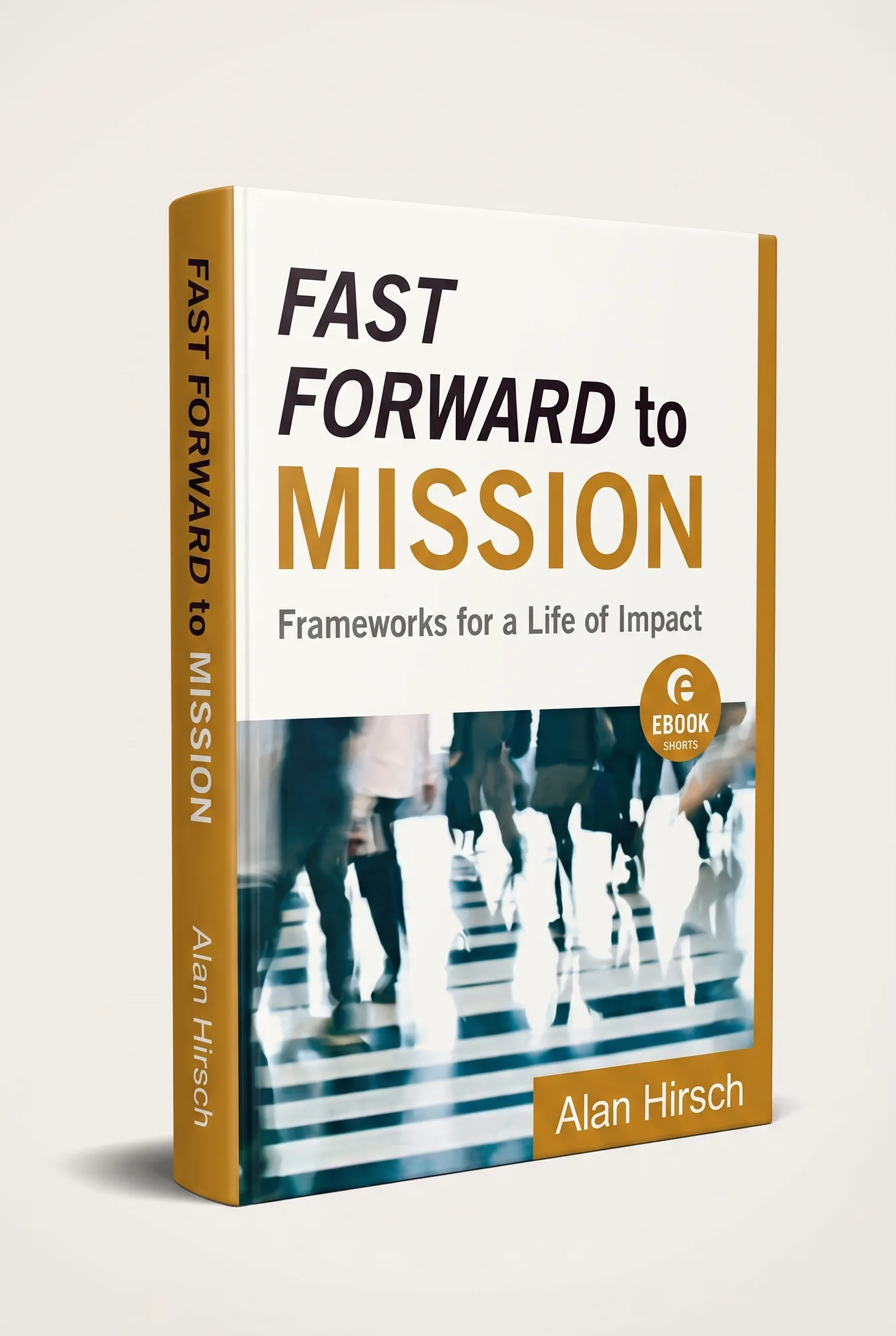
For small groups, cohorts, or teams wanting to take the principles of this book and work through a structured 8-week field guide with exercises and neighborhood audits, Fast Forward to Mission (2011, with Lance Ford) is the direct tactical companion.
For those wanting to understand the personal spiritual formation required to sustain an everyday missional life, Untamed (2010, with Debra Hirsch) explores the four domains of discipleship in full depth.
Notes
11 notes
- The genesis of the book and the need to democratize missionality: Right Here, Right Now, Introduction, pp. 15–26. ↩
- John 1:14 and the incarnational sending of the whole people of God: Right Here, Right Now, ch. 1, pp. 28–42. ↩
- The dual dimensions of movement (Apostolic Mission vs. Mission of the Whole People of God): Right Here, Right Now, ch. 1, pp. 34–38. ↩
- The outward movement of mission: Right Here, Right Now, ch. 1, pp. 38–42. ↩
- Subcultural identification and Paul's Athenian apologetic: Right Here, Right Now, ch. 1, pp. 43–52. ↩
- Practices of incarnational presence (proximity, frequency, spontaneity): Right Here, Right Now, ch. 1, pp. 58–64. ↩
- Overcoming dualistic Christendom patterns: Right Here, Right Now, ch. 1, pp. 52–57. ↩
- Suburban isolation and kenotic presence: Right Here, Right Now, ch. 3–5, pp. 119–150. ↩
- Table hospitality and conversational evangelism: Right Here, Right Now, ch. 6–7, pp. 153–193. ↩
- The metaphor of salt blocks versus distributed shakers: Right Here, Right Now, ch. 9, pp. 214–228. ↩
- Retooling congregations for neighborhood release: Right Here, Right Now, ch. 10, pp. 235–256. ↩
Works cited
Built from the notes · details from the books record
Hirsch, Alan, and Lance Ford. Right Here, Right Now: Everyday Mission for Every Christian in Every Place. 2011.
this book · cited 11× · notes 1, 2, 3, 4, 5, 6, 7, 8, 9, 10, 11
Sources drawn from
Right Here, Right Now (all chapters: "Putting the Extra in the Ordinary," "Meet the Extras," "Laodicean Cul-de-Sacs," "From Paper to Pavement," "Losing for Winning," "Oh Raaaawb," "Beyond Kumbaya," "Y'all Come Back Now Ya Hear," "Salt Blocks and Salt Shakers," "Debriefing Right Now"); The Shaping of Things to Come (The Incarnational Approach); The Forgotten Ways (The Missional-Incarnational Impulse); Untamed (Going Out, Going Deep).
How these ideas evolved
Each concept in this book, and every book it runs through.
- Missional-Incarnational Impulse
Develops here
- Disciple Making
Develops here
- Organic Systems
Develops here
Related works
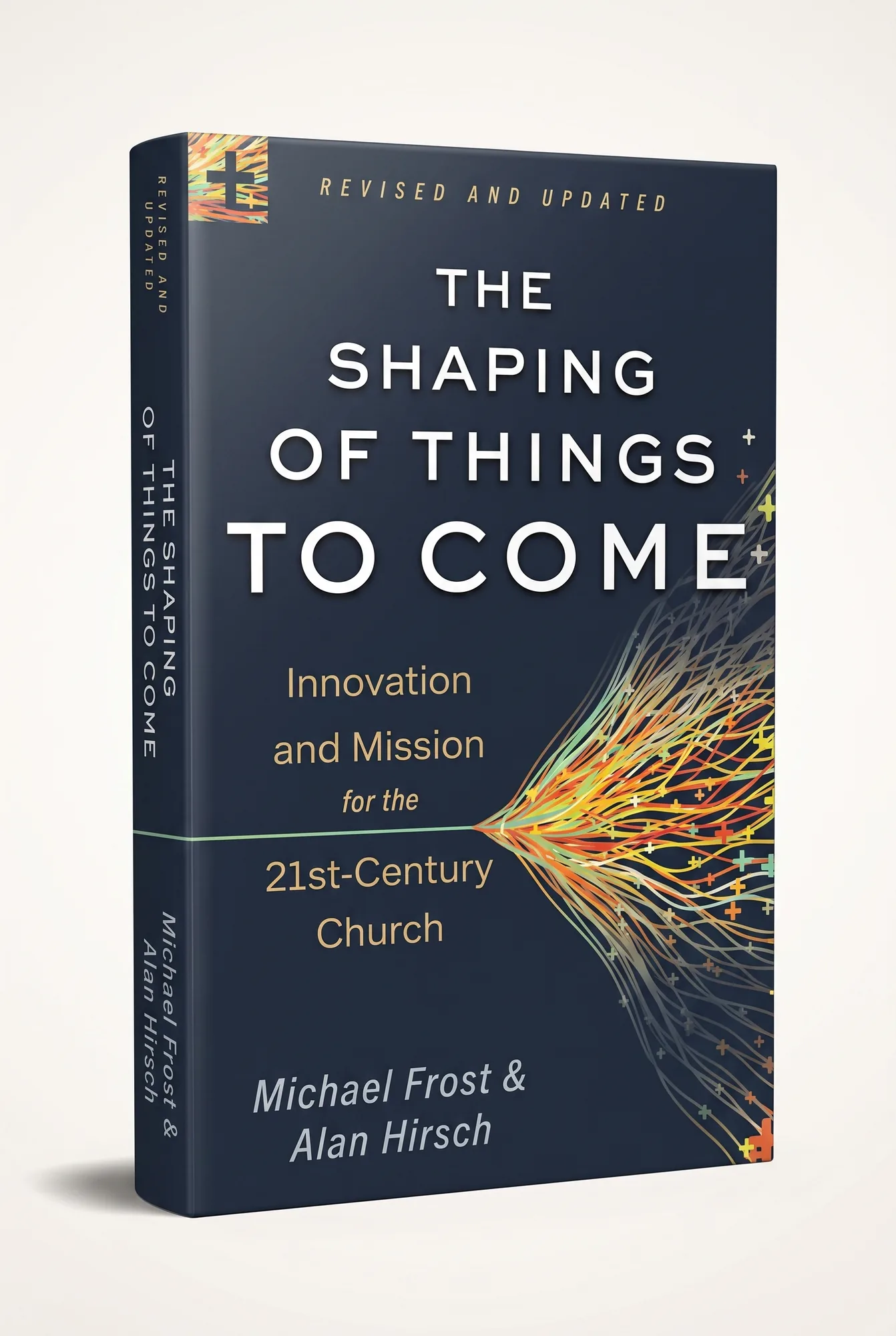
- 01 · 2003The Shaping of Things to ComeShares: Missional-Incarnational Impulse, Organic Systems
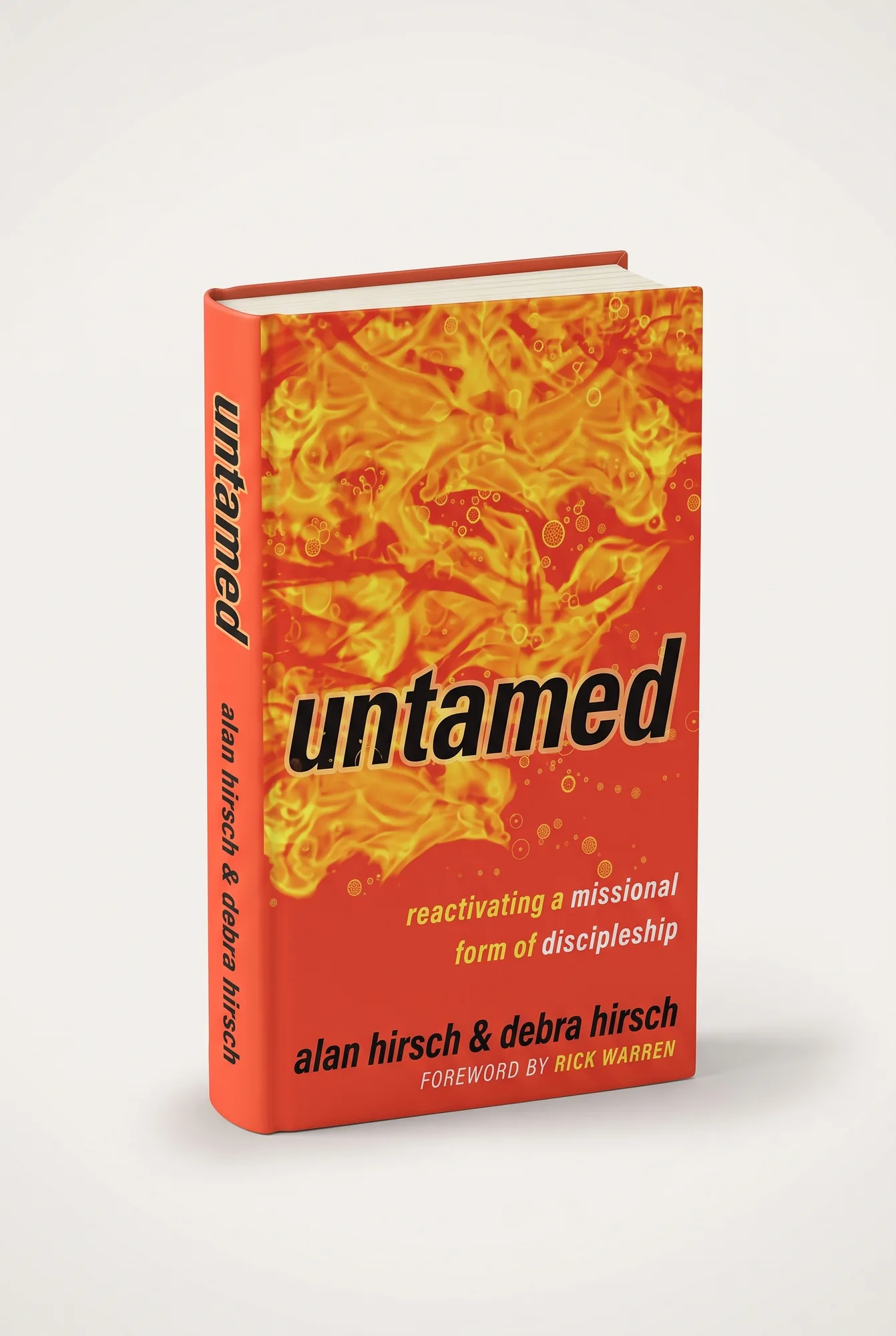
- 05 · 2010UntamedShares: Disciple Making, Missional-Incarnational Impulse
- 07 · 2011Fast Forward to MissionShares: Missional-Incarnational Impulse, Disciple Making
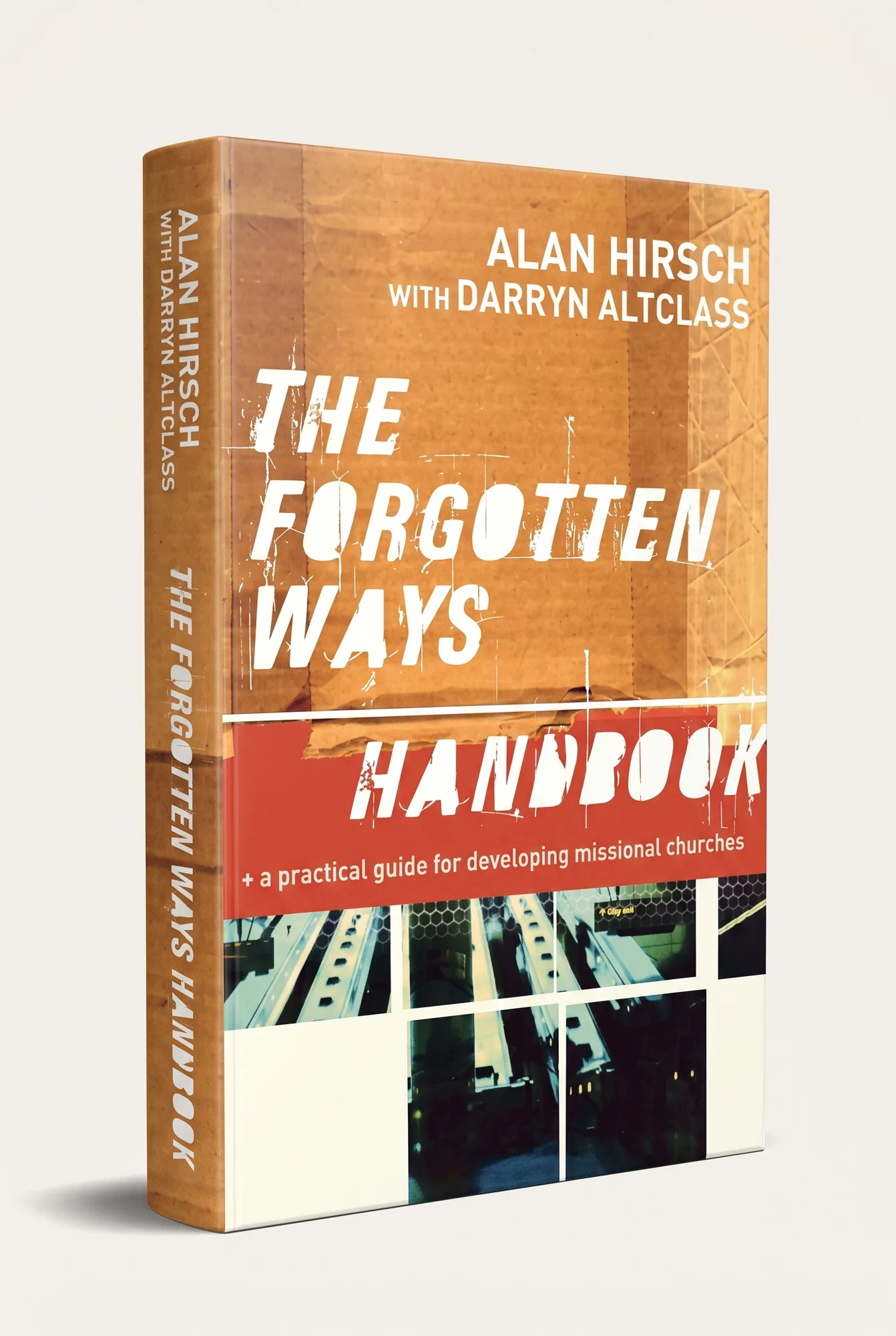
- 03 · 2009The Forgotten Ways HandbookShares: Disciple Making, Missional-Incarnational Impulse, Organic Systems