“The Word became flesh and dwelt among us is the pattern of mission itself. God's approach to a world that needed redemption was to move into the neighborhood.”
In brief
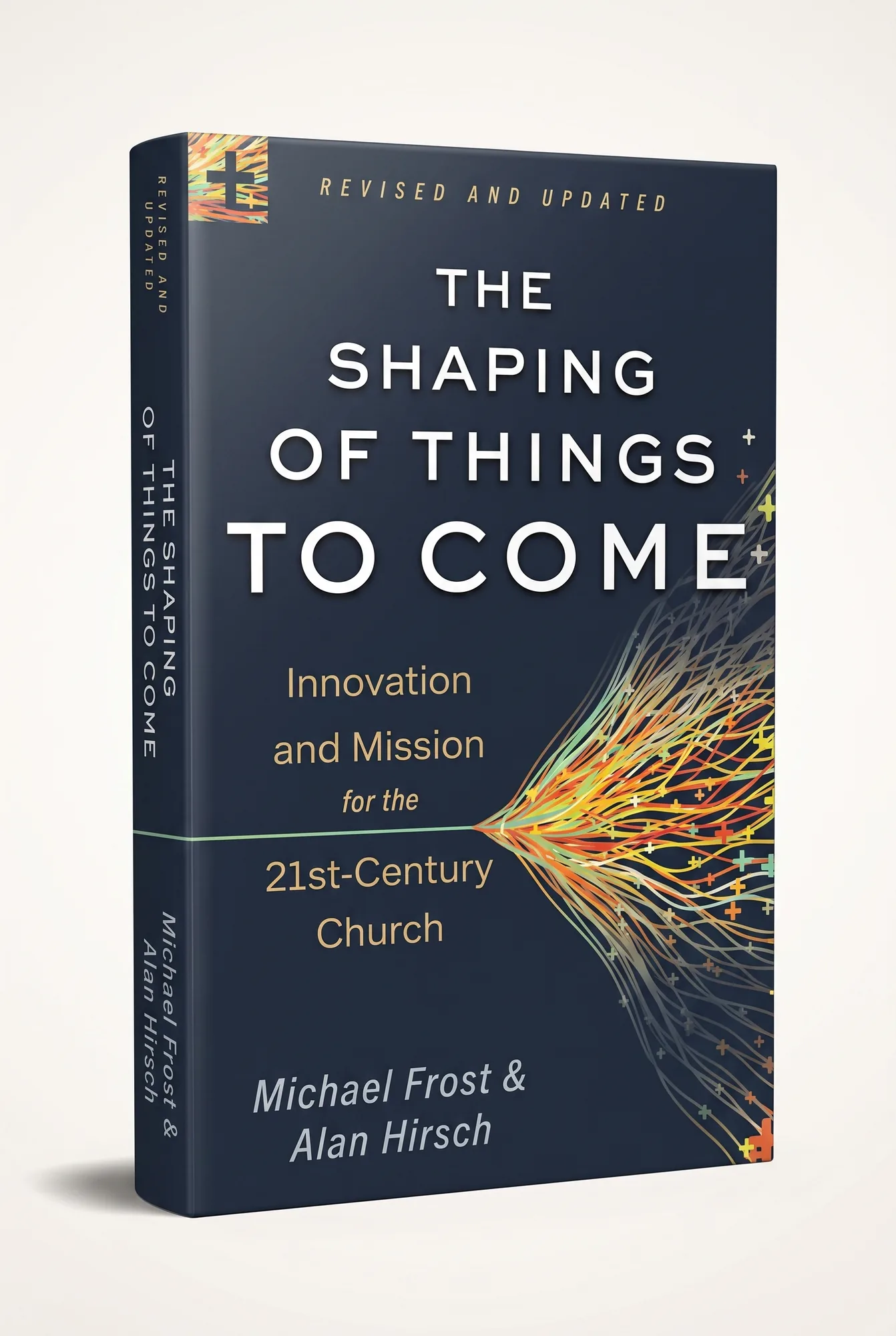
The Shaping of Things to Come (2003), written with Michael Frost, argues that the Western church's crisis is a failure of imagination, not method. Christendom left the church attractional, dualistic and hierarchical; the book recovers the corresponding postures of a sent people — incarnational, messianic and apostolic — grounded in God's own movement into the world in Christ. It coins the term APEST from Ephesians 4 and plants nearly every theme of the next twenty years, from missional DNA to discipleship.
On this page
The question the Western church keeps asking is: how do we get more people through the door? That question has an answer. The trouble is, it may be answering the wrong problem entirely.
In 2003, Michael Frost and I published The Shaping of Things to Come. It was not a book about church growth strategies. It was a diagnosis — and underneath the diagnosis, a recovery. The book argued that the problem facing the Western church was not a failure of method but a failure of imagination. We had inherited a mode of being church that was structurally incapable of fulfilling the mission it claimed to be about. The only way forward required going back — to the originating impulse of the Jesus movement itself, to the pattern of God's own engagement with the world.
§ 1
Why This Book Exists
The early 2000s were a moment of particular cultural turbulence for the Western church. Attendance was declining across every major denomination. The church-growth movement had produced a generation of polished, program-rich congregations that were, by almost every honest metric, failing to reach the people they existed to reach. A whole industry had grown up around the idea that if you built the right product, the right people would come. And some churches had grown — but the broader culture was moving away, not toward.1
Michael and I were both working in Australia at the time, in contexts that made the problem viscerally clear. I had spent years leading South Melbourne Restoration Community, a congregation in the inner city working with people on the margins — people who would never come to a polished Sunday service regardless of how well it was designed. The question we were living with was not theoretical. It was: how does the gospel actually reach people who have no interest in coming to church? And what does that tell us about the nature of the church itself?
The Shaping of Things to Come emerged from that question. It was an attempt to name what we were seeing — the captivity of the Western church to a mode of being that was preventing it from fulfilling its own calling — and to recover a different imagination, one rooted in the life of Jesus and the practice of the earliest Christian communities.2
§ 2
The Central Reframe: Incarnation as Mission
Most books about church renewal focus on what the church should do differently. This book focuses on what the church needs to understand differently — because the doing follows from the seeing, and the seeing requires a fundamental reorientation.
The central reframe is this: the church is a sent people, and the form of that sending is incarnational. The word matters. Incarnation is not a metaphor for being friendly or culturally relevant. It is the theological claim that God engaged the world by entering it — fully, materially, at cost. "The Word became flesh and dwelt among us" is the pattern of mission itself. God's approach to a world that needed redemption was to move into the neighborhood.3
The Christendom church gradually inverted this logic. Over seventeen centuries, it developed what the book names as an attractional mode: plant a building, create compelling services, expect people to come. This posture works when the church sits at the center of culture, when Christianity is the assumed framework of public life. In the post-Christian West, that position was already gone.4
The missional church understands itself as a movement sent into the world. It embeds itself in the fabric of communities, subcultures, neighborhoods — representing Christ from within. God is a missionary before we are missionaries. The church's sent-ness is participation in something God was already doing.5
The Christendom-mode church carries three structural flaws in its DNA: it is attractional, dualistic, and hierarchical. These are not peripheral problems of style or culture — they are baked into the model's architecture at the level of its basic assumptions about what church is for. The entire structure of the book is built around naming those flaws, tracing their roots, and recovering the three corresponding modes of a genuinely sent community: incarnational, messianic, apostolic.6
§ 3
What the Book Actually Does
The Shaping of Things to Come moves through four major sections, each building on the last.
Part One
pp. 13–50
The Shape We're In
Does the diagnostic work. Chapter 1, "Evolution or Revolution?" (p. 15), opens the question of whether incremental adjustment can address a structural problem — and concludes it cannot. Chapter 2, "The Missional Church" (p. 33), delivers the diagnosis in full: the Western church has become an institution that exists primarily to serve its own members, and its missionary posture has collapsed accordingly. This is the kind of honest reckoning that makes genuine recovery possible. A misdiagnosis at this stage produces only cosmetic change.7
Part Two
pp. 51–138
Incarnational Ecclesiology
The theological and practical heart of the book. Chapter 3, "The Incarnational Approach" (p. 53), grounds everything in the movement of God toward the world in Christ — drawing on Philippians 2:6–8 and the kenotic pattern of Jesus' own engagement.8 Chapter 4, "The Shape of the Missional Church" (p. 83), develops what that looks like structurally: smaller, more organic, more embedded in host communities. Chapter 5, "The Contextualized Church" (p. 101), works through the question of how the gospel takes root within specific cultures — drawing on Paul's own contextual practice in Acts 17:16–34 and Acts 2:14–40.9 Chapter 6, "Whispering to the Soul" (p. 123), addresses how a missional community communicates in a post-Christian culture, drawing on Matthew 13 and the parabolic mode of Jesus.10
This section is dense with both theological argument and concrete examples, from small missional communities in San Francisco to the early church's expansion through the Roman world. The early church had no buildings, no centralized hierarchy, and no cultural privilege — and it multiplied with extraordinary speed precisely because its mode of expansion was organic, moving through relationships and neighborhoods.11
Part Three
pp. 139–202
Messianic Spirituality
Recovers something the Christendom tradition largely obscured: a spirituality of engagement. Western Christianity developed a spirituality oriented primarily around retreat, reflection, and the interior life — shaped by a Hellenistic-Roman ontology that pulled attention upward and inward, away from the world.12 Chapter 7, "The God of Israel and the Renewal of Christianity" (p. 141), argues that recovering the Jewishness of Jesus is essential to recovering a missional spirituality. Jesus understood himself and his mission through Hebraic categories — through a worldview in which the material world is the arena of God's redemptive action, and the holy deed done in God's name carries its own sacramental weight.13 Chapter 8, "Action as Sacrament" (p. 169), presses this further: "action itself is a sacrament of grace, not only to the recipient of the gracious act, but to the actor as well."14 Chapter 9, "The Medium Really Is the Message" (p. 183), draws out the formational implications — that who we are as a community is itself the primary communication of the gospel.15
Part Four
pp. 203–272
Apostolic Leadership
Introduces what would become one of the defining frameworks of the next twenty years of work. Chapter 10, "The Genius of APEST" (p. 205), draws on Ephesians 4:1–16 to argue that Christ gave five distinct ministry gifts to the church — apostle, prophet, evangelist, shepherd, teacher — and that the Western church has systematically marginalized three of them.16 The term APEST itself is coined here: "in order to avoid the cumbersome term 'fivefold ministry,' we have substituted it with the term APEST."17 The result of that marginalization is a church running on two cylinders when it was designed for five. Chapter 11, "Imagination and the Leadership Task" (p. 225), addresses the kind of leadership imagination required for a missional community. Chapter 12, "Organizing the Revolution" (p. 247), works through the structural and organizational implications — including a direct challenge to the assumption that church planting should always aim at replicating the large-church model.18
§ 4
Where This Book Sits in the Larger Body of Work
The Shaping of Things to Come is the seed from which everything else grew.
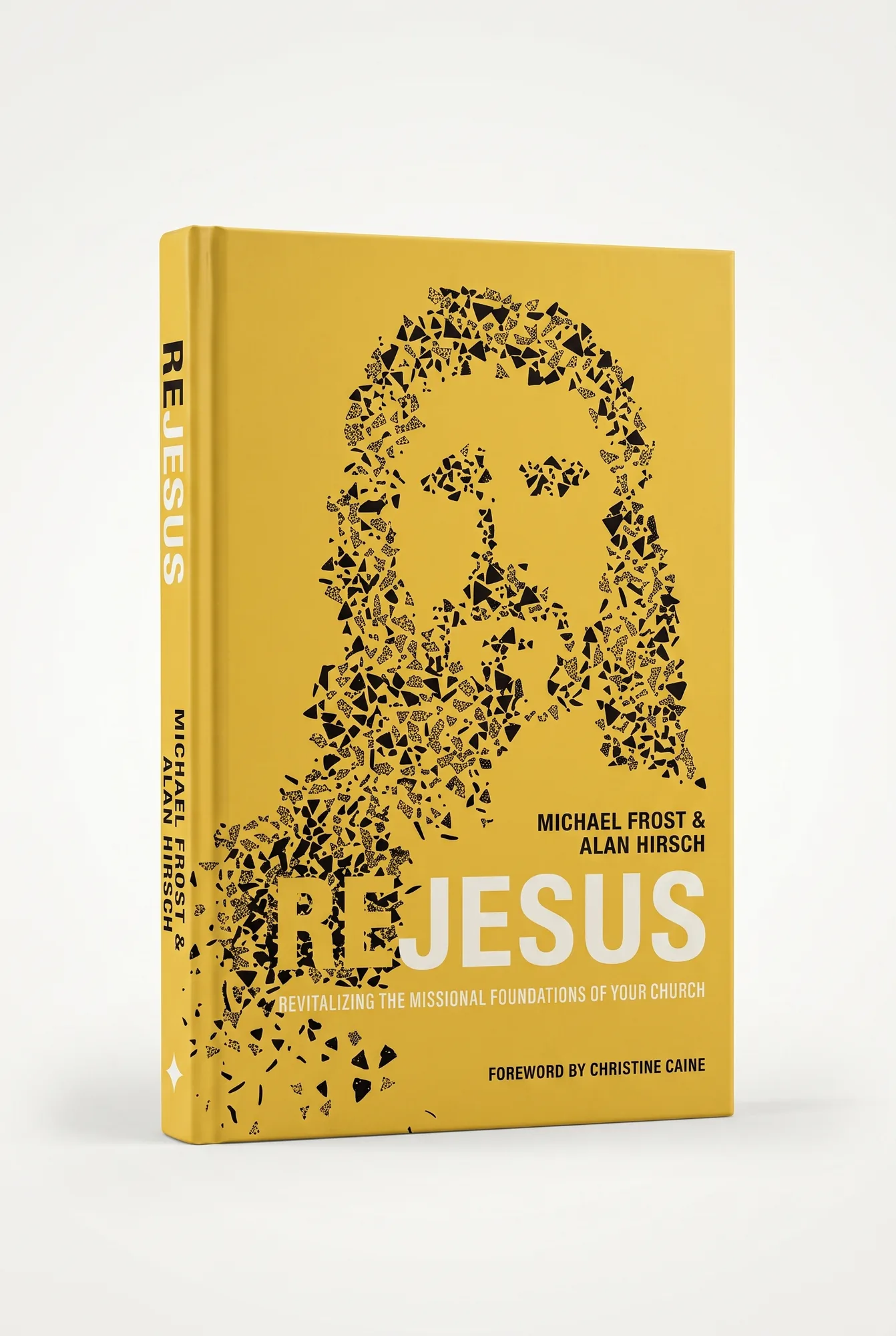
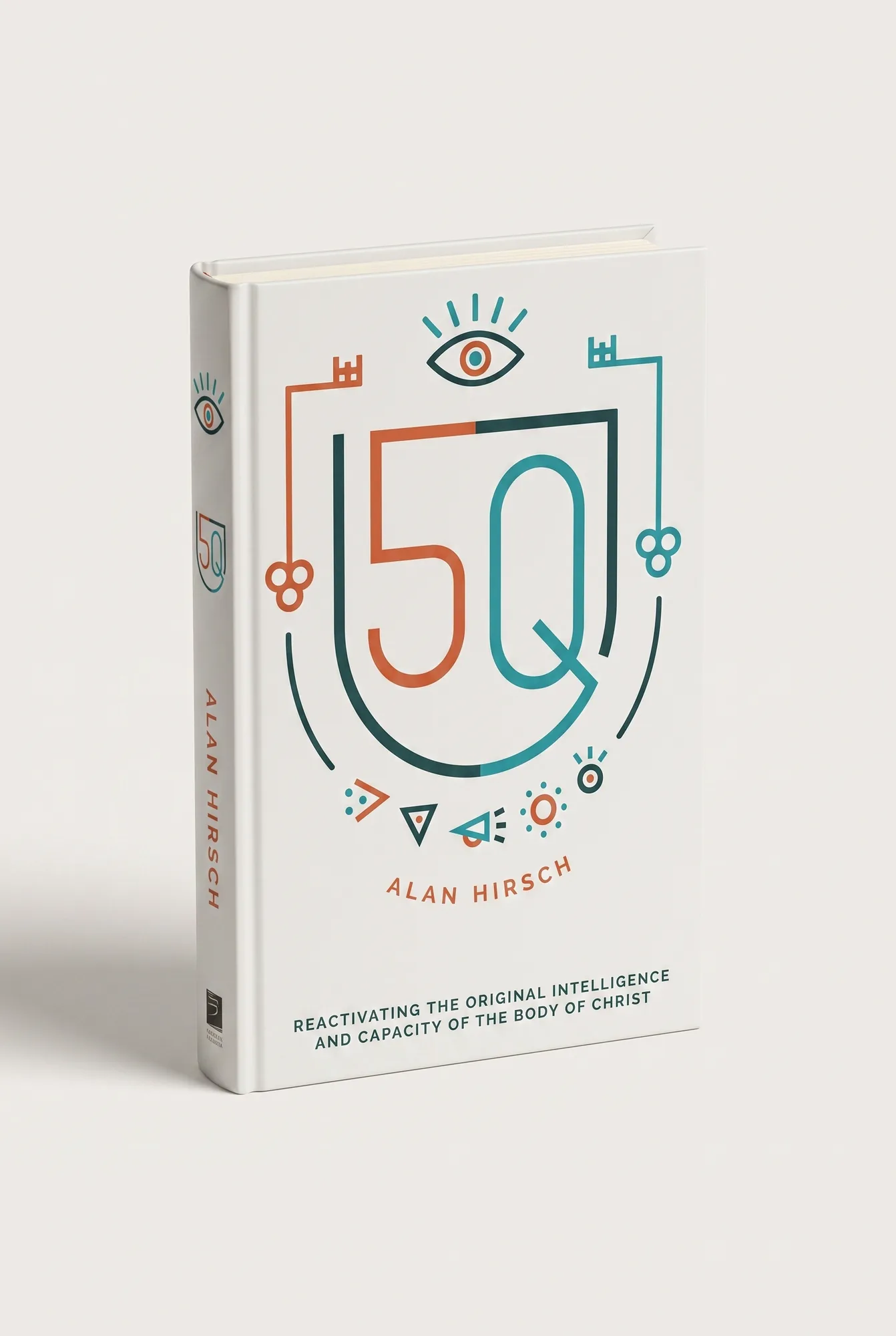
The incarnational framework developed here would be refined and extended in The Forgotten Ways (2006), where the concept of missional DNA received its fullest early articulation. The APEST framework introduced in Chapter 10 of this book would be developed across the next fifteen years into The Permanent Revolution (2012) and ultimately 5Q (2017), where it received its most comprehensive treatment. The messianic spirituality recovered in Part Three laid the groundwork for ReJesus (2008), which pushed the Christological question even further. The call for a different kind of discipleship — one rooted in proximity and imitation rather than programs and information — became the central concern of Untamed (2010).
Read this book and you are reading the genetic code of everything that follows. The questions it asks — What is the church for? What is mission? What kind of leadership does a movement require? — are the questions that have occupied this body of work ever since.
The book was also a product of a specific collaboration. Michael Frost brings a particular gift for cultural analysis and narrative — the eye of an evangelist who reads the world with both theological precision and genuine love for the people in it. The missional church conversation that followed owes a great deal to the particular chemistry of these two voices working together.
§ 5
Who Needs to Read This
- The pastorwho has been faithful for fifteen years and is watching the congregation slowly shrink — and suspects the problem is structural rather than personal. This book names what they are sensing.
- The church planterwho has been trained in attractional models and is beginning to realize that those models do not translate to the post-Christian neighborhoods they are trying to reach. This book gives them a different framework before it gives them a method.
- The seminary studentwho has been taught that mission is a department of the church — a committee, a budget line, a program — and who has a nagging sense that this cannot be right. This book reopens the question from the ground up.
- The denominational leadertrying to understand why renewal strategies keep producing the same results. This book is a diagnosis before it is a prescription, and the diagnosis is the most important thing.
- The thoughtful laypersonwho loves Jesus, who is engaged with the world around them, and who has never quite been able to reconcile the church they experience on Sunday with the mission they read about in the Gospels. This book is written for them too — perhaps especially for them.
§ 6
Where to Go Next
If The Shaping of Things to Come opens the question, The Forgotten Ways (2006) develops the answer most fully — the book that names the six elements of missional DNA and provides the most comprehensive framework for understanding what a genuine Jesus movement looks like and what it requires.
For those who want to go deeper on the APEST framework introduced in Chapter 10, 5Q (2017) is the definitive treatment. It takes the seed planted here and develops it into a full systems-level understanding of how the fivefold ministry functions as the distributed intelligence of the body of Christ.
Both are in the library. Both build directly on what begins here.
Notes
18 notes · 1 direct quotation
- The cultural turbulence and failure of attractional models in the early 2000s: The Shaping of Things to Come, "Evolution or Revolution?," pp. 15–32. ↩
- South Melbourne Restoration Community context and origin of the missional inquiry: The Shaping of Things to Come, Introduction, pp. 1–12. ↩
- The definition of incarnational mission as God moving into the neighborhood: The Shaping of Things to Come, ch. 3, pp. 53–82. ↩
- The inversion of sending logic under Christendom: The Shaping of Things to Come, ch. 2, pp. 33–50. ↩
- God as primary missionary and missio Dei: The Shaping of Things to Come, ch. 3, pp. 53–82. ↩
- The three structural flaws of Christendom (attractional, dualistic, hierarchical): The Shaping of Things to Come, ch. 2, pp. 33–50. ↩
- Honest diagnosis as prerequisite to structural renewal: The Shaping of Things to Come, ch. 1–2, pp. 15–50. ↩
- Philippians 2:6–8 and kenotic incarnation: The Shaping of Things to Come, ch. 3, pp. 53–62. ↩
- Paul's contextual practice in Athens and Jerusalem: The Shaping of Things to Come, ch. 5, pp. 101–122. ↩
- Parabolic communication in post-Christian culture: The Shaping of Things to Come, ch. 6, pp. 123–138. ↩
- Early church growth without centralized architecture: The Shaping of Things to Come, ch. 4, pp. 83–100. ↩
- Hellenistic-Roman vs. Hebraic spirituality: The Shaping of Things to Come, ch. 7, pp. 141–168. ↩
- Action as sacrament and Jewishness of Jesus: The Shaping of Things to Come, ch. 7–8, pp. 141–182. ↩
- QuotedDirect quote: The Shaping of Things to Come, ch. 8, p. 169. ↩
- Medium is the message in ecclesial community: The Shaping of Things to Come, ch. 9, pp. 183–202. ↩
- The recovery of the fivefold ministry from Ephesians 4: The Shaping of Things to Come, ch. 10, pp. 205–224. ↩
- Coining of the term APEST: The Shaping of Things to Come, ch. 10, p. 205. ↩
- Structural reorganization away from large-church replication: The Shaping of Things to Come, ch. 12, pp. 247–272. ↩
Works cited
Built from the notes · details from the books record
Hirsch, Alan, and Michael Frost. The Shaping of Things to Come: Innovation and Mission for the 21st-Century Church. Baker Books, 2003.
this book · cited 18× · notes 1, 2, 3, 4, 5, 6, 7, 8, 9, 10, 11, 12, 13, 14, 15, 16, 17, 18
Sources drawn from
The Shaping of Things to Come (all chapters: "You Must Read This Bit First," "Evolution or Revolution?," "The Missional Church," "The Incarnational Approach," "The Shape of the Missional Church," "The Contextualized Church," "Whispering to the Soul," "The God of Israel and the Renewal of Christianity," "Action as Sacrament," "The Medium Really Is the Message," "The Genius of APEST," "Imagination and the Leadership Task," "Organizing the Revolution"); The Forgotten Ways (APEST Culture); The Permanent Revolution (Better Together); 5Q (RetroFuture).
How these ideas evolved
Each concept in this book, and every book it runs through.
- Missional-Incarnational Impulse
Introduces here · Part Two
- APEST Culture
Introduces here · ch. 10
- The Shaping of Things to Come (2003)
- The Forgotten Ways (2006)
- The Forgotten Ways Handbook (2009)
- On the Verge (2011)
- The Permanent Revolution (2012)
- 5Q (2017)
- Organic Systems
Introduces here · ch. 4, 12