APEST is not merely a leadership typology; it is the constitutional intelligence of the ascended Christ distributed into the whole cosmos and latent in every healthy organization.
In brief
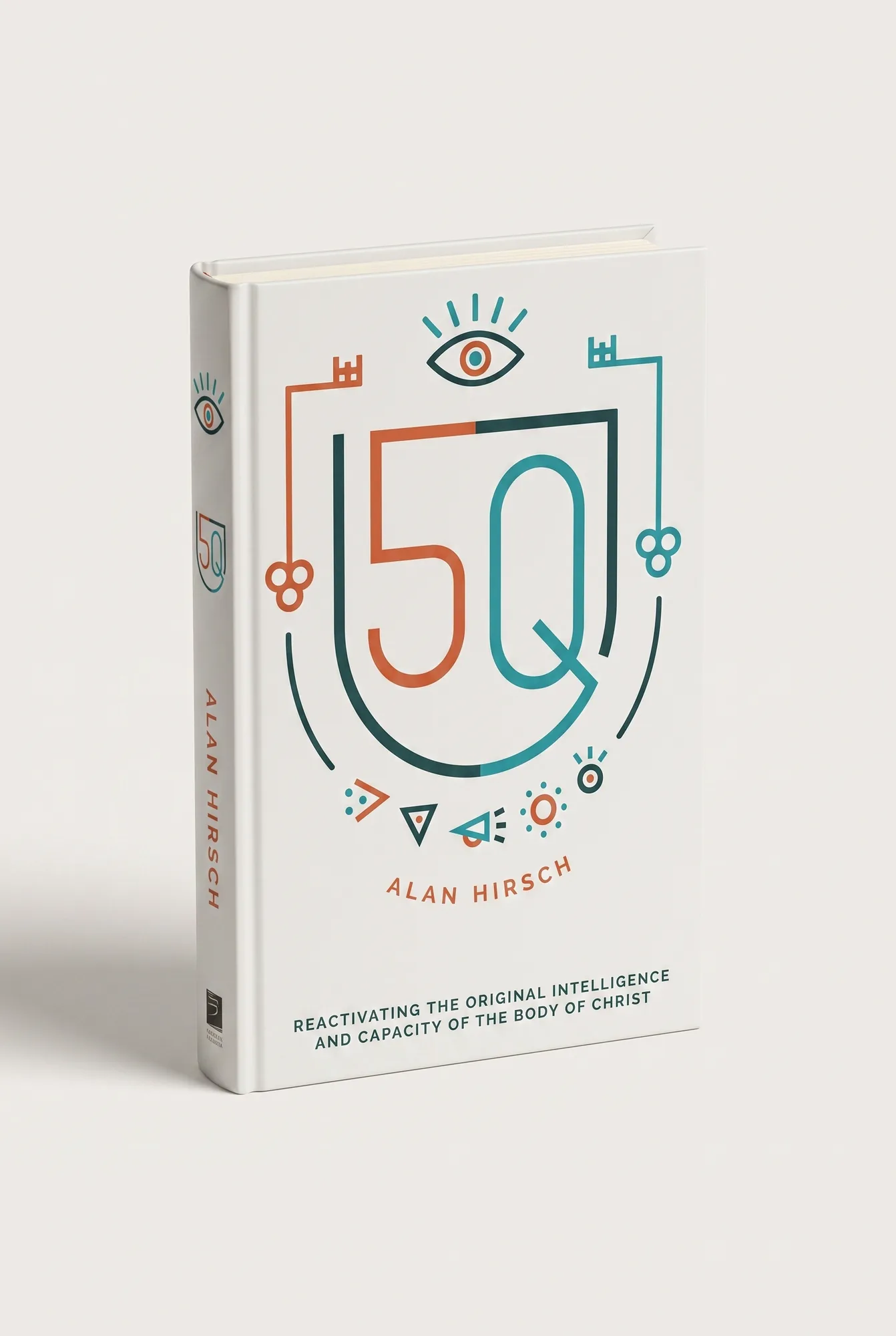
5Q (2017) takes APEST beyond an individual gifts profile to a systems-level, archetypal intelligence. Because the ascended Christ fills all things, the fivefold — apostolic, prophetic, evangelistic, shepherding and teaching — operates at three levels: the individual disciple, the organization's culture and systems, and the movement as a whole. The book maps each intelligence's contribution and shadow side, and provides diagnostic tools for organizations that are over-invested in shepherding and teaching and starved of the other three.
On this page
The question the church has been asking of Ephesians 4 for decades is: what spiritual gift do I have, and how does that fit into a church leadership team? That question is understandable, but it dramatically understates what the Apostle Paul is actually unveiling.
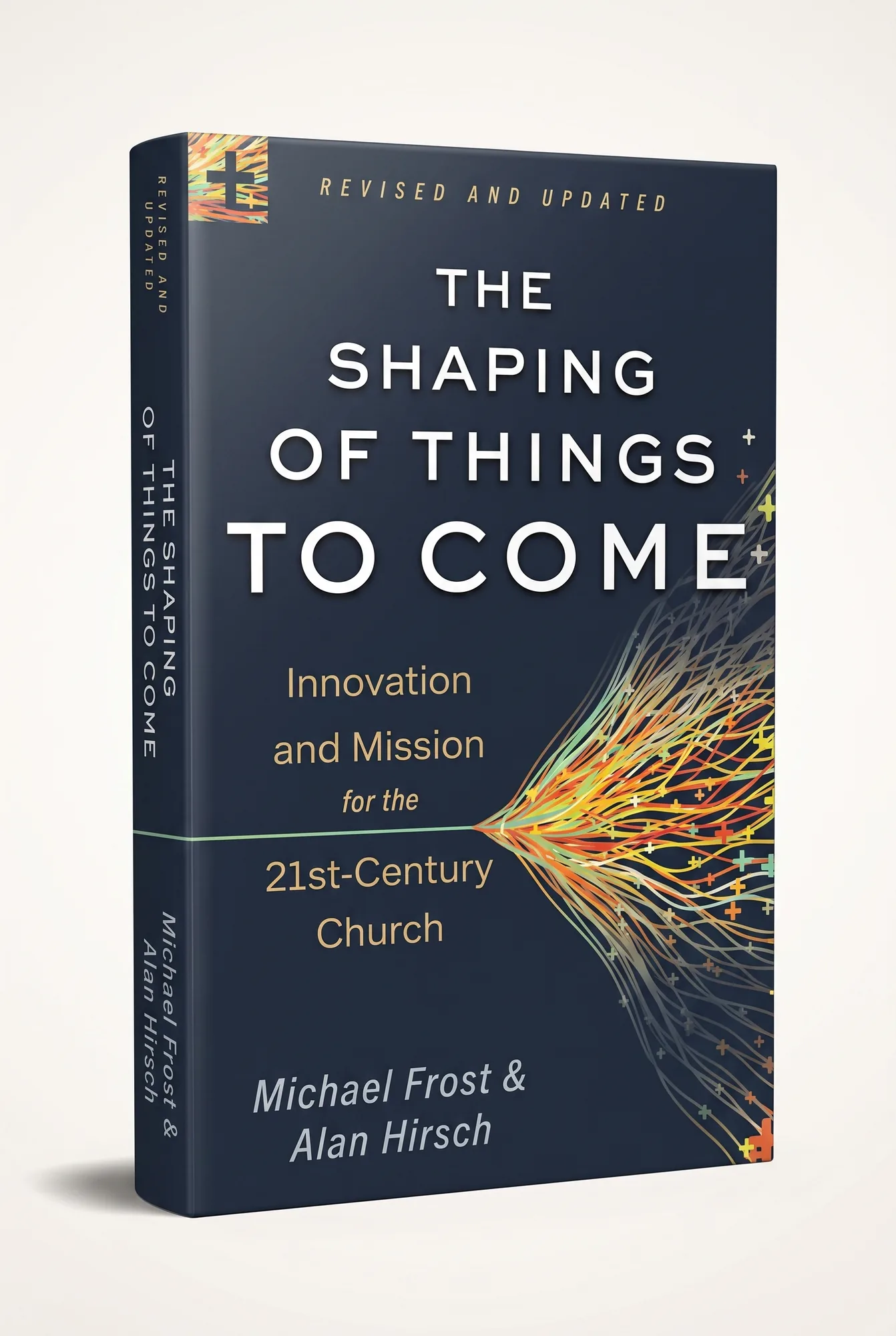
In 2017, I published 5Q. It was the culmination of fifteen years of intense research, organizational consulting, and theological reflection that began with Chapter 10 of The Shaping of Things to Come (2003), deepened as Element 4 of The Forgotten Ways (2006), and was given comprehensive biblical commentary in The Permanent Revolution (2012).
Yet even after The Permanent Revolution, I watched leaders continue to reduce the fivefold ministry to an individual personality profile—a Christianized Myers-Briggs used to assemble a staff team. 5Q was written to make a far more radical, cosmological claim: the fivefold typology (Apostle, Prophet, Evangelist, Shepherd, Teacher) is nothing less than the distributed intelligence of Jesus Christ himself, patterned into creation, embedded in the body of Christ, and serving as the comprehensive operating system for organizational health and movemental impact.1
§ 1
Why This Book Exists
Across hundreds of consultations with denominations, megachurches, church planting networks, and non-profit organizations, I observed a consistent pathology. An organization would embrace missional rhetoric, assemble an energetic team, and launch innovative initiatives—only to find itself, five to seven years later, experiencing severe systemic dysfunctions.
Why? Because the system itself was metabolically incomplete.
Most Christian organizations operate with a profound structural imbalance. They are heavily over-invested in the Shepherding and Teaching intelligences—prioritizing pastoral care, community harmony, doctrinal precision, and organizational stability. Meanwhile, the pioneering Apostolic, truth-telling Prophetic, and recruiting Evangelistic intelligences are actively marginalized or entirely excluded.
The result is systemic stagnation. Without the Apostle, the organization loses its outward frontier and ability to seed new expressions. Without the Prophet, it loses its holy discontent and ability to question its idols. Without the Evangelist, it loses its magnetic message and ability to draw outsiders into the story.
I realized that we did not need another spiritual gifts questionnaire. We needed a systems-level paradigm shift. We needed to understand how the fivefold functions as the metabolic immune system and generative intelligence of the entire body of Christ. 5Q was written to elevate APEST from an individual leadership framework to an archetypal, organizational architecture.2
§ 2
The Central Reframe: Distributed Intelligence Across Three Levels
The foundational reframe of 5Q is that APEST is an archetypal intelligence distributed throughout the body of Christ rather than an elite leadership hierarchy: the fullness of Christ is distributed across the whole body.
Paul's argument in Ephesians 4:1–16 hinges on the cosmic ascension of Jesus: "He who descended is the very one who ascended higher than all the heavens, in order to fill all things" (Eph. 4:10). Having filled all things, Christ poured his fivefold ministry into the church. The fivefold functions are the specific ways the ascended Lord remains dynamically active in the world through his people.
5Q maps this intelligence across three distinct, interdependent levels:
Level 1
Individual Discipleship (mDNA)
Every believer carries a distinct 5Q profile.
Level 2
Organizational Culture (Systems)
Every church or team embodies a collective 5Q balance.
Level 3
Movement Ecology (Whole Body)
Apostolic ecosystems achieving the full stature of Christ.
- The Individual Level (Discipleship / mDNA): Every believer is gifted with a measure of Christ's fivefold grace (Eph. 4:7). Discipleship involves discovering and maturing that latent wiring.
- The Organizational Level (Culture & Systems): Every healthy organization requires all five intelligences operating simultaneously as distinct functional capacities:
- Apostolic: Pioneering, innovation, safeguarding the core code, expanding the frontier.
- Prophetic: Questioning status-quo assumptions, discerning God's voice, standing with the marginalized.
- Evangelistic: Communicating the core message, recruiting others, generating contagious enthusiasm.
- Shepherd: Cultivating communal harmony, protecting relational health, providing care.
- Teacher: Organizing wisdom, teaching deep truth, building enduring educational architectures.
- The Movemental Level (Ecology): When all five intelligences are fully activated and mutually submitted to one another, the entire body builds itself up in love and attains to the whole measure of the fullness of Christ (Eph. 4:13).3
§ 3
What the Book Actually Does
5Q moves across thirteen substantial chapters, combining biblical theology, archetypal psychology, organizational design, and practical diagnostic tools.
Chapters 4–6
pp. 55–100
The Primordial Form and Archetypal Foundations
Chapter 4, "RetroFuture: Biblical Foundations for a 5Q Future" (p. 55), grounds the entire system in the ascension narrative of Ephesians 4. Chapter 5, "5Q: The Primordial Form" (p. 75), demonstrates that APEST is not an arbitrary list of five callings, but a comprehensive, archetypal grammar of human and divine organization. Chapter 6, "The Traces of God: A Prehistory of (the Fivefold) Archetypes" (p. 91), traces how these five functions reflect the very character of the Triune God and appear across human history and sociological systems.4
Chapters 7–9
pp. 104–172
Culture, Scenius, and Embodiment
Chapter 7, "Scenius: The Roots and Shoots of Fivefold Culture" (p. 104), introduces Brian Eno's concept of scenius—the communal genius of a vibrant scene—to show how APEST functions as a collective cultural matrix rather than isolated individual gifts. Chapter 8, "The Hero's Journey: The Movement that Jesus Started" (p. 137), maps the fivefold onto the transformational pilgrimage of discipleship. Chapter 9, "Embodiment: The Fivefold Modes of Jesus' Presence in the Church" (p. 150), develops the Christological core: Jesus as the perfect Apostle, Prophet, Evangelist, Shepherd, and Teacher, and how the church embodies each mode.5
Chapters 10–11
pp. 179–245
Eph4Us and Marking the Body
Chapter 10, "Eph4Us: The Fivefold Functionality of the Church" (p. 179), is the operational masterpiece of the book. It provides an exhaustive, granular breakdown of each of the five intelligences across their theological definitions, operational habits, organizational contributions, and characteristic shadow sides (what happens when an intelligence operates in an immature or toxic fashion). Chapter 11, "Marking the Body" (p. 226), outlines how an organization audits its fivefold markers to discover systemic blind spots.6
Chapters 12–13
pp. 249–284
Tools for the Trade and Getting There
Chapter 12, "Tools for the Trade" (p. 249), introduces the formal 5Q diagnostic instruments, rubrics, and organizational mapping tools used by leadership teams worldwide. Chapter 13, "To Get From Here to There" (p. 275), provides a strategic change-management pathway for transitioning an established system toward full fivefold activation.7
§ 4
Where This Book Sits in the Larger Body of Work
5Q is the crowning conceptual achievement of the APEST thread that runs through the entire Hirsch canon.
- In The Shaping of Things to Come (2003, Chapter 10), the term APEST was originally coined and introduced as a counter to the Christendom shepherd-teacher monopoly.
- In The Forgotten Ways (2006, Chapter 8), it was named as Element 4 of Apostolic Genius (Apostolic Environment / APEST Culture).
- In The Permanent Revolution (2012), it received exhaustive biblical exegesis and leadership application with Tim Catchim.
- In 5Q (2017), the framework achieves its mature, systems-level, cosmological form.
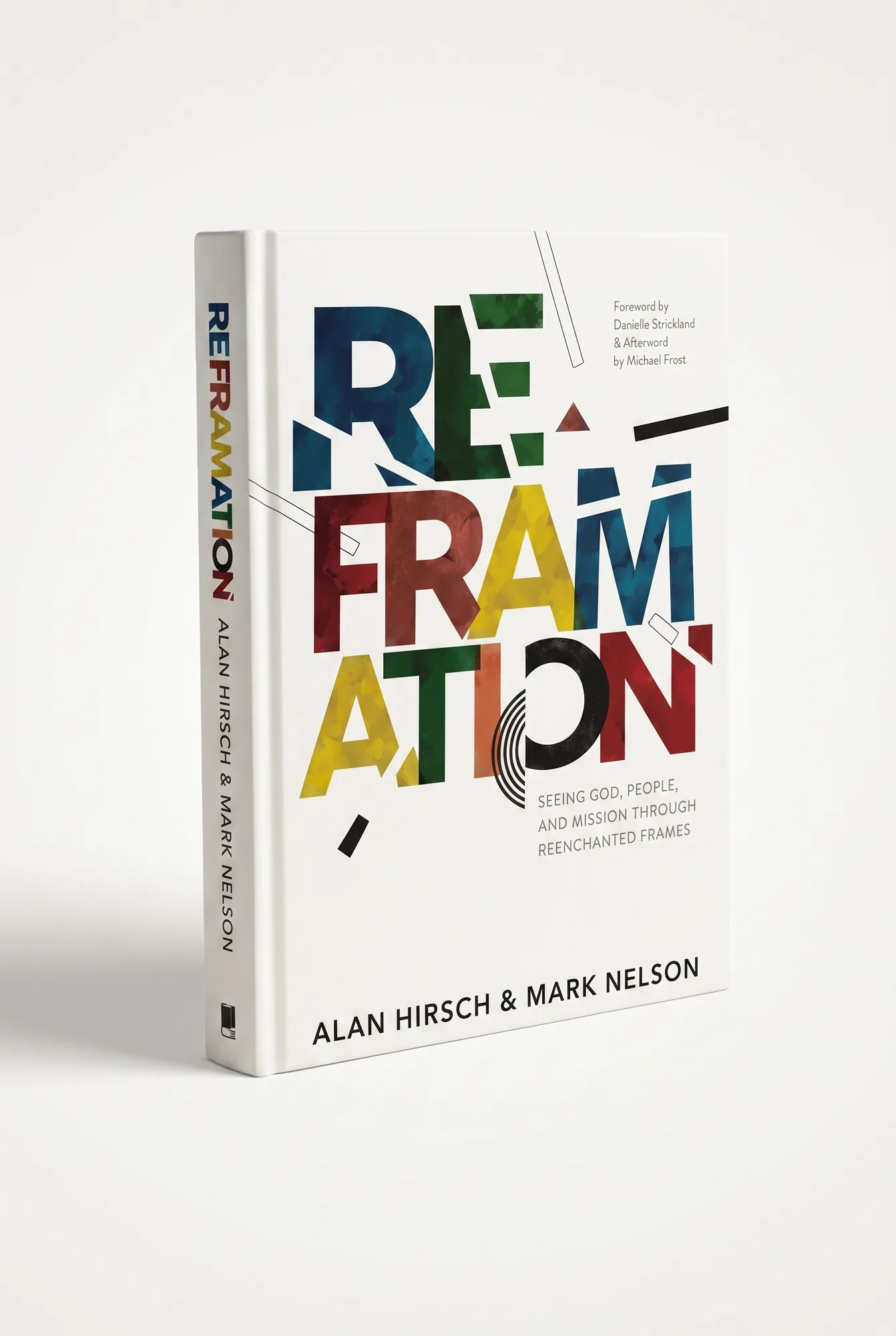
5Q also marks a profound bridge in my writing. It completes the structural and organizational quest that began at South Melbourne, while simultaneously opening the door to the deeper philosophical, aesthetic, and theological explorations of imagination, beauty, and worldview that would follow in ReFramation (2018) and Metanoia (2023).
§ 5
Who Needs to Read This
- The organizational leader or senior executivemanaging systemic dysfunction, burnout, or stagnation across their teams, seeking a diagnostic framework that addresses root causes rather than surface symptoms.
- The denominational or network catalystcommitted to building reproducing movements that do not collapse into institutional bureaucracy as they scale.
- The leadership consultant or executive coachlooking for a validated, comprehensive systems model that integrates spiritual formation with organizational dynamics.
- The practitioner carrying an apostolic, prophetic, or evangelistic wiringseeking validation, theological vocabulary, and maturity guardrails for their specific contribution to the body.
§ 6
Where to Go Next
For readers who want to study the biblical exegesis and pastoral applications of each specific calling within a local church context, The Permanent Revolution (2012, with Tim Catchim) provides the detailed companion foundation.
For those ready to move from organizational systems into the renovation of the theological imagination itself, ReFramation (2018, with Mark Nelson) takes the journey into wonder, beauty, and cosmic re-enchantment.
Notes
7 notes
- The genesis of 5Q and the necessity of moving beyond individual typologies: 5Q, Introduction, pp. 25–42. ↩
- Diagnosing systemic organizational imbalances in Western Christianity: 5Q, ch. 1–3, pp. 43–54. ↩
- The three tiers of 5Q expression (personal, organizational, movemental): 5Q, ch. 5, pp. 75–89. ↩
- The ascension theology of Ephesians 4 and the primordial form of APEST: 5Q, ch. 4–6, pp. 55–100. ↩
- Scenius and the embodiment of Christ's presence across five modes: 5Q, ch. 7–9, pp. 104–172. ↩
- The exhaustive functional anatomy and shadow sides of APEST: 5Q, ch. 10, pp. 179–216. ↩
- Diagnostic tools and transformational change management for organizations: 5Q, ch. 12–13, pp. 249–284. ↩
Works cited
Built from the notes · details from the books record
Hirsch, Alan. 5Q: Reactivating the Original Intelligence and Capacity of the Body of Christ. 100Movements, 2017.
this book · cited 7× · notes 1, 2, 3, 4, 5, 6, 7
Sources drawn from
5Q (all chapters: "RetroFuture: Biblical Foundations for a 5Q Future," "5Q: The Primordial Form," "The Traces of God," "Scenius: The Roots and Shoots of Fivefold Culture," "The Hero's Journey," "Embodiment: The Fivefold Modes of Jesus' Presence in the Church," "Eph4Us: The Fivefold Functionality of the Church," "Marking the Body," "Tools for the Trade," "To Get From Here to There"); The Permanent Revolution (Missional Ministry for a Missional Church); The Forgotten Ways (APEST Culture); The Shaping of Things to Come (The Genius of APEST).
How these ideas evolved
Each concept in this book, and every book it runs through.
- APEST Culture
Extends here
- Organic Systems
Develops here
- Jesus Is Lord
Develops here