The untamed God asks nothing that would require a small life. We have been domesticated instead of discipled.
In brief
Untamed (2010), written with Debra Hirsch, argues that Western Christians have been domesticated instead of discipled. Moving through four domains — the untamed God, the untamed culture, the untamed self and the untamed mission — it reframes discipleship as a countercultural apprenticeship to Jesus rather than self-improvement or moral compliance. It uses C. S. Lewis's image of "undragoning" for the healing of identity in the imago Dei, and is the full-length treatment of Element 2 of mDNA, Disciple Making.
On this page
Something has gone wrong with discipleship in the Western church, and it has happened so gradually that most of us didn't notice.
The taming was not sudden. There was no moment of dramatic theological collapse, no council that voted to make Christianity comfortable. The process was slower and more insidious than that — a decade-by-decade accommodation to cultural expectations, a softening of edges, a preference for belonging over following. What emerged was a form of Christian life that functions more as a lifestyle accessory than as a total reorientation around the lordship of Jesus. We have been, as Rick Warren's foreword to this book puts it with uncomfortable precision, domesticated instead of discipled.
Untamed — written with Debra Hirsch — is the theological and pastoral response to that condition. It moves through four domains: the untamed God, the untamed culture, the untamed self, and the untamed mission. Each domain exposes a layer of the accommodation that has settled into Western Christianity, and each calls the reader back to something more whole, more demanding, and more alive.
§ 1
Why This Book Exists
If The Forgotten Ways charted the six elements of missional DNA, Untamed was born out of the sobering realization that Element 2 — Disciple Making — is where the entire system succeeds or collapses.
In the late 2000s, churches across the Western world were eagerly adopting missional language and attempting to launch incarnational experiments. Yet many of these initiatives stalled. Why? Because you cannot build an apostolic movement on the backs of consumer disciples. Discipleship in the average Western congregation had become synonymous with cognitive classroom instruction and moral compliance. It produced people who could discuss theology or attend weekend programming, but who lacked the spiritual muscle to live as an alternative society in the midst of a consumerist empire.
Debra and I had lived this tension intimately during our years leading South Melbourne Restoration Community. We knew firsthand that when you welcome marginalized people, outsiders, and countercultural searchers into community, conventional discipleship manuals are worse than useless. You cannot tame people into Christlikeness. Formation requires an encounter with the wild holiness of God, a radical dismantling of the false self, and an embodied apprenticeship in the way of Jesus. Untamed was written to call the church away from domestic religion and back into the perilous adventure of authentic discipleship.
§ 2
The Central Reframe: Apprenticeship Over Domestication
The central reframe of Untamed is that discipleship is not personal self-improvement or moral domestication; it is a holistic, countercultural apprenticeship to the living Christ that recalibrates every dimension of human life.
Most church discipleship programs assume the primary problem is a lack of information. Untamed argues that our primary problem is idolatrous capture. We have accommodated our imagination to a consumer culture, domesticated God into an agreeable sponsor of our middle-class aspirations, and reduced salvation to an interior coping mechanism.
The book reframes discipleship through four interconnected transformations:
- From a Domesticated Deity to the Untamed God: Trading religious comfort for the unmanageable Lord of the cosmos.
- From Cultural Conformance to Holy Distinctiveness: Becoming an alternative community capable of resisting consumer evangelization.
- From the False Self to the Imago Dei: Experiencing the radical "undragoning" of our identities in Christ.
- From Church-Centered Programs to Incarnational Mission: Moving into neighborhoods and relationships with proximity, presence, and grace.
§ 3
What the Book Actually Does
Untamed unfolds across four major sections, systematically dismantling our domestications and replacing them with a robust theology of lived apprenticeship.
Part One
The Untamed God
Before any recovery of untamed discipleship is possible, we need to recover an untamed God. The chapter "Your God Is Too Sick" takes its cue from William Temple's sobering warning: "If your conception of God is radically false, then the more devout you are, the worse it will be for you." The God of the prosperity gospel — the god of success, comfort, and therapeutic self-affirmation — is a managed substitute for the living God. And if we have replaced the God of Scripture with something more palatable, then our entire discipleship is being shaped by an idol. The whole of the Christian life runs on the fuel of who we think God is. Distort the source, and everything downstream distorts with it.
This is where Untamed picks up the thread that ReJesus laid down. If ReJesus asked "Show me your Jesus, and I'll tell you who you are," Untamed asks the next question: what does it mean to actually follow him? The chapter "Jeebus Made Me Do It" names the substitution with characteristic directness. The "Jeebus" we have constructed — cut down to our cultural size, repackaged in our own likeness — costs us nothing because he asks nothing that we weren't already inclined to do. He is a projection of our preferences. Discipleship to a projection is not discipleship at all. It is self-confirmation dressed in religious vocabulary.
Part Two
The Untamed Culture
Discipleship always takes place inside a cultural stream, and that stream is always exerting pressure. The question is not whether culture shapes us, but in which direction. The chapter "Kultcha-Schmultcha" works through the uncomfortable reality that in many respects the surrounding consumer culture has evangelized the church more effectively than the church has evangelized the culture. The church of "Christianity Lite" has been acculturated. The antidote is not withdrawal but a deeper formation — disciples so thoroughly rooted in their identity in Christ that they can move through cultural currents without being swept away by them.
This is the ancient challenge of every Jesus movement. The early communities that spread across the Roman world in the first three centuries did so precisely because they carried a culture of their own — a culture of radical belonging, of table fellowship that crossed every social boundary, of a Lord whose claims outranked Caesar's. That cultural distinctiveness was not an obstacle to mission. It was the mission. The church's witness was the church's life, and the life was sufficiently strange and beautiful that it demanded an explanation.
Part Three
The Untamed Self
"The Lying Mirror" is one of the most pastorally rich chapters in all of Alan and Debra's shared writing. Identity is not a therapeutic concept in Untamed — it is a theological one. The imago Dei is the first and most fundamental truth about every human being, and discipleship is in large part the recovery of that image from beneath the layers of false identity that culture, trauma, and sin have deposited over a lifetime.
The C.S. Lewis image of "undragoning" — from The Voyage of the Dawn Treader, where Aslan strips the dragon scales from Eustace layer by painful layer — runs through this section as a metaphor for what genuine conversion and ongoing discipleship actually involve. The false self, formed outside a relationship with God, does not yield to self-improvement programs or motivational techniques. It requires something more radical: a stripping away that only the living Christ can accomplish, restoring the true self that has been buried beneath accumulated layers of performance, fear, and misdirected love.
Part Four
The Untamed Mission
The fourth domain is where Untamed makes its most distinctive contribution to the missional conversation. The chapter "Going Out, Going Deep" argues that the incarnation is not merely a theological doctrine to be affirmed but a pattern of life to be embodied. Consider what the incarnation actually involved: the almighty God, Creator of all that is, spent thirty years in a regular neighborhood doing ordinary things before anyone took notice. That hiddenness was not incidental to the gospel. It was the shape of the gospel. God chose proximity, ordinariness, and presence over power and spectacle. That choice is the hermeneutical key to everything that follows.
Missional living takes its cue from that pattern. Going out into the world, going deep into the particular place and particular people where God has planted you, trusting that God is already there before you arrive — this is the incarnational posture that Untamed calls every disciple to inhabit. Mission is not a program that the church runs on Tuesday evenings. It is the orientation of a whole life, shaped by the conviction that the God who came near in Jesus is still coming near, still working in the neighborhoods and workplaces and relationships where his people are present.
The Whole Life and Debra's Voice
Debra Hirsch's contribution to this book is not incidental. Her voice, her theological instincts, and her pastoral experience — particularly in working with people on the margins of church and society — give Untamed a texture and a warmth that carries genuine weight. The sections on identity, sexuality, and the family reflect a kind of embodied wisdom that comes from years of genuine proximity to human brokenness and beauty. This is discipleship written from inside real life.
What Untamed does, across all four domains, is refuse the reduction. The reduced God, the reduced self, the reduced mission — all of these are named and refused in favor of something larger, stranger, and more demanding. The question the book leaves with its reader is not comfortable: In what ways have you been domesticated rather than discipled? For most of us, the answer is more extensive than we would like to admit. The untamed life is a life fully oriented around the wild and loving Savior who calls us to follow him — all the way, without reservation, into the world he came to redeem.
§ 4
Where This Book Sits in the Larger Body of Work
Untamed provides the human, formational engine for the entire missional canon.
In The Forgotten Ways, Element 2 of mDNA was identified as "Disciple Making," with the warning that if a community fails at making disciples, it will fail at every other dimension of Apostolic Genius. Untamed is the full-length embodiment of that element.
While ReJesus (2008) established the Christological foundation ("Show me your Jesus, and I'll tell you who you are"), Untamed works out the direct ethical and behavioral consequences: what does a life actually look like when that wild Messiah is Lord? It bridges the high Christology of ReJesus with the structural ecclesiology of The Permanent Revolution (2012) by focusing on the individual and communal habits that make movemental structures viable.
Later, in Disciplism (2014), Alan would return to this theme in a concise companion format to challenge the church on its systemic failure to reproduce disciples. Untamed remains the foundational theological and experiential text for that ongoing concern.
§ 5
Who Needs to Read This
- The exhausted disciplewho feels that church has reduced their faith to moral rule-keeping and religious busywork. This book opens the cage door.
- The pastor or small group leaderwho wants to transition their community away from passive classroom learning and into lived, active apprenticeship.
- The church planterwho wants to embed deep spiritual formation and countercultural community into the DNA of a new church from day one.
- Anyone struggling with false self-perceptions, shame, or consumer exhaustionseeking the radical healing of the imago Dei through Christ's un-dragoning grace.
§ 6
Where to Go Next
For readers who want to explore the theological center that drives this untamed discipleship, ReJesus (2008, with Michael Frost) provides the definitive Christological foundation.
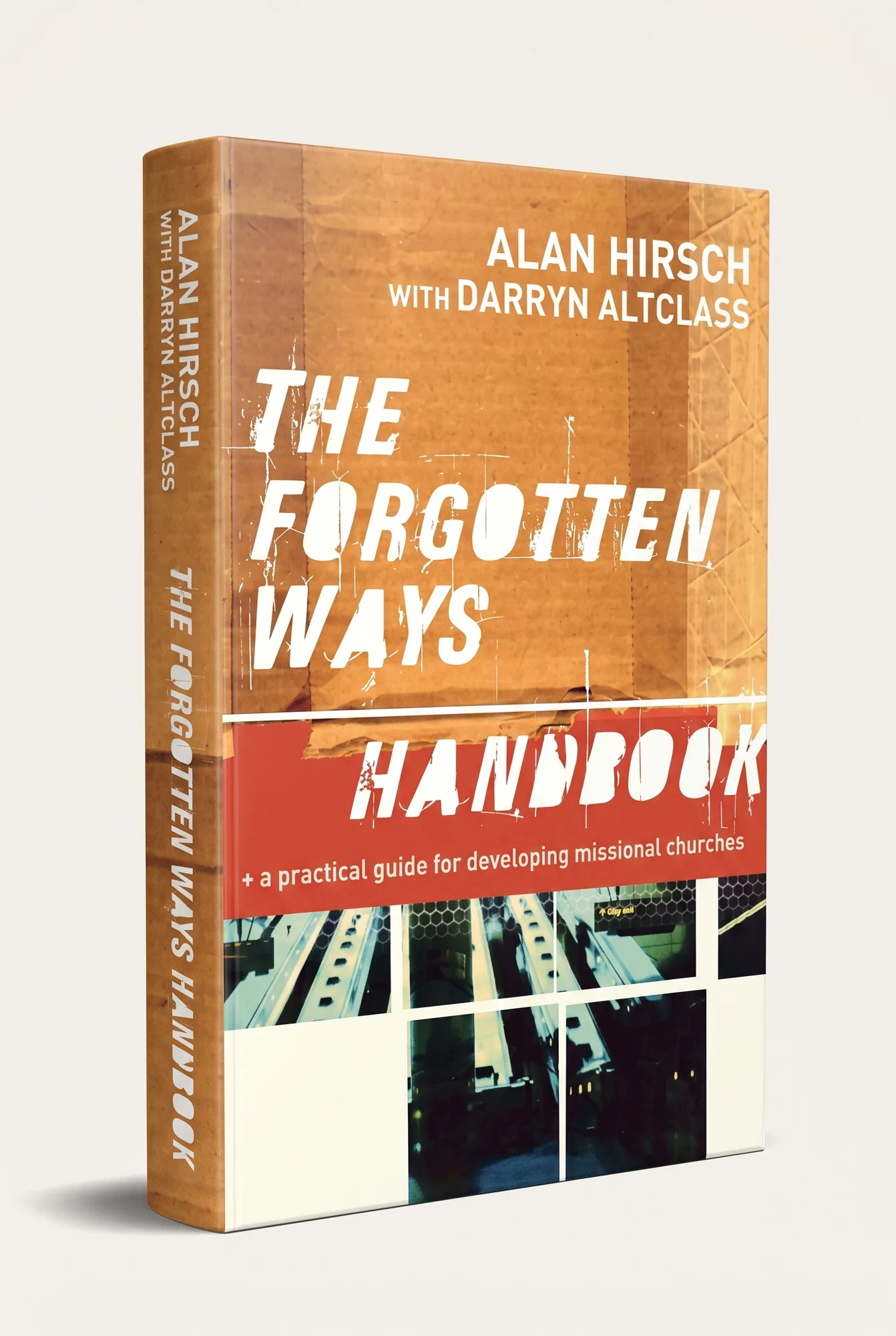
For those ready to see how untamed disciples assemble into reproducing, viral apostolic movements, The Forgotten Ways (2006) provides the comprehensive framework of mDNA.
Sources
Sources drawn from
Untamed (Hirsch & Hirsch, Baker, 2010) — front matter, "Your God Is Too Sick," "Jeebus Made Me Do It," "Kultcha-Schmultcha," "The Lying Mirror," "Going Out, Going Deep"; ReJesus (Hirsch & Frost, 2009) — "I've Got a Picture of Jesus."
How these ideas evolved
Each concept in this book, and every book it runs through.
- Disciple Making
Develops here
- Jesus Is Lord
Develops here
- Missional-Incarnational Impulse
Develops here
Related works
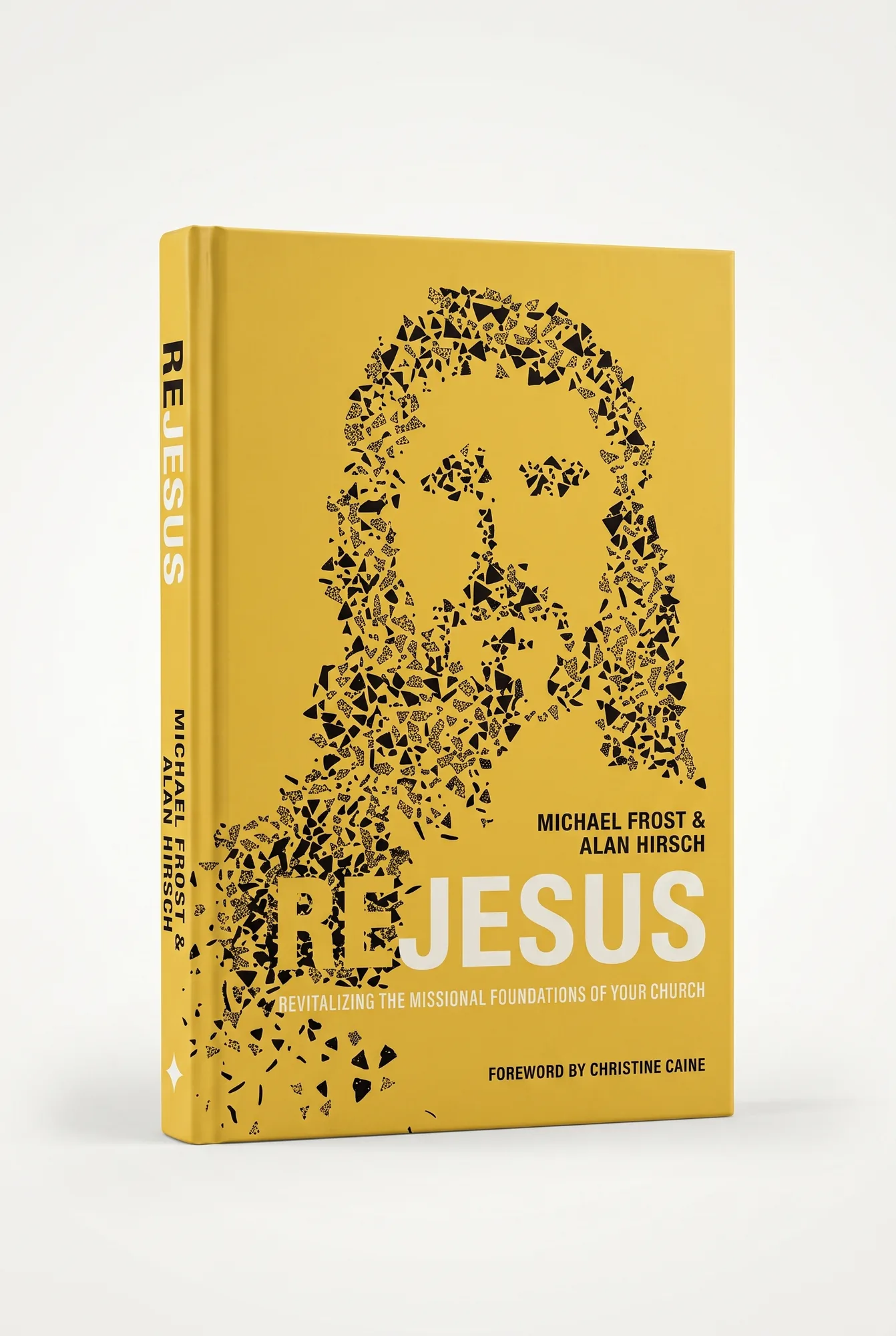
- 04 · 2008ReJesusShares: Jesus Is Lord, Disciple Making, Missional-Incarnational Impulse
- 02 · 2006The Forgotten WaysShares: Jesus Is Lord, Disciple Making, Missional-Incarnational Impulse

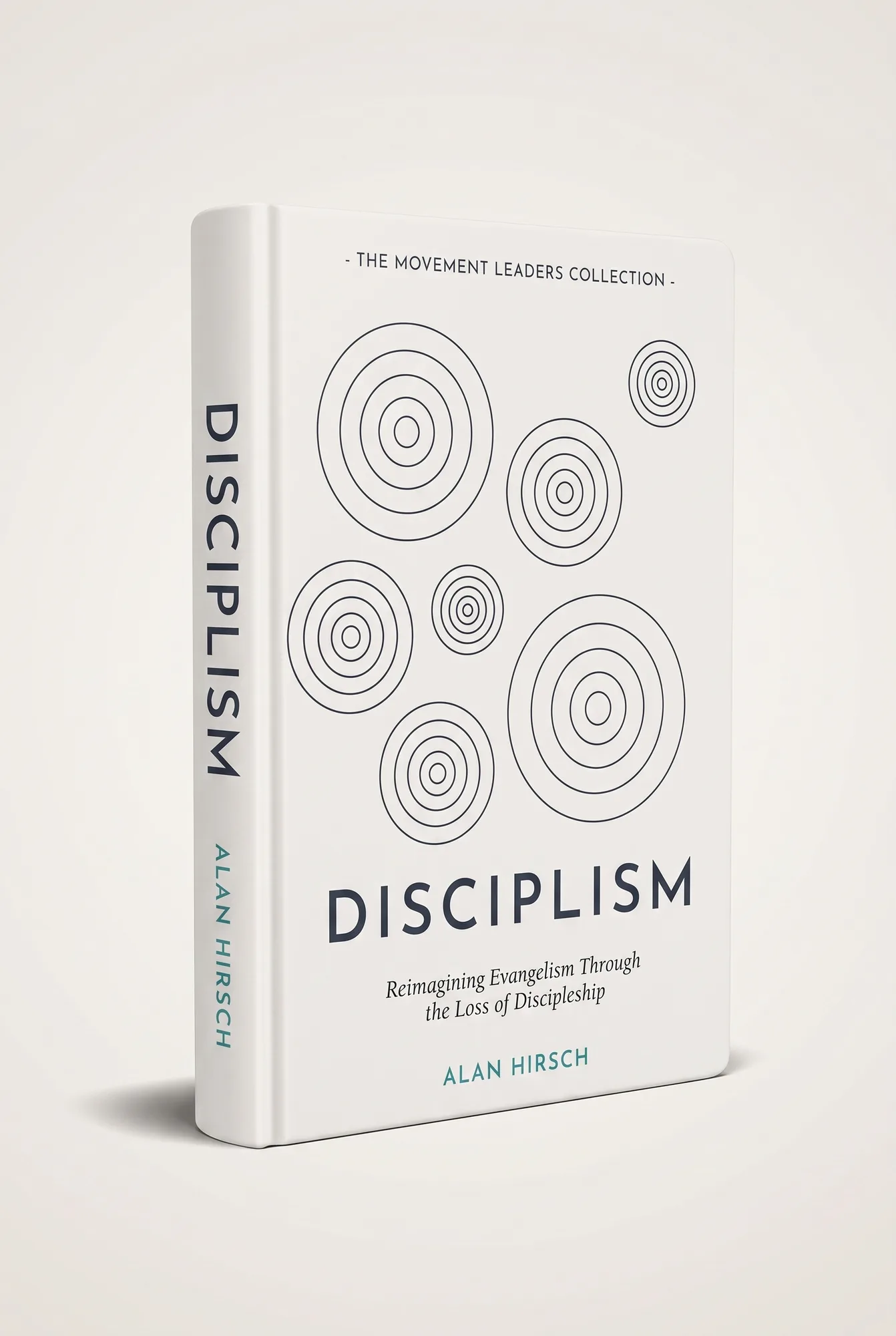
- 11 · 2014DisciplismShares: Disciple Making, Jesus Is Lord, Missional-Incarnational Impulse
- 03 · 2009The Forgotten Ways HandbookShares: Jesus Is Lord, Disciple Making, Missional-Incarnational Impulse